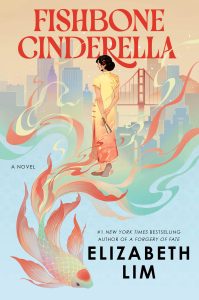
There are fairy godmothers, glass slippers and handsome princes—and then there are magical fishbones.
Elizabeth Lim’s Fishbone Cinderella (Del Rey, 2026), her first adult historical novel, takes its inspiration from Ye Xian, the ancient Chinese version of Cinderella. But anyone expecting the familiar rags-to-riches fairy tale is in for a surprise. Lim’s Cinderella inhabits a world of war, hunger, arranged marriages, immigration and family secrets. Happily ever after is by no means guaranteed.
That was part of the attraction for Lim.
“Unlike the Disney-influenced Western version of Cinderella, the Chinese version Ye Xian doesn’t necessarily have a happily ever after,” she says. There are several versions of the tale, and some are decidedly unsentimental. In one, Cinderella’s husband sells her golden slippers to finance his army; in another, she becomes one concubine among his many wives.
Lim was fascinated by these darker endings and “the sense of realism that they offered.”
That collision between fairy tale and reality runs throughout Fishbone Cinderella. Lim’s women may possess magical gifts, but those gifts cannot protect them from the forces of history. And behind the magic is a story about mothers and daughters: what mothers endure, what they choose not to tell and what their daughters inherit anyway.
The novel begins in Guangdong in 1940. Yut Ying is a young girl when she narrowly escapes Japanese soldiers after discovering an extraordinary ability: she can make herself invisible. Her mother has a gift of her own—dreams that foretell the future—and gives her daughter a gold bracelet with links shaped like fishbones, warning her of a curse hanging over the women in their family.
Due to the strife on the Chinese mainland, Yut Ying is sent to Hong Kong to live with her father and his second wife. Eventually, her life takes her across the Pacific to the United States. The story moves between Yut Ying—later Helen—and her daughter Marigold, growing up in the very different world of the 1960s San Francisco Bay Area.
For Lim, the novel is also personal. Fishbone Cinderella is loosely inspired by her grandmother’s life, and it is a story she had wanted to write for years.
“It’s been my golden rule as an author to write what I want to read,” she says, “and it so happens that historical fiction and fantasy have always been my favorite genres.”
Writing the novel meant immersing herself in China in the 1930s, wartime Hong Kong and the Bay Area of the 1960s, while also drawing on anecdotes from her family history. The research produced some unexpected discoveries.
author photo by Adrian Ow
For instance, in wartime Hong Kong, soy milk saved many lives. Lim discovered the story of Dr. K. S. Lo, founder of Vitasoy, whose soy milk provided an inexpensive and nutritious source of food during the Japanese occupation. The family of Tommy Yeung, the boy Yut Ying meets in the novel, is loosely inspired by Vitasoy’s founders.
Another surprising discovery was the fate of Yoshiko Yamaguchi, a Japanese singer who passed as Chinese. Yamaguchi was so convincing that she was almost executed for treason and collaboration with the Japanese after the war. It was only when her Japanese identity became known that she escaped this fate. Her story fascinated Lim and helped inspire the inclusion of collaborators in the novel.
These historical details give Fishbone Cinderella its texture, although history never remains safely in the past. The Sino-Japanese War follows Yut Ying/Helen and her husband long after the fighting has ended. Its consequences cross the Pacific and infiltrate family dynamics through secrets and arguments between parents and daughters.
One of the most striking moments comes when Helen tells her wilful teenage daughter Marigold, “You are Chinese, not American.”
It initially appears to encapsulate the conflict between an immigrant mother and an American-born child, but Lim sees something more complicated at work.
“The core conflict between Marigold and Yut Ying/Helen is a consequence of Helen’s unwillingness to share the tragedies from her past, and how they’ve shaped her into the woman she’s become,” she explains.
Yut Ying/Helen has buried much of that past while trying to construct a future in a new country. But silence does not necessarily prevent the next generation from inheriting its consequences. Marigold is left trying to understand a mother whose fears, rules and expectations have origins she knows nothing about.
There is a wonderful irony here. Marigold’s magical gift is that she can see the past.
Her mother can make herself invisible.
Lim describes the gulf that can exist between immigrants and their children as “a sea of misunderstanding.” She was interested in mothers living “interesting” lives so that their children might have the privilege of experiencing peace.
“I always intended Fishbone Cinderella to be a story about mothers and daughters,” she says, “about the disappointments and secrets and burdens that mothers carry.”
For me, this is at the heart of the novel. A mother wants to spare her daughter the suffering she endured and so does not speak of it. Yet by withholding the story, she can also deprive her daughter of the means to understand her.
The complicated inheritance between women extends beyond Yut Ying/Helen and Marigold. Yut Ying/Helen’s stepmother, Sai Ma, occupies the position traditionally reserved for Cinderella’s wicked stepmother. Lim, however, gives us something less comfortable than a straightforward villain. Sai Ma’s disappointments in life, Lim says, become “a sharp bitterness” that shapes the way she treats both her daughter and stepdaughter.
The fairy-tale character is still there, but so is the woman underneath.
Yut Ying/Helen grows up at a time when many marriages are arranged and relatively few women have the privilege of marrying for love. Her daughter Marigold comes of age in 1960s San Francisco and Berkeley, surrounded by radically different ideas about love, freedom and individual choice.
Marigold may inherit the past, but she does not necessarily have to repeat it.
Which brings us back to Cinderella.
In Ye Xian, Cinderella’s magical helper is not a fairy godmother but a fish. When the stepmother kills and eats it, the fishbones retain their magic. Lim rearranges elements of the folktale for her historical setting, transforming the fishbones into the bracelet that connects Yut Ying and Marigold and runs through the mystery at the centre of the novel.
The title, Lim says, is meant to feel “like a puzzle whose last piece comes together at the very end.”
Fishbones also seem a fitting image for what remains between generations: fragments of stories, half-understood memories, family expectations whose origins may have been forgotten. Someone has to piece them together.
Lim had something her characters do not always have—the stories themselves. Having listened to her grandmother throughout her life, she says she came to the novel with “a good sense of what it was like for an actual person to be living through the times and events depicted in the book.” She supplemented those stories with research and conversations with family friends, but tried to let the private lives of her characters remain at the centre of the history.
And that may explain why, for all its magic, Fishbone Cinderella feels grounded in something very recognizable.
Women disappear. Dreams foretell the future. A daughter sees into the past. Yet perhaps the most difficult task in the novel requires no supernatural powers at all: seeing your mother as someone who had an entire life before she became your mother.
The daughter must discover the history that shaped her mother. The mother has to accept that her daughter does not have to relive it.
Somewhere between Guangdong, wartime Hong Kong and 1960s California, Cinderella changes too. The prince is no longer the whole answer, and escape does not necessarily mean happily ever after.
Sometimes the magic is simply in finally telling the story.
Although Fishbone Cinderella may leave you with one rather less profound legacy as well: an unexpected craving for soy milk, ngau lam and egg tarts.
About the contributor: Helen Piper is an actress and a poet. She is currently working on her first novel. Previously she worked as a lawyer.
If you’ve any interest in history, particularly about Ireland, strong female figures, or piracy, chances are you’ve heard of Grace O’Malley. A legend in Irish folklore, Grace is famous for becoming an Irish chieftain and building a fleet of ships to create an empire covering land and sea—both by legal and illegal means.
The story in Lawhon’s latest novel, The Pirate Queen (Doubleday, September 2026), features little of actual piracy and instead focuses more on how Grace was able to carve out and hold a position of power in an era when women were typically resigned to the household roles of wife, mother, and servant.
I asked Lawhon what drew her to writing Grace’s story. “I found Grace the way that I find most of my novels: by accident. The idea for The Pirate Queen came to me in the middle of the night while reading a book of essays. The first contributor mentioned that she wished she could have dinner with Queen Elizabeth I and her archnemesis Grace O’Malley, the pirate queen of Ireland. I gasped. I’d never heard of this pirate queen! I immediately tumbled down the rabbit hole of history and knew within hours it would be my next book.”
Though Grace has achieved legendary status in the years since her death, readers may be surprised to learn that Grace is not mentioned in contemporary Irish records at all and is only officially known through English records of her.
Lawhon offers some explanation for this. “Historians differ on this point. Some say that garden variety sexism is to blame. Grace was a female chieftain at a time when a woman’s leadership wasn’t widely accepted (even though Elizabeth I was on the throne at that time). Others argue that, though inspiring, Grace made little impact outside the west coast of Ireland. Here’s what I know: both of her husbands and all her sons were included in official Irish history. Make of that what you will.”
Lawhon’s Grace is a woman who inspires thousands of people to view her as their leader—men and women, noble and peasant—because she is bold, brave, fair-minded, and, perhaps most importantly, unafraid to challenge English oppression. She is perhaps most famous for her meeting with Queen Elizabeth I in 1593. What we know of Grace comes mainly from eighteen “Articles of Interrogatory,” questions put to her in writing on behalf of Elizabeth I in response to Grace’s petition to release her brother and son from captivity and to have ancestral lands that had been commandeered for English vassals returned to her.
Since fairly little is known about Grace’s life, I asked Lawhon how she separated fact from myth when writing about a figure who has taken on legendary status—or gave herself permission not to. “I truly believe that the marriage of fact and myth is what makes for the best stories. So I try to stay close to established historical fact while weaving myth into the inevitable gaps that one always finds in the record.”
author photo by Kristee Mays Photography
While Lawhon could have told a linear version of Grace’s life, she made the decision to tell Grace’s story based on the “eras” of her life, weaving three timelines together, moving backward and forward in time. “This is the first novel I’ve written where I cover a woman’s entire life. The inherent challenge in that was to maintain momentum. So I needed to skip broad swaths of her life, sometimes jumping forward ten years in the narrative. A nonlinear timeline allowed me to focus on her legendary exploits without making the story feel episodic.”
Lawhon also includes viewpoints from a number of men in Grace’s life, including both husbands, her brother, her loyal soldiers, and her archenemy, Richard Bingham. “That was never a decision that I consciously made. It happened by accident early in the writing process. I sat down at my desk one day just as Grace’s father got home from a trading mission. So I followed him off the boat and into the castle and before I knew it, I realized that he had something to say about a then five-year-old Grace. As the novel progressed, a number of men in her life elbowed their way into the story.”
Considering how Grace had to overcome continual resistance to a woman being in power, these viewpoints offer insights into the minds of both the men who loved her and those who despised her, while also offering further insight into Grace herself, creating a satisfyingly rich and well-rounded depiction. I recently attended the HNS conference in Ireland and spent some time exploring afterward, traipsing through a number of locations mentioned in the story and imagining them as Grace must have seen them. Lawhon’s deeply personal portrayal of a legendary woman weaves an emotional spell, and I thought of Grace often during that trip.
I asked Lawhon why she thinks Grace is still such a popular figure today.
“Because she was just so ballsy! A pirate. A chieftain. A mother. A warrior. She defied every expectation of her age—and many of ours. That kind of woman leaves a mark . . . I hope, when readers have read the last page of this book, they realize that extraordinary courage and defiance do not have to stay within the pages of a book. They’re meant to be lived.”
About the contributor: Jenny Quinlan is an editor and coach specializing in historical fiction. As founder of Historical Editorial, she has helped hundreds of authors achieve their publishing goals. She served three terms as chair of the Historical Novel Society North America Conference and founded the HNS Romance chapter. She lives on a farm in Virginia with her family and a spoiled-rotten German Shepherd.
Children in Montreal learning to bow and curtsey, 1943
BY B.J. SEDLOCK
Do the characters in your novel conform to (or rebel against) expected “proper” behavior? You might want to research the etiquette/manners in your novel’s time period so you get the facts right.
Etiquette and manners are closely related, but are not quite the same thing. I had a lot of trouble figuring out how to state the difference in one sentence. Here’s what I came up with: Etiquette is a set of rules governing society’s expectations of behavior, whereas manners are how you apply those rules to make others around you feel comfortable.
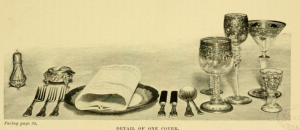
Example: etiquette might dictate how a table setting is arranged at a formal dinner and the order in which utensils are used, but manners would influence how you treat your table neighbor’s action if they picked up the wrong spoon for the soup course. Make fun of them, or help them by quietly signaling that they should use a different one?
Consult these sources to research how your character might behave either correctly or incorrectly according to the etiquette of the time. Unless otherwise stated, illustrations are from Wikimedia Commons and in the public domain.
Print books, secondary sources
BOWING TO NECESSITIES: A HISTORY OF MANNERS IN AMERICA, 1620-1860, by C. Dallett Hemphill. Oxford University Press, 1999. 0135125576
“An examination of the changing rules of class, age, and gender relations in early America”—p.5. Chapters include the middle class, youth vs. adults, and sex differences. It has a very impressive bibliography of primary source etiquette books from the period.
FROM COURTESY TO CIVILITY: CHANGING CODES OF CONDUCT IN EARLY MODERN ENGLAND, by Anna Bryson. Clarendon Press, 1998. 019821765x
Examines the advice literature of early modern England, rather academic in tone.
GROWING UP JIM CROW: HOW BLACK AND WHITE SOUTHERN CHILDREN LEARNED ABOUT RACE, by Jennifer Ritterhouse. University of North Carolina, 2006. 9780807856840
The author consulted autobiographies and oral histories from the deep South to find out how Southern children, both Black and White, learned the code of “racial etiquette” in the Jim Crow era.
HOW TO BEHAVE BADLY IN ELIZABETHAN ENGLAND: A GUIDE FOR KNAVES, FOOLS, HARLOTS, CUCKOLDS, DRUNKARDS, LIARS, THIEVES, AND BRAGGARTS, by Ruth Goodman. Liveright Publishing/Norton, 2018. 9781631495113
“An exploration of the written and unwritten rules of Tudor and Stuart England, and how people went about breaking them…a study of all the niggling, antisocial, irritating ways that people used to kick against prevailing social mores”—p.3. Includes rude hand gestures, fencing rules, and bad table manners.
MOURNING DRESS: A COSTUME AND SOCIAL HISTORY, by Lou Taylor. George Allen and Unwin, 1983. 0047460164
Queen Victoria’s daughters in mourning clothes for their father, 1862. Mourning dress had complicated rules in that era
If your novel has a plot element involving a death and period of mourning, this book could be helpful. Chapters cover mourning dress and etiquette between 1600 and 1910, children’s dress, jewelry, and how mourning traditions changed after 1910.
THE POLITE WORLD: A GUIDE TO THE DEPORTMENT OF THE ENGLISH IN FORMER TIMES, by Joan Wildeblood. Davis-Poynter, 1973. 0706701097
Covers medieval times to 1929. One section covers manners for portrayal on stage. Appendices give details on the history of bowing and curtseying, and meaning of fan gestures.
RITUALS OF DINNER: THE ORIGINS, EVOLUTION, ECCENTRICITIES, AND MEANING OF TABLE MANNERS, by Margaret Visser. Penguin, 1992. 0140170790
This might be a bit difficult to use if you are researching one particular era, as the author deliberately does not organize her material in chronological order or by location. Consult the index to find the relevant passages on forks, ancient cultures, British vs. American manners, use of wine, etc.
SAVAGE OR CIVILIZED? MANNERS IN COLONIAL AUSTRALIA, by Penny Russell. New South, 2010. 9780868408606
“Tell people you are writing a book about Australian manners and they tend to laugh, and ask whether you have found any yet”—p.1. About the conflicting savage vs. refined manners in early Australia. I found the chapter on the experiences of a frontier governess particularly interesting and a good source of story material.
UNCOMMON HISTORY OF COMMON COURTESY: HOW MANNERS SHAPED THE WORLD, by Bethanne Patrick. National Geographic, 2011. 9781426208133
“It’s about different ways common courtesy is practiced and demonstrated around the world, including different cultures, regions, and even time periods”—p.9. This would be a good introduction to manners in general, a lot of the material covers present-day, but it does contain some historical information, such as early alcohol practices, and the influence of the Duchess of Orleans on pre-French Revolution manners.
UNMENTIONABLE: THE VICTORIAN LADY’S GUIDE TO SEX, MARRIAGE, AND MANNERS, by Therese Oneill. Little, Brown, 2016. 9780316357913
Humorously educates readers who don’t realize that beloved books/films/TV shows set in the 19th century skip over the nitty gritty details of life, like toilet habits, how women coped with periods, and the absurd rules of courtship.
Place setting in 1902 for a formal or semi-formal dinner of 6 courses from Mrs. Seely’s Cook Book
WHAT WOULD MRS. ASTOR DO: THE ESSENTIAL GUIDE TO THE MANNERS AND MORES OF THE GILDED AGE, by Cecelia Tichi. Washington Mews Books/New York University Press, 2018. 9781479826858
Covers customs among the wealthy New Yorkers during the last quarter of the 19th century. Chapters cover fashion, dining etiquette, funeral practices, and correspondence. It also has a list of Mrs. Astor’s “Four Hundred” society leaders, if you want to incorporate a real-life family into your novel which moved in the highest circles.
Print books, primary sources
ETIQUETTE IN SOCIETY, IN BUSINESS, IN POLITICS AND AT HOME, by Emily Post. Funk & Wagnalls, 1922.
THE etiquette authority for Americans in the 20th century, still being published long after her death. This is her earliest edition, in which she notes “Etiquette must, if it is to be of more than trifling use, includes ethics as well as manners.” It’s interesting to compare Post’s advice on the same topic in different editions, such as smoking etiquette or playing sports and games. The Emily Post Institute continues her work since her death in 1960.
THE LADY’S STRATAGEM: A REPOSITORY OF 1820S DIRECTIONS FOR THE TOILET, MANTUA-MAKING, STAY-MAKING, MILLINERY & ETIQUETTE, edited by Frances Grimble. Lavolta Press, 2009. 9780963651778
While published in 2009, the book is a translation of several French works from the 1820s and 30s. Much of the work is instructions on dressmaking, cleanliness, advice for maids, etc., but the section on etiquette will be useful. The original works were “written for a solidly Bourgeois audience…,” so if your novel is set in late Regency/early Victorian times in western Europe and the characters are middle class, this would be very helpful, such as advice on a widow’s conduct, propriety at home and on the street, etc.
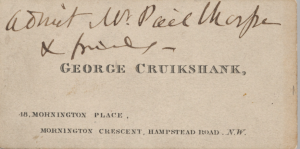
Caricaturist George Cruickshank’s calling card, between 1830-1878. Leaving calling cards had complex etiquette rules in his era
LETTERS TO HIS SON, by Philip Stanhope, fourth Earl of Chesterfield. Folio Society, 1973.
An important milestone in the field, published in 1774, offering advice on etiquette and good manners to 18th century audiences, such as how often to clean one’s teeth, why loud laughter is poor manners, and the art of pleasing others. Also available online in Project Gutenberg, see below.
NEVER GIVE A LADY A RESTIVE HORSE: A 19TH CENTURY HANDBOOK OF ETIQUETTE, by Thomas E. Hill. World Publishing, 1969.
While this was published in the 20th century, it is a selection of reprinted pages from Hill’s Manual of Social and Business Forms from 1873. Has sections on the language of flowers, recommended speaking gestures, how to raise good children, and proper modes of dress. There’s a passage in one of Georgette Heyer’s novels where the male half of the couple tries to restrain the female’s fractious riding horse, and she is infuriated that he assumes she isn’t competent to handle the horse—an example of a character rebelling against the prevailing etiquette.
POLITE SOCIETY AT HOME AND ABROAD: A COMPLETE COMPENDIUM OF INFORMATION UPON ALL TOPICS CLASSIFIED UNDER THE HEAD OF ETIQUETTE, by Annie R. White. J.H. Moore, 1891.
A period resource aimed at an American audience, which covers how to greet the President, wedding customs (bridesmaids wore white, not the bride), funerals, table manners, etc. If you have an American character who wants to rebel against society, this would give you a lot of story ideas of rules they could break.
REGENCY ETIQUETTE: THE MIRROR OF GRACES (1811), by a Lady of Distinction, enlarged ed. R.L. Shep, 1997. 0914046241
A 20th century reprint of the 1811 Mirror of [the] Graces. Covers deportment, manners, including examples from outside England, gives advice on dress. An appendix has period beauty product recipes. Original 1811 edition is also available online at Hathi Trust, see below.
Doffing one’s hat to a social superior (1896 illustration from an edition of Robinson Crusoe)
ONLINE RESOURCES
As usual I avoided listing .com commercial websites.
First of a two-part article by Karen Lyon in 2017 from the Folger Shakespeare Library site about 16th-17th century English manners and etiquette. This link will take you to part 2.
A database of over 79,000 e-books. It’s more difficult to search this database by date than the two listed below. You can search on “etiquette” in the quick search box, and then sort by “release date,” but if the book is a reprint from the 21st century of a 19th century title, then it’s going to be listed by the reprint date, not the original pub date. You may just have to do a lot of paging forward. The “search options” bar doesn’t have a date search filter either.
Offers many etiquette e-books both current and from centuries past. To the left of the search box, use the arrow to select “books/documents” and then put “etiquette” in the search box. Then use the year filter on the left to select a book from the era you are researching. There are thousands, all freely available.
A collaborative of research libraries that provides access to digitized print collections. If you only type “etiquette” in the search box, you’ll retrieve a lot of extraneous material. It might be better to change the “full text and all fields” drop-down choice to “subject” and then search on “etiquette,” to get 1000+ books rather than 700,000+. The “date of publication” filter box will let you narrow the results by date.
About the contributor: B.J. Sedlock is a semi-retired archivist at Defiance College in Defiance, Ohio. She writes book reviews and articles for The Historical Novels Review, judges the First Chapters contest, and has contributed articles to The Sondheim Review and Northwest Ohio History.
Elizabeth Letts is the New York Times bestselling author of books about remarkable horses. Fallen for France (Ballantine, August 2026), her latest novel, follows the journey of a fictional Arabian mare, born at the palace of the Sultan of Morocco in the unsettled time before the outbreak of World War I. Letts explains that ‘the original spark for the story was a single line I encountered in a wartime veterinarian’s account’ of the ‘horse breeds he’d treated at his hospital on the Western Front, and I was intrigued’ that ‘one was a Moroccan Arabian.’ The ‘idea that a horse from Morocco had somehow made it all the way to the Western Front, was the seed from which the rest of this story grew.’ This story binds a Moroccan boy, an English veterinarian and a French nurse to Tassa, an Arabian war horse.
As well as the horses who toiled and died on the front lines, she was also inspired by the colonial soldiers who were shipped from Casablanca to fight for France because Morocco had come ‘under French control’ in 1912. Letts explains that the Moroccan experience of the war ‘was not easy to research as there was very little scholarship,’ even though ‘Moroccan soldiers were highly decorated as contributors to the French empire. But after Morocco liberated itself in 1956, there was little motivation to memorialize’ these men. Their history is now being recovered: ‘there is more scholarship than there was when I started writing this book’ and she is optimistic that ‘soon there will be greater understanding of this important and mostly overlooked slice of World War I history.’
Asked about the transition from non-fiction to fiction, she explains that ‘Even though I write non-fiction, I think of myself primarily as a novelist. Historical fiction, in some ways, can be truer to the past.’ Both forms are a ‘reconstruction and I think historical fiction is more honest about that.’ Non-fiction is actually ‘more difficult, as you are trying to create a compelling story out of a fixed set of facts. As a fiction writer I have more tools in my toolbox—I can write dialogue and create interiority in a way that is much harder in non-fiction unless you have an actual memoir, diary, or interviews to draw on.’
Regarding research, Letts considers that ‘Readers recognize authority,’ which requires ‘a firm and granular command of your subject matter,’ but she advises writers to ‘not succumb to the temptation to parade your knowledge. Well-chosen details allow readers to feel the steadiness and solidity of your authority, but you have to be ruthless in also letting many things go if they aren’t absolutely germane to the central story you’re telling.’
author photo by Nina Subin
The novel begins in the High Atlas Mountains of Morocco, in an Amazigh community living a hard agrarian existence. Beddou, aged six, is indentured as a shepherd to a distant cousin, and his mother Aisha secretly gifts Beddou a string of amber beads. In creating Aisha’s character, Letts ‘drew deeply on my own mother-in-law, Rabha Ouchaou, who lived her entire life in a small village in the High Atlas following traditional ways. I have watched Rabha toil from dawn to dusk, walking high into the mountains to gather kindling on her back. I saw how she allowed her eldest son to leave home at a young age to attend school, knowing that—lacking any means of communication—each time he left, she had no way of knowing if he would return.’ Beddou’s epic quest to return home forms the emotional backbone of the novel. Letts reveals that as she ‘went through the editing process Beddou made himself the true center of the story, and I realized that, to make the story click, I needed to follow the string of amber beads.’
Aisha’s world is bordered by her community; but another character, Louhou, adventures into dance. Letts explains that a woman such as Louhou, ‘alone in Morocco at that time had few options, and entering the singing and dancing trade was one of them.’ To create her authentically, Letts ‘drew on oral histories of women who had actually followed this path’.
Meanwhile in France, Estelle is a woman in different circumstances, pressed into nursing by the occupying Germans. Letts’ ‘extensive reading of memoirs written by World War I nurses’ began with ‘English narratives, which were incredibly compelling,’ but not ‘right for creating Estelle: English nurses were generally trained, often living on personal means. French nurses were more likely to have been pressed into service, as Estelle was.’ Their memoirs described ‘going through soldiers’ pockets to find information about their families’, and ‘their experiences caring for colonial soldiers.’
Of these intersecting character journeys between Morocco and France, Letts says ‘I really do just shoot from the hip and let my own curiosity be the guide.’ She admits that ‘It’s hard to believe that a novel this complex, with such a tight interlocking narrative, was actually created by trial and error, but unfortunately, I’m not a planner. I don’t map anything in advance. For me writing is iterative. I layer on draft after draft, and the shape and themes and yes, even the plot emerge in the editing and revision. I don’t think my stories would have the same depth if I didn’t go through this process—themes and meanings emerge slowly over time, through the act of writing itself, and often I don’t recognize them right away.’
Beddou and his Arabian mare, Tassa, must survive against the odds, navigating a world at war. For Letts, horses ‘bring people together. In fact, we see time and again that warring humans can start to see past enmity when the fate of a horse is at stake.’ They represent ‘our longest relationship with domestication’ and this ‘can reveal what it means to be human. Nobility, courage, beauty, patience, and endurance are qualities we deeply admire in humans. These same qualities exist in horses largely because humans bred them over millennia. Thus horses become mirrors of our best selves.’
About the contributor: Louise Tree is a book reviewer and feature writer for the Historical Novels Review and judges the First Chapters Competition. She is currently working on a novel about a woman saboteur in World War II.
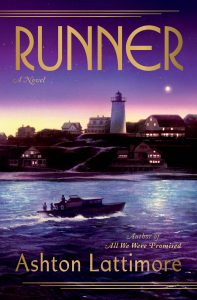
Ashton Lattimore’s Runner (Ballantine, 2026) is a rollicking ride through the Prohibition era Black communities of Martha’s Vineyard and Boston. Lena Jameson, the daughter of a fisherman turned rum-runner, is forced set aside her dreams of escaping Martha’s Vineyard after her father is lost at sea. With her family’s financial future in jeopardy, she must assume her father’s illegal liquor-smuggling operation or lose everything she holds dear. Alongside her brother Walter, her occasional boyfriend Sam, and a sophisticated Boston visitor named Dee, Lena navigates the treacherous worlds of rum-running, organized crime, and hidden family secrets. As Lena and Dee put everything on the line, their journey takes them from Martha’s Vineyard to Boston and Harlem, where Lena must decide how much she is willing to risk for freedom, ambition, and the truth.
Set in 1923, Runner is Ashton Lattimore’s second novel, taking place nearly a century after her first, the mid-19th century set All the Things We Were Promised. Despite the shift in time periods, Lattimore deftly captures the many layers of the Black American experience. Martha’s Vineyard, originally the home of the Wampanoag tribe, was colonized by English immigrants in 1602. The island soon became populated with farmers, fishermen, merchants, Black indentured servants, and the enslaved. Martha’s Vineyard would later become a haven for those escaping enslavement and following abolition in 1863, the town’s Oak Bluffs area would be the only place Black residents could purchase property and live without the restrictions of segregation.
By the late 19th century, Martha’s Vineyard would develop a rich industry in tourism for both white and Black visitors; this history still resonates today. In fact, it was Lattimore’s 2014 trip to the Martha’s Vineyard Museum that planted the seed for Runner. “There was an exhibit about the Prohibition era on the island, and it explained the Vineyard was a popular launch point for rum-runners headed to Rum Row, which was a line of ships stretching all the way from Florida to New England, all loaded with liquor,” Lattimore explained. Since the ships were located three miles offshore in international waters, the Volstead Act could not be enforced; this allowed for untold amounts of illegal liquor to make its way to American shores.
Lattimore specifically cited the museum’s account of the wreck of the John Dwight, which was manned by a crew of fishermen turned rum-runners. In 1923, the steamship wrecked in Vineyard Sound, and the Coast Guard discovered barrels marked “FLOUR” bobbing in the water. They also found the crew, all in life vests, dead in the water, but their bodies bore the signs of being involved in an altercation prior to the wreck. The “FLOUR” barrels were found to contain bottles of Frontenac Ale, a French-Canadian beer. Exactly what happened to the crew of the John Dwight was never discovered, but it speaks to the dangers of smuggling during this period. It also served as inspiration for the mysterious loss of Lena’s father Earl Jameson, an event that has a far-reaching impact on her life.
To write Runner, Lattimore called upon historical accounts of both white and Black women during the Prohibition era. “For Lena, there are surprisingly few historical accounts of Black women who were rum smugglers during Prohibition,” Lattimore said. Instead, Lena’s character “sprang largely from my imagination with a sprinkling of inspiration from Gertrude “Cleo” Lythgoe, who was white. Known as “The Queen of Rum Row,” she primarily worked out of the Bahamas, but had some characteristics in common with Lena—namely her business acumen, her ever-present pistol, and her temper.”
author photo by Joy Masi
While Lena was conceived mostly in Lattimore’s imagination, the character of Della “Dee” Brooks is thoroughly grounded in historical precedent. “Dee’s character was very strongly inspired by two different sets of historical women—the first were the women of Boston’s Black elite in the early 20th century, particularly the ones who formed clubs focused on community service, civic engagement, while also celebrating cultural pursuits like music and art,” Lattimore explained. Specifically, inspiration was derived from Maud Cuney Hare, a member of the League of Women in Community Service, and also a pianist who studied at the New England Conservatory of Music—just as Dee did in the novel. While Dee is classically trained in piano, she has a great love of Jazz music and finds refuge in the vibrant cultural world of Harlem. Lattimore cites Lil Hardin Armstrong, a jazz pianist and the second wife of Louis Armstrong, as the inspiration for this part of Dee’s character.
Composing a historical novel is as much an exercise in research as it is creative writing. Lattimore conducted an immense amount of research into the novel and cleverly included many of these details into the story. “It was fascinating learning about the ways rum-runners tried to evade and outsmart the Coast Guard,” Lattimore said. She uncovered one newspaper story from the era that described the way a fisherman-turned-runner was able to smuggle his illicit cargo back to shore. He “made a run out to Rum Row, and returned to port with liquor hidden underneath later of fresh fish in chopped ice.” For her first run out to Rum Row, Lena employs a similar technique, which saves her from being arrested by the Coast Guard.
In the novel, Lattimore also included the strong opposition to liquor that led to Prohibition. “I read pages and pages of meeting minutes from chapters of the Woman’s Christian Temperance Union on Martha’s Vineyard, and at one meeting they recorded a discussion on hatching a plan to gather evidence against the bootleggers! As I learned more about the WTCU, they took on a more prominent role in the story and in some ways ended up serving as secondary antagonists to Runner’s main characters, right alongside the cops and the rival smugglers.”
Though Runner is filled with adventure and intrigue, its beating heart is the journey of self-discovery that Lena and her family are forced to undertake. Capturing the emotional depth of the subject was often difficult to write. “Since the story begins with the death of the family patriarch, there’s a thread of grief that runs through each of the characters that was at times hard to write,” Lattimore acknowledged. “Each character’s reaction to Earl’s death is very different—Lena launches into a new venture to try to outrun it, her brother leans on drinking, and her mother goes quiet and still in a way that’s almost suspicious. Capturing all those responses nonjudgmentally, and treating them with equal weight and value wasn’t easy.”
Despite the complexity of this task, Lattimore ably presents the reality of losing a cherished loved one. By the novel’s end, Lena’s anguish, guilt, and anger are replaced with hopeful determination. While her dreams of an independent future are not as she planned, Lena creates a new path that allows her to express her strength of character while preserving the important bonds of a loving family.
About the contributor: Caroline Wilson is an architectural historian specializing in the social history of 19th and 20th century architecture. When she’s not reading or writing, Caroline can be found planning her next trip abroad and advocating for the preservation of Modernist architecture. She makes her home in Charleston, South Carolina with her husband and a brood of quirky, but very lovable cats collected from her work in cat rescue.
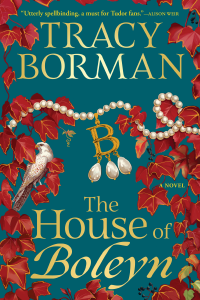
When we think of the ‘House’ of a great family, what comes to mind? Lineage, dynasty, coats of arms, family trees, vast wealth? Take away the capitalization, however, and the house in question becomes a family home: in this case, Hever, the iconic 14th-century castle and estate in Kent, the childhood home of Anne Boleyn.
In The House of Boleyn (Grove Atlantic, August 2026), Tracy Borman, lauded historian and novelist, sets Hever at the heart of everything. She describes writing a novel about Anne Boleyn as “a long-cherished dream,” explaining: “I’ve studied the Boleyns throughout my career as a historian and in dramatising their story I really wanted to bring a fresh perspective. The idea for centering it at their beloved home came to me from one of my favourite TV shows: Downton Abbey. I thought it would be fascinating to see the Boleyns in their natural habitat and explore what life was like for those who served them.”
Anne’s story is one that has endured across the centuries. “To millions of history fans across the world,” Borman says, “Anne Boleyn holds the same powerful and magnetic appeal that she wielded over Henry VIII and his court 500 years ago. Partly, this is because her story is so dramatic and controversial that it is irresistible to novelists, historians, film-makers and history fans across the globe. But a large part of Anne’s appeal is down to the sheer force of her personality. All the contemporary commentators were at pains to stress that she was not beautiful. And yet thanks to her charisma she had an army of admirers at court – chief among whom was the King of England himself. I think as well, Anne is the most relatable of the six wives for modern audiences: she wasn’t willing to fit the mold imposed by Tudor society of a meek and submissive woman. She had ideas, opinions, ambitions, and wasn’t afraid to voice them, even when it placed her in danger.”
Almost all the action in the novel takes place at Hever, with the narrative told from a range of points of view. The actual date of Anne’s birth is unknown, but Borman adopts the earliest likely year of 1501, and the story follows Anne from age eleven onwards, beginning in 1512. Whoever is at Hever throughout the following decades, as Anne’s dramatic tale unfolds, becomes the narrator of the novel. It’s an approach that allows Borman to introduce new perspectives and lesser-known characters, and “give readers an entirely new take on their famous story.”
author photo by Sophia Spring
This approach brings surprises. Borman singles out a character who takes on new importance in her novel: “Anne’s grandmother, Lady Margaret Butler, was one of the wealthiest and most powerful women of her age, and yet she has largely disappeared from history. She would have wielded a considerable influence over the household at Hever and her granddaughter in particular, so I loved bringing her to life. But readers beware: there’s a sudden and tragic twist to Margaret’s story… and it happened in real life.”
Familiar characters are also explored in a new light, for example, Jane Boleyn, Lady Rochford, wife of Anne’s brother George. “So often,” says Borman, “she’s portrayed as the villain of the Boleyns’ story. The theory is that she gave Thomas Cromwell evidence of an incestuous affair between her husband and sister-in-law Anne which sent them both to their deaths. But I found not one shred of evidence to support this: in fact, Jane seems to have been trying to save them. I loved rehabilitating Jane in this novel and creating a much more sympathetic – and true to life – version of her character.”
And that’s not all. Borman also has a new theory on “who really held Anne’s heart.” Reflecting on the difference between her non-fiction and fiction writing, she explains: “With fiction, I can let my imagination run wild and fill those frustrating gaps left behind by the sources. For The House of Boleyn this was particularly true of Anne Boleyn’s relationship with Henry VIII. Even though it’s one of the most famous relationships in history (and started exactly 500 years ago this year!) we only know half of the story. Seventeen of Henry’s love letters to Anne survive (in the Vatican archives, intriguingly) but none of her replies. We know he was obsessed with her, but what did she think of him? It was a joy to be able to tell her side of the story in this novel.”
Did Anne love Henry? Or if not Henry, then who does Borman think Anne was really in love with? Read The House of Boleyn to find out.
About the contributor: Kate Braithwaite is the author of five novels, including The Scandalous Life of Nancy Randolph (Joffe Books). An editor for the Historical Novels Review, she also publishes SIS-stories, a substack about sister relationships in history and fiction.
The scandalous theft of Da Vinci’s Mona Lisa in 1911, the Paris avant-garde art scene in the decade before World War I, and the well-planned but often frantic strategies to save the Louvre’s art from the grasping hands of the Nazis during their occupation of France in World War II. Lisa Rochon connects these disparate historical events in her latest novel, The ParisThief (HarperCollins, July 2026), through her main character, Mathilde. This is a well-researched novel that transports you to the Alsatian countryside before World War I, Picasso’s art studio in Montmartre, Paris under the Occupation, and Chateau de Chambord in the Loire Valley.
Mathilde, who grows up with her father and brothers on a farm, lost her mother when she was born, depriving her of any maternal guidance that would help her navigate the male world of the farm and beyond, no one to support her when her brothers called her porcine (piggy). This is a critical backstory that contributes to Mathilde’s early affair with a German art teacher, and her subsequent move to Paris to find a place in Montmartre’s art scene, specifically, the artists’ commune known as Bateau-Lavoir. In that world, she meets, and becomes the lover of, Vincenzo Peruggia, the man who stole the Mona Lisa from the Louvre in 1911. Mathilde’s experience suggests that, in the absence of maternal love and strong emotional bonds with family, young women will try to find love elsewhere, in often inappropriate or desperate ways.
Rochon, a national architecture columnist with Canada’s revered Globe and Mail, reveals that her work as a journalist has honed strong research techniques. For her novel, this research included visiting sites such as the Chateau de Chambord and the Place Émile-Goudeau in Montmartre—where Bateau-Lavoir was located—and scouring the personal accounts of women during this historic era. Some of the most famous artists who rubbed shoulders in Bateau-Lavoir populate this novel: Pablo Picasso, for whom Mathilde models; Georges Braque; Guillaume Apollinaire. However, Rochon also includes women, “recast[ing] the male-dominated gaze of history”: Marie Laurencin (1883-1956), dubbed “Our Lady of Cubism” by Apollinaire; Suzanne Valadon (1865-1938), the first woman painter admitted to the Société Nationale des Beaux-Arts; and Fernande Olivier (1881-1966), artist, model and Picasso’s muse.
In the novel’s other timeline, it is 1939 and Mathilde, who has buried her past and taken a new, married name, works for the Louvre and has been chosen by its director, Jacques Jaujard, to accompany the Louvre’s most precious art treasures – especially the Mona Lisa – into hiding. Mathilde’s protectiveness of Leonardo’s masterpiece is incredibly fierce, so fierce that, despite being a mother herself to an eighteen-year-old son and anxious about leaving him alone in Paris as the Nazis invade that city, she travels to Chambord to oversee the storage of works of art. The Mona Lisa is always at her side.
Perhaps the most interesting secondary character of the novel is Franz Wolff Metternich, a real historical figure and the German art teacher Mathilde fell in love with in Alsace. To dig further into the critical work of Metternich, Rochon worked closely with the Chateau de Chambord, learning that Metternich was known as the “protector of French works.” During this specific research, Rochon was invited to sleep over in the castle: “That night, I was the only one occupying a bedroom among more than 400 rooms!” For Rochon, Metternich not only represents the important theme about complicity during war time, but also how the enemy can be perceived as both evil “but also a decent human being.” The allusions to older historical plunders of the cultural works of countries under siege–the British Museum’s Grecian artifacts; the French display of Egyptian artifacts from Napoleon’s plunder—raises the fierce debate about repatriating these stolen cultural artifacts, something the thief, Peruggia, argued in his defence.
Although the historical time frames provide an interesting backdrop for this story about art—what it means to a nation, and what it means to be an artist—at the centre of this story is a woman who, deprived of a mother’s guiding influence at critical moments of her life, has made mistakes that she regrets. Rochon goes so far as to say that “being motherless leads Mathilde to become unhinged, manipulative and selfish.” As the mother of two daughters and two sons, with close relationships with them all, Rochon recognizes how mothers are “universally recognized as the grounding force of families and, indeed, community.” This certainly translates into Mathilde’s transformation in the 1939-1941 timeline of the novel. Mathilde’s leadership of those required to move the Louvre’s artworks into the French countryside and her reliance on personal connections to free her son when he is arrested by the Nazis, show how female networks are indeed strong forces at work in difficult times.
About the contributor: Terri Baker is an English Literature and Composition instructor at Mount Royal University in Calgary, Alberta. The focus of her PhD was historical fiction, in particular the contemporary critique found in Hilary Mantel’s Wolf Hall and Bring Up the Bodies.
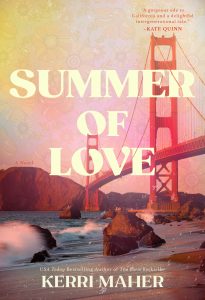
California history, addiction and recovery, winemaking and the hippie culture of the 1960s are all part of Kerri Maher’s latest, complex novel, Summer of Love (Berkley, July 2026). For the author, this meant a combination of lived experience and in-depth research. “I was born and raised in California by California native parents who met at UC Berkeley in the 1960s,” she explains, “so I grew up hearing stories about that mythical time and place. Then I attended Cal myself in the ’90s, when the ’60s were still very much alive and well on campus. Because of this combined lived experience, much of the historical backdrop was already inside of me; I just had to look up a few things and fact-check others.”
It was wine-making and the specific history of Napa that she had to learn the most about. She describes her research experience this way: “While I enjoyed learning about the art and science of creating the perfect bottle, I really geeked out on the history, which began with the Spanish missionaries and evolved through the region’s time as part of Mexico, then the United States.”
Like her previous books, this one presents strong, female main characters. However, unlike most of her other works, these are all fictional characters. Maher has already realized that she enjoys writing both types of historical fiction, as they each have rewards and challenges. She provides these insights into her writing process: “When I’m writing about real people,” she explains, “my research tells me so much about them, whereas with entirely fictional characters, I have to get to know my characters through meta writing and multiple drafts. There’s more freedom when I’m writing more fiction than history, but sometimes that freedom makes me feel lost; when I don’t have the historical record to look at for a major event in the character’s life, I have to do a lot of thinking and journaling and walking to figure out the event.” She confirms, “It feels great when I figure things out!”
author photo by Peter Su
This book explores several characters’ struggles with addiction and recovery. For this, Maher drew from personal experience as well as the experiences of several women who inspired her to “be brave enough to write this novel.” What was important to the author was to portray the realities, rather than the misrepresentations she’s read in other fictional accounts of addiction. Maher knows that no path to recovery is the same, nor is it the defining characteristic of a person. “Addiction,” she declares, “is just one experience among many in a life, and not using anymore is just the beginning of the recovery journey, which I wanted to explore as a joyful process of self-discovery. That’s how it’s been for me, and how it’s been for so many of the sober people I’ve met along the way. Since sobriety is synonymous with self-discovery, it’s impossible for two journeys to look the same.”
The author expects her own life journey will include leaving the east coast of the United States, where she’s lived for more than three decades, and returning to California. “And I’m certainly not done exploring or writing about the state,” she affirms. “I imagine my return after so long will give me a whole new perspective. California is so huge and varied, it’s more than I could ever tackle in one lifetime.”
As for future novels, she reveals that she enjoyed writing the fantasy element that formed part of Summer of Love so much that the new novel she is working on “involves a magical Book of Hours and an epic love story.” She adds, “That’s all I can say right now!”
About the contributor: Lee Ann Eckhardt Smith’s passion for history and storytelling has driven her writing career. She is the author of two acclaimed non-fiction history books: Strength Within: the Granger Chronicles (Baico, 2005) and Muskoka’s Main Street: 150 Years of Courage and Adventure Along the Muskoka Colonization Road (Muskoka Books, 2012). She’s written articles for many magazines and newspapers, primarily about how to write family history and memoir. She is currently working on her fourth collection of photographs and poetry, inspired by the beauty she finds in her everyday world. Find out more at her website.
What comes first, the plot, character or location?
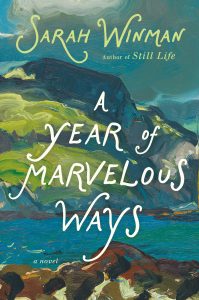
For Sarah Winman, ‘Characters always come first … but place is also extremely important.’ Winman believes that ‘What place does is to show a character something they would never have encountered elsewhere. Or it reveals an aspect of the character that they wouldn’t have discovered in themselves elsewhere … When I encountered St-Just-in-Roseland in the Roseland Peninsula in Cornwall I found it an entrancing and bewitching place. It is a tidal muddy creek off the River Fal that has both a church and a boathouse. I simply asked the question – who would live here? The landscape answered,’ and Marvelous Ways was born.
Marvelous Ways –protagonist of Winman’s novel A Year of Marvelous Ways (Putnam, June 2026) – is eighty-nine years old and lives in a caravan by a creek in Cornwall, ‘outside the community as most “witches” or midwives did back in the day’ waiting for something, but she’s not sure what; she’ll know it when she sees it or him. Francis Drake, a soldier broken in heart and spirit after World War II comes out of the sea and is taken under her wing and, as Sarah Winman explains, ‘meets what he needs – healing and compassion and forgiveness.’
A Year of Marvellous Ways was first published in Great Britain (Tinder Press, 2015) and is now being released for the U.S. market, with appropriate changes to the spellings. The names of the characters in the book (Marvelous, Drake, Paper Jack, Peace) all ‘matter’ to Winman. She remembers how, when she was with her mother in hospital for a checkup, ‘A Nigerian nurse called out her name and we went with her. The nurse said to my mum, Why aren’t you called Winwoman? Neither my mum or I could answer this question. And she said, You have to understand, I come from a place where names matter. And I never forgot it, and I thought, OK – all these characters need “names that matter.” Even if it’s a burden. In some ways it will define them – but will also lead them to a form of truth and discovery. I also wanted names that felt incongruous to the time in which I’d placed the story.’
The characters, however, are not fully formed before Winman starts writing. ‘They grow as I write them. Through circumstance, through dialogue, through interaction. Everyone is seeking to be healed ultimately, not that they necessarily know it. But they are drawn to a place that makes this possible. Everyone is an outsider seeking connection.’
author photo by Patricia Niven
The characters are fictional, not so the place. Winman explains that ‘I know Cornwall pretty well, because I met it during childhood. My grandparents moved to Cornwall when I was five, so it has always played a huge part in my life. It is a magical peninsula, full of stories and myths and ancient saints and standing stones. You are never more than twenty miles from the sea, so the salt and sea mist become part of you when you are there. Your complexion changes. Your heart expands. You notice the clouds more, and how light moves across the waves and the meadows. You are drawn into the mystery of the place, and cannot help but be altered by it.’
Winman did have to do some research of ‘what was happening in Cornwall during this time. Learning about mining, about Cornwall’s role in D-Day landings. About the famous Eddystone lighthouse. About the seaports, about the role of women when there was no health service. When I knew what was what, then I could move the characters around that space and time and allow them to react to it.’
There is magic in the countryside and magic in Marvelous’s life, for wasn’t her mother a mermaid? ‘From the moment she tells Drake that her mother was a mermaid, we as readers know that we are entering the world of enchantment and make-believe. Drake comes to believe in the other – or chooses to believe – because his life gradually becomes richer for it.’ For Winman, the mermaid ‘represents the Great Mother. She is also Marvelous’ actual mother – a biracial woman who was brought over from America and lived as an outcast. It’s Marvelous’ father who tells Marvelous that her mother was a mermaid, and does so out of love. So that she grew up believing her mother to be unique and powerful and mystical, rather than how society, at the time, wanted to define her.’
Ultimately, Winman would ‘just like the reader to think this was an enjoyable story. That not everything is so clear in life and there is magic when you least expect it. Let’s open our eyes to the mystery. To the love of storytelling and the nature of healing through connection and words.’
About the contributor: Marilyn Pemberton has a passion for fairy tales that subvert and challenge social mores. Victorian fairy-tale writer Mary De Morgan was the subject first of a biography, then a fictionalised life in The Jewel Garden. Marilyn has published four novels from her historical series, Grandmother’s Footsteps, which include her own fairy tales as a means of critiquing the society in which her female protagonists live. Marilyn has also published two stand-alone historical novels, Sold for a Song and Under the Eye.
When Amy Ephron started out to write her noir-ish 1939 mystery, Unseasonably Cold, (The Sager Group, 2026) she did not expect the process to be interrupted by other writing projects. She started writing the book a few years ago. In the meantime, she had sketched out the plot of a children’s book, The Castle in the Mist, (Penguin, 2018).
“The Castle in the Mist is a modern-day mash-up of an old-fashioned children’s book,” she said. “I was definitely influenced by Frances Hodgson Burnett’s books, A Wrinkle in Time, The Phantom Tollbooth, and wanted to try my hand at it,” she said.
Penguin/Philomel asked for two more books in the Other Side series. Between writing these two books, which she describes as an absolute pleasure, and going on a schoolbook tour, work on Unseasonably Cold got put aside for a while.
However, the delays worked out in her favor. “Somehow it all feels perfect,” she said, “because our own time evolved so that 1939 looks a lot like now. So, it seems a relatable time to me.”
The year 1939 was a pivotal year in history, marking the end of the Great Depression and the start of the deadliest war in history.
“The longer the writing took, the more the period of 1939 seemed to mirror today. The division of wealth, the threat of a possible world war. Religious divides. External placidness veiling fear and grief often constantly felt,” she said.
Ephron notes that the underlying placidness and fear she describes mirror the plot of her book, in which a well-known heiress (Jane) disappears without a trace and nobody knows what happened to her. The story is narrated by Jane’s best friend and others, many of whom exhibit a studied level of calm, obscuring their sense of loss, grief, and fear.
The year 1939 was also an inspirational period in the arts. Against the backdrop of impending war, the Modernism movement emerged in art and literature. The 1939 World’s Fair was held in Queens, New York. Broadway was booming, and the surrealist artist Salvador Dali even designed a show.
For Ephron, character is not only defined by geo-political events, although she says that those events are important. “A character is defined by what they wear: what they choose to order or imbibe; the decoration of a house or garden.” For example, the character Liza is fond of making vodka gimlets and cosmopolitans. And in the opening scene she’s remembering eating perfect egg salad sandwiches with the crusts removed at a tea shop in the West Village.
“It was fun bringing all of those attributes into play,” she said.
author Amy Ephron
This was also a time of secret love affairs. Ephron researched tabloid scandals from the period in order to understand how the public would be affected by the disappearance of a famous heiress.
“In my novel, the disappearance of Jane is front page news. As is the police investigation. And the reporter who seems to know everything almost before anyone else, knew Jane’s best friend Liza when they were kids,” she said.
To give readers context, she tried to pick locations from the past that are still in existence today such as Gallagher’s Steakhouse and the Manhattan police station, which looks much the same it did back in 1939.
While the inciting incident of a woman’s disappearance is not based on an actual historical figure, Ephron says that she has lost a couple of friends, only to discover there was much she had not known about them until after their deaths – similar to her character’s discoveries.
“In both cases, we were good friends, and there was a lot I hadn’t known about each of their states of mind and/or habits,” she said. “Secrets, lies, betrayals, and possible drug use.”
She noted that an unexpected loss, particularly when we are young, brings with it an intense level of pain and grief.
Unseasonably Cold has been described as a noir mystery. The noir plot hinges on a police investigation; the multiple family ties; romantic entanglements, hidden and not so hidden relationships.
“I am not sure I knew much when I started, except that Jane had disappeared and her best friend Liza, whose POV begins the book, had lunch with her that day.”
Ephron doesn’t make extensive outlines, and she said she isn’t sure that she knew how the book would end when she started.
“The book takes a left turn at a certain point as everyone has secrets, lies. And as they unfold, the story lines interlap,” she said. “It was fun to see it evolve that way, and at a certain point, it got so dark, I started to laugh, sort of the way you could at a Quentin Tarantino movie. And it took some turns I didn’t expect it to make.
“But it’s also a love story,” she added.
About the contributor: Author of the Delafield & Malloy Investigations series, the historical coming-of-age novel, Cinnamon Girl (Livingston Press, Sept. 2023), and more, Trish MacEnulty is currently working on a play about silent film star, Theda Bara. More info at her website.

 BY HELEN PIPER
 BY JENNY QUINLAN



 BY LOUISE TREE
 BY CAROLINE WILSON
 BY KATE BRAITHWAITE
 BY TERRI BAKER
 BY LEE ANN ECKHARDT SMITH
 BY MARILYN PEMBERTON
 BY TRISH MACENULTY