New books by Historical Novel Society members, August 2026
Congrats to all HNS members with new books out! If you’ve written a historical novel or nonfiction work published (or to be published) in March 2026 or after, send the following details in via our contact form by October 7: author, title, publisher, release date, and a blurb of one sentence or less. Please shorten your blurbs down to one sentence, as space is limited. Details will appear in the November 2026 issue of HNR. Submissions may be edited.
In The Falcon’s Heart, by Joyce DiPastena (Sable Tyger Books, Nov. 15, 2025), set in 12th-century Poitou during Henry II’s war with his sons, an exiled archer confronts the woman he believes betrayed him, resolved to uncover the truth behind a long-buried theft before rekindled love is undone by suspicion and war.
Agrippa and Octavia, trusted general and sister to Rome’s rising first emperor, fight to preserve order and their ideals as Augustus’ ascent turns the Republic’s fall into a dangerous, uncertain birth of empire in My Agrippa: Love, Loyalty, and the Fall of the Republic by William Twersky (All Things That Matter Press, Dec. 2, 2025).
Therein Lies the Pearl by Catherine Hughes (Historium Press, Jan. 19) retells the events of the Norman Conquest as experienced through the eyes of two women, Celia and Margaret, who live on opposite sides of the English Channel.
In J. D. Porter’s The Muleskinner and The King (Historium Press; Jan. 26), when the circus rolls into Atlanta, Georgia, in the fall of 1936, a string of murders threatens to close the show and ignite a powder keg of suspicion that stretches far beyond the tent poles.
Fans of Conn Iggulden, Ken Follett, and Robert Graves will be captivated by A Ram for Mars, Book 3 in the “A Slave’s Story” trilogy (NFB Publications, Feb. 9), a richly detailed and immersive exploration of the Jewish revolt against Rome (66-73 AD/CE) through the lens of a pro-Roman Jew in the rural district of Galilee, written by Christopher D. Stanley, an expert on early Judaism.
Randy Elrod’s The Mysteries of Barcelona: An Erotic Gothic Serial (cre:ate Publishing, Feb. 14) is a baroque, erotic Gothic serial set in 1890s Barcelona, following Chloé Permanyer—poisoner, vigilante, dark angel—as she hunts the monsters society protects, one kiss at a time.
Christian Beaudry’s Unfulfilled Expectations – The Untamable (Éditions du Tullinois, Feb. 28) is an emotionally charged WWII era novel set in Canada, centred on Catherine—a fiercely independent young woman whose wartime and post-war journey blends carefully grounded historical detail with her struggle to navigate desire, loyalty, and identity.
Century by Robert Campbell (Independent, Mar. 9.) is inspired by the author’s PhD and newspaper career and follows a young exiled couple at the dawn of the 20th century, running from troubled pasts in Ireland and Germany into the treacherous newsrooms and spy-infested alleyways of New York, London and Cologne.
In The Peacemaker’s Wife by Julie Dorsey (Curtis Publishing Company, Mar. 28), as Polly King helps bring new life into the world as a healer and midwife, she also becomes entangled in a series of mysterious murders haunting her community; through betrayal, loss and forbidden love, Polly must confront danger and ultimately take control of her own destiny.
Dylan Stone’s Journal by W. D. Nelson (Independently published, Apr. 2) is a dual-timeline historical adventure mystery following two American friends who stumble into a hunt for the missing Irish Crown Jewels during a backpacking trip through Europe in 1983—and the nephew who retraces their journey decades later through the protagonist’s journal.
A richly atmospheric, suspenseful adventure set in the American Revolutionary War, Constance Emmett’s Bound (Next Chapter, Apr. 2) is a story of love lived in the shadows, and the cost of claiming one’s own life when the surrounding world denies it.
Set in 1830s Cornwall, The Ties That Bind, the debut novel by Jane Bayly Vaughan (Indian Orchard Press, Apr. 14), first in the series A Story of Grace and based on the author’s family history, is a poignant tale of loyalty, resilience, and the enduring bonds that shape a woman’s courage when everything she cherishes is at stake.
In Chele Crawley’s Lady Dixon’s Niece (Chele Crawley Publishing, Apr. 15), Lady Dixon’s duplicitous scheme to find her niece a rich husband is derailed when her niece falls in love with one brother whilst simultaneously being rumbled by the other.
Set in the pre-First World War period and told in the style of a timeless fable, Straight Lines and Brown Brogues by David Braybrook (Self-published, Apr. 16) invites readers to witness the futility of war and the quiet, persistent courage of ordinary people in extraordinary times.
The Murder Investigation of Adolf Hitler (Level Best, Apr. 21) by Peter Clenott, featuring young Munich detective Avi Kreisler, takes place in 1931, as Adolf Hitler is less than two years away from becoming dictator of Germany, and his niece Geli Raubal is found dead of a gunshot wound to the chest in her locked bedroom in Hitler’s flat.
Absent Lives (The Book Guild, Apr. 28), the debut historical novel by Rebecca Pells, is a dual-timeline novel inspired by real events, it tells the story of the Lusitania, sunk by a German torpedo in 1915, and the devastating consequences for one young family who were aboard.
Described as Braveheart meets El Cid, Thomas J. Howley’s Fury in Hispania (Lanyard Press, Apr. 30) is a novel of high adventure and subtle romance: fresh from crushing a huge pagan Viking army at Clontarf in Ireland, Wolf the Quarrelsome and his small band of Celts and Christian Norse sail into the Iberian maelstrom and spark the unstoppable fire that will kindle the eventual re-conquest of the oppressed Hispanian homeland.
Jude Munro’s The Season of Gold Dust and Gilt (Independently published, May 1) is a lively adventure/romance moving between the glitter of London in the 1850s and the riotous Australian goldfields.
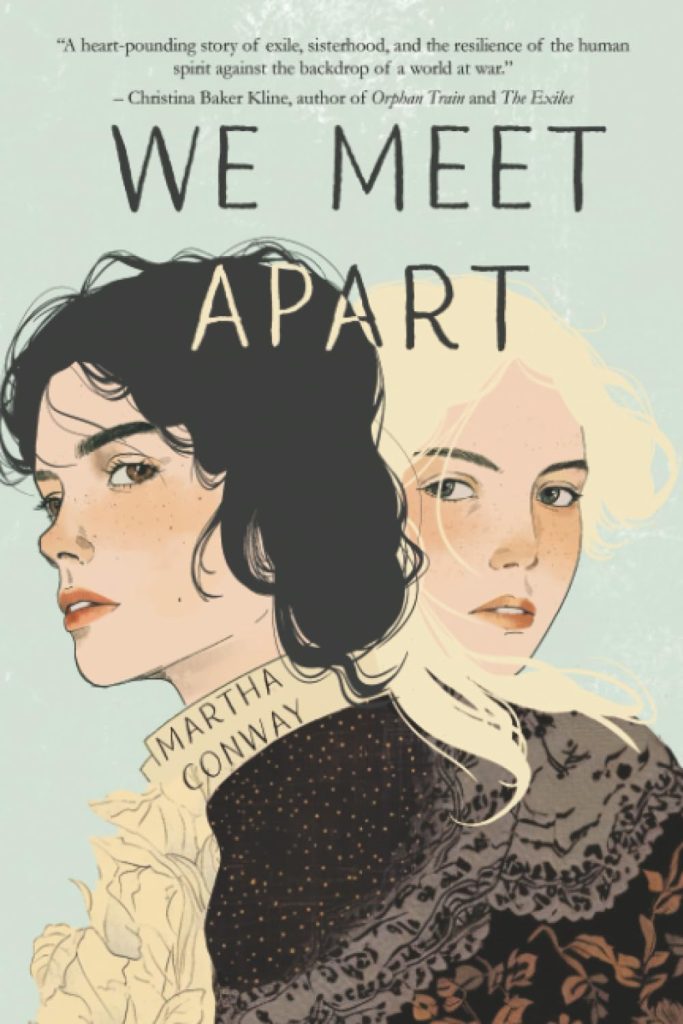
Martha Conway’s We Meet Apart (Regal House, May 5) follows two American sisters trapped in Ireland during World War II—but in separate realities.
Diana Stevan’s A House Full of Strangers (Island House Publishing, May 9), set in the 1940s and 1950s, is a collection of short stories about Ukrainian immigrant landladies, their families, and the people who rent rooms from them.
Helen Parusel’s The Lost Orphans of Lyon (Boldwood, May 16) is a novel inspired by the true story of a remote Huguenot village that saved thousands of children in WW2.
Maelstrom: A Civil War Novel by James D. Best (Queen Beach, June 1) tells the story of the greatest rivalry in American history: that of Abraham Lincoln and Jefferson Davis, showing how each dealt with the same issues, countered the other’s moves, led their respective governments, and used their political powers to sway the outcome.
With Raven Wine: 1153 Orkneyjar, Book 4 in the Midwinter Dragon quartet by Jean Gill (The 13th Sign, June 5) brings to a gripping conclusion this adventurous reimagining of the Viking Orkneyinga Saga, as warrior bard Skarfr and his trader wife Hlif navigate temptation and treachery in Jerusalem, Constantinople and back home in Orkney.
In M. Joy Gorence’s An Unrelenting Tide: The Untold Story of Anne Bonny (Independently published, June 6), rebellious of the role society deems proper for a young woman, Anne Cormac begins her journey in the early 18th century that will introduce her to James Bonny and her future identity as Anne Bonny, the Pirate Queen.
Confidences, by Adela Zamudio, translated by Laura Nagle (Bucknell Univ. Press, June 9) is a story of love, scandal, and religious dogma in central Bolivia at the turn of the twentieth century.
The life of a respected 1870s physician unravels from alcohol and opioid addiction in Betty Brandt Passick’s Anatomy of a Death (BBPcom, Inc. Publishing, June 15).
John Orton’s The Pit Boy (UK Book Publishing, June 16), is the story of his Grandad Teddy, who started down the pit as a trapper boy in 1903 aged 13 after his mother had taken to the drink and abandoned him on a doorstep.
Deadly Ruse, the 14th in the Deadly Series of WWII mysteries by Kate Parker (JDP Press, June 23), concerns the POW camp for German generals at Trent Park House in north London in 1943: British spy Livvy Redmond is brought in to teach sketching to bored German generals and to get them to speak so the listeners in the basement can hear them discuss their secrets.
A historical fiction coming-of-age novel set in 1940s Appalachia, Shelly Chatterelli’s Knowin’ Sugar (Fauve Press, June 23) is an ode to the intertwined natural and human worlds of rural America — a story about what it means to belong to a place and a people, and the wavering line between destiny and choice.
Washington, 1864: with President Lincoln’s reelection in jeopardy, a serial killer runs loose in the Union capital, slaughtering high-ranking officers, and it’s up to renowned detective Allan Pinkerton and his crack team of operatives to hunt the madman down, as told in The Killing Season (VonDen Press, July) by Dennis Keeler.
In Carolyn Morgan’s debut novel Copperopolis (The Book Guild, Aug. 28), set in 1880s Swansea, Wales, a master mariner gambles everything on the deadly copper trade round Cape Horn, while his pioneering wife uncovers the industry’s ruinous toll at home; as ambition and morality collide, their family’s reputation and livelihood hang in the balance.
In Stephanie Simpson’s debut, The Alchemy from Antiquity (Atmosphere Press, Sept. 3), a young Gaulish herbalist from the 6th century journeys to Londinium to train as a midwife and surgeon, working for a progressive military compound general where she dodges raids, plagues, assaults and a conflicted relationship with a high-ranking officer, later becoming a self-actualized woman warrior trained by Pict women during a campaign in Bernicia (Northumberland).
In Manufacturing a Duchess by Tracy Wise (Type Eighteen Books, Sept. 8), when widower Alec Raeburn, Duke of Selkirk, leaves his faltering estate to seek a mate and mother for his young daughter on the London Marriage Mart, his expectations are upended when he meets industrial heiress Aurora Hardcastle, who arrives with ideas of her own.
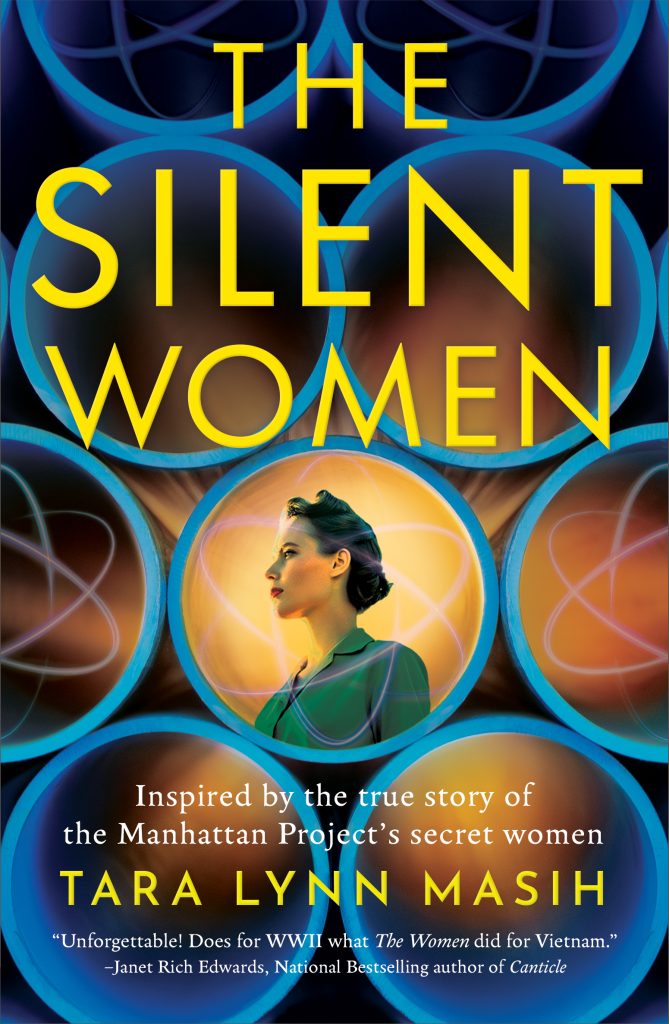
Inspired by the true story of the Manhattan Project’s secret women at Oak Ridge, TN, award-winning author Tara Lynn Masih’s The Secret Women (Storm Publishing, Sept. 9) is a sweeping, absorbing, and deeply human story about chosen family, moral courage, and what it costs to live with the truth.
Patricia O’Reilly’s The Laverys – Passion. Power. Paint (Cape Press, Oct.) set in London, America, Ireland, and Tangier, is a novel about the enduring power of love, the pull of politics and consuming art: one of the great love stories of the 20th century.
After the End by Kelli Christiansen (Sibylline Press, Oct. 20) finds Holocaust survivor Sarah Morgenstern at a precipice, facing the chaos of Liberation with nothing to her name, launching a quest to solve the mystery of the fate of her family, and navigating the uncertainty of a postwar future she had never dared dream of while living under Nazi rule.
Bring Daybreak (Amphorae Publishing Group, Nov. 3) completes Steve Wiegenstein‘s five-book Ozarks historical series with the story of a newspaper editor in the mid-1920s who deals with the resurgence of the Ku Klux Klan, the decline of her prominent family, and her growing attachment to a charming out-of-towner.