Women Run the Business in Ashton Lattimore’s Runner
 BY CAROLINE WILSON
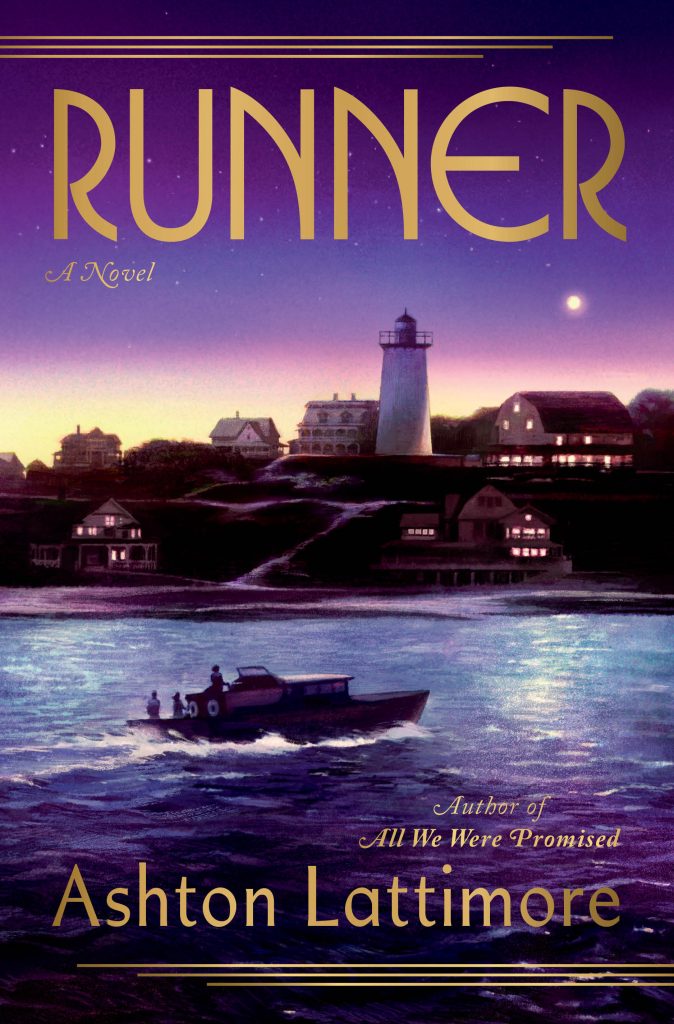
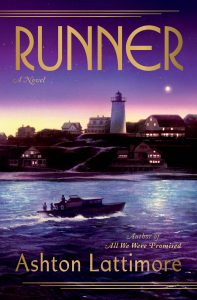
Ashton Lattimore’s Runner (Ballantine, 2026) is a rollicking ride through the Prohibition era Black communities of Martha’s Vineyard and Boston. Lena Jameson, the daughter of a fisherman turned rum-runner, is forced set aside her dreams of escaping Martha’s Vineyard after her father is lost at sea. With her family’s financial future in jeopardy, she must assume her father’s illegal liquor-smuggling operation or lose everything she holds dear. Alongside her brother Walter, her occasional boyfriend Sam, and a sophisticated Boston visitor named Dee, Lena navigates the treacherous worlds of rum-running, organized crime, and hidden family secrets. As Lena and Dee put everything on the line, their journey takes them from Martha’s Vineyard to Boston and Harlem, where Lena must decide how much she is willing to risk for freedom, ambition, and the truth.
Set in 1923, Runner is Ashton Lattimore’s second novel, taking place nearly a century after her first, the mid-19th century set All the Things We Were Promised. Despite the shift in time periods, Lattimore deftly captures the many layers of the Black American experience. Martha’s Vineyard, originally the home of the Wampanoag tribe, was colonized by English immigrants in 1602. The island soon became populated with farmers, fishermen, merchants, Black indentured servants, and the enslaved. Martha’s Vineyard would later become a haven for those escaping enslavement and following abolition in 1863, the town’s Oak Bluffs area would be the only place Black residents could purchase property and live without the restrictions of segregation.
By the late 19th century, Martha’s Vineyard would develop a rich industry in tourism for both white and Black visitors; this history still resonates today. In fact, it was Lattimore’s 2014 trip to the Martha’s Vineyard Museum that planted the seed for Runner. “There was an exhibit about the Prohibition era on the island, and it explained the Vineyard was a popular launch point for rum-runners headed to Rum Row, which was a line of ships stretching all the way from Florida to New England, all loaded with liquor,” Lattimore explained. Since the ships were located three miles offshore in international waters, the Volstead Act could not be enforced; this allowed for untold amounts of illegal liquor to make its way to American shores.
Lattimore specifically cited the museum’s account of the wreck of the John Dwight, which was manned by a crew of fishermen turned rum-runners. In 1923, the steamship wrecked in Vineyard Sound, and the Coast Guard discovered barrels marked “FLOUR” bobbing in the water. They also found the crew, all in life vests, dead in the water, but their bodies bore the signs of being involved in an altercation prior to the wreck. The “FLOUR” barrels were found to contain bottles of Frontenac Ale, a French-Canadian beer. Exactly what happened to the crew of the John Dwight was never discovered, but it speaks to the dangers of smuggling during this period. It also served as inspiration for the mysterious loss of Lena’s father Earl Jameson, an event that has a far-reaching impact on her life.
To write Runner, Lattimore called upon historical accounts of both white and Black women during the Prohibition era. “For Lena, there are surprisingly few historical accounts of Black women who were rum smugglers during Prohibition,” Lattimore said. Instead, Lena’s character “sprang largely from my imagination with a sprinkling of inspiration from Gertrude “Cleo” Lythgoe, who was white. Known as “The Queen of Rum Row,” she primarily worked out of the Bahamas, but had some characteristics in common with Lena—namely her business acumen, her ever-present pistol, and her temper.”

author photo by Joy Masi
While Lena was conceived mostly in Lattimore’s imagination, the character of Della “Dee” Brooks is thoroughly grounded in historical precedent. “Dee’s character was very strongly inspired by two different sets of historical women—the first were the women of Boston’s Black elite in the early 20th century, particularly the ones who formed clubs focused on community service, civic engagement, while also celebrating cultural pursuits like music and art,” Lattimore explained. Specifically, inspiration was derived from Maud Cuney Hare, a member of the League of Women in Community Service, and also a pianist who studied at the New England Conservatory of Music—just as Dee did in the novel. While Dee is classically trained in piano, she has a great love of Jazz music and finds refuge in the vibrant cultural world of Harlem. Lattimore cites Lil Hardin Armstrong, a jazz pianist and the second wife of Louis Armstrong, as the inspiration for this part of Dee’s character.
Composing a historical novel is as much an exercise in research as it is creative writing. Lattimore conducted an immense amount of research into the novel and cleverly included many of these details into the story. “It was fascinating learning about the ways rum-runners tried to evade and outsmart the Coast Guard,” Lattimore said. She uncovered one newspaper story from the era that described the way a fisherman-turned-runner was able to smuggle his illicit cargo back to shore. He “made a run out to Rum Row, and returned to port with liquor hidden underneath later of fresh fish in chopped ice.” For her first run out to Rum Row, Lena employs a similar technique, which saves her from being arrested by the Coast Guard.
In the novel, Lattimore also included the strong opposition to liquor that led to Prohibition. “I read pages and pages of meeting minutes from chapters of the Woman’s Christian Temperance Union on Martha’s Vineyard, and at one meeting they recorded a discussion on hatching a plan to gather evidence against the bootleggers! As I learned more about the WTCU, they took on a more prominent role in the story and in some ways ended up serving as secondary antagonists to Runner’s main characters, right alongside the cops and the rival smugglers.”
Though Runner is filled with adventure and intrigue, its beating heart is the journey of self-discovery that Lena and her family are forced to undertake. Capturing the emotional depth of the subject was often difficult to write. “Since the story begins with the death of the family patriarch, there’s a thread of grief that runs through each of the characters that was at times hard to write,” Lattimore acknowledged. “Each character’s reaction to Earl’s death is very different—Lena launches into a new venture to try to outrun it, her brother leans on drinking, and her mother goes quiet and still in a way that’s almost suspicious. Capturing all those responses nonjudgmentally, and treating them with equal weight and value wasn’t easy.”
Despite the complexity of this task, Lattimore ably presents the reality of losing a cherished loved one. By the novel’s end, Lena’s anguish, guilt, and anger are replaced with hopeful determination. While her dreams of an independent future are not as she planned, Lena creates a new path that allows her to express her strength of character while preserving the important bonds of a loving family.
About the contributor: Caroline Wilson is an architectural historian specializing in the social history of 19th and 20th century architecture. When she’s not reading or writing, Caroline can be found planning her next trip abroad and advocating for the preservation of Modernist architecture. She makes her home in Charleston, South Carolina with her husband and a brood of quirky, but very lovable cats collected from her work in cat rescue.