I am assuming that readers of this article have seen Barry Lyndon and know its plot. On release in 1975, it was a commercial failure in the USA but better received in the rest of the world; its popularity and critical reputation have climbed immensely since then. Hundreds of internet pages have been written about it, and two books.1, 2
The origins of Barry Lyndon lie in Stanley Kubrick’s planned film of the life of Napoleon. However, by the early ´70s, the director, always conscious of commercial realities despite his unremitting focus on making the films he wanted to make, was prevailed upon to shelve the project. A series of biographical epics were failing epically at the box office – not just Waterloo, in which Rod Steiger played Napoleon, but also Cromwell and Nicholas and Alexandra.3 But Warner Brothers did back Kubrick to make a less expensive historical film which would use some of the research for the Napoleon project. He selected as his raw material Barry Lyndon, by William Makepeace Thackeray, a little-known novel first published in 1844.4 Thackeray’s inspiration was the history of the Irish soldier Andrew Robinson Stoney (1747-1810), who gained great wealth by marriage to Mary Eleanor Bowes, widow of the Earl of Strathmore. Stoney tricked Bowes into marrying him via a conspiracy involving a faked duel. On marriage he incorporated his wife’s name into his own. He starved and beat his wife for years in the attempt to acquire her fortune, but was ultimately unsuccessful and died in prison.
The resemblances between this historical biography and the novel/film are obvious – Redmond Barry changes his name to Barry Lyndon on marriage to the widowed Honoria, Lady Lyndon, and flies very high in wealthy society, but then loses everything. The book’s writing style has a knowing dryness wherein we can easily spot how the author makes fun of the vanity of his leading man, through whose egotistical eyes the story is told. Thackeray was married to an Irish woman and was obviously fascinated by the melancholic fluctuations, as he saw it, of the Irish psyche. Much of the book concerns itself with class-conscious humour, which has dated. The name of Barry’s nemesis, his stepson Lord Bullingdon, may have been inspired by the Bullingdon Club, a clique of wealthy Oxford University students.
In adapting the book, Kubrick removed some characters and enlarged others and – as any Hollywood adaptor of a Victorian novel would do – improved the organization of the story, whilst also adding far more emotional heft. The climactic duel between Barry and his stepson was purely Kubrick’s conception and greatly improves on the original, in which Bullingdon only manages to give his stepfather a thrashing.
Another story about a selfish protagonist who negotiates war and poverty, marries for money, but then sees the marriage collapse after the death of a child in a riding accident, is Margaret Mitchell’s Gone with the Wind. The film of the book was, in visual terms alone, outstandingly successful. These visuals are not enough for many people, Kubrick himself among them. As he commented (quoted by Strelow): ‘It’s a really terrible movie.’ Thirty-five years on, did the director approach Barry Lyndon in a competitive spirit? A fascinating speculation.
Warner Bros. insisted that a bankable leading man played the main character. The rather blandly handsome Ryan O’Neal may not have been Kubrick’s first choice, but he turns in a fine performance, conveying more grief and self-doubt than is ever suggested by the bumptious voice of Thackeray’s narration. The script was originally closer to the book, with narration in the first person, and with scenes in Dublin which were never filmed. These changes were made during production. No shooting script was used: everything was organized in the director’s own head.
Kubrick originally planned to film in a converted aircraft hangar in Radlett, near his Hertfordshire home. However, the powerful film industry unions expressed their displeasure at any production outside of a purpose-built film studio. Because the idea of building his own studio was solely intended to maintain control of his unit, Kubrick then made a rapid U-turn and decided to film entirely in the Republic of Ireland. This could readily be justified in terms of the number of period settings available. Other historical films had recently used Irish locations: Lock up Your Daughters (1969) in which Kildare Town stands in for 18th-century London, Sinful Davy (1969) and Ryan’s Daughter (1970).
Aided by expert production designer Ken Adam, a roster of locations was chosen. Initially based in Waterford, from summer 1973 the cast and crew, about 160 people, roved around the countryside, castles and demesnes. Many Irish actors and technicians were employed: some 250 men from the Irish army were recruited as soldier extras, kitted out in costumes sent over from Radlett. At this time the Irish Troubles were at their height, affecting both North and South. In January 1974, a day’s filming in Dublin’s Phoenix Park had to be cancelled due to IRA bomb threats in the city. In February 1974 all production in Ireland was abruptly closed down. It has been widely reported that this was due to a bomb threat, but the truth remains murky. Maria Pramaggiore comments that it may have been a hoax threat made by an extra who had been fired. Following a hurried move, filming continued on English locations for the scenes corresponding to the second part of the story.
This free-wheeling method of production does reveal itself in little mistakes. There is an obvious costume continuity error in the scenes where Barry has temporarily promoted himself from private to lieutenant. When referring to the death of Lady Lyndon’s first husband, the novel states that it happened ‘in the Kingdom of Ireland’, but the film changes that to ‘the Kingdom of Belgium’, Kubrick being unaware that this country did not exist in the 18th century. One character, Lord Wendover, is introduced with the first name of ‘Gustavus Adolphus’ but was later addressed as ‘Neville’. Towards the end, mention is made of the Irish-sounding ‘Doolan’s Farm’, but whilst in the book this part of the narrative happens in Ireland, in the film we see recognizable English locations.
Still, the experience of watching the film is one I always find immensely compelling. We begin with a duel scene filmed in crepuscular light against a mountainous background5; as soon as we start to wonder who is fighting who, the narrator (Michael Hordern) explains that we are witnessing the death of Redmond Barry’s father. The first actor seen in close up is Marie Kean as the widowed Mrs Barry, as she walks through the garden of her Irish cottage on the arm of a would-be suitor, who never appears again. But the first dialogue is the word ‘Killarney’ spoken by Gay Hamilton as Nora Quin at the end of a card game she and Redmond have been playing in a shell-lined room beyond whose window rain is falling. The game leads to flirtation, but then flirtation inevitably leads to disappointment, as Nora is stolen away from Redmond by the comically abrasive English officer, Captain Quinn (Leonard Rossiter).
Although the film has a reputation for slowness, it does cover a period of some 30 years as Barry moves from minor Irish gentry to soldiering to gambling and then to great wealth as the husband of a countess: time jumps are handled with some economy. The narration, dryly written in the third person but closely adapted from Thackeray, streamlines the transitions between scenes. Every shot is beautifully set up. Often the zoom lens works dynamically, as a scene starts on a detail and then widens out to show an artfully arranged composition. For many interior shots, the backgrounds are soft, and indeed at times only the eyes of the actors remain in focus. This short depth of field was a consequence of the wide camera aperture that Kubrick required, due to his insistence that only (or mainly) candles should be used for lighting – an approach to authenticity which, like the frequent zooming, counterintuitively draws attention to very fact that we are watching a film.
As people are static and glorious music plays, whilst the mellifluous narration moves the story along, the effect is rather like being in an art gallery that tells a story. It is far from a silent film, however. Much dialogue is adapted from Thackeray, but there are also newly written scenes. Some of these are excellent: late in the film there is a dialogue between Mrs Barry and the chaplain Reverend Runt (Murray Melvin) which is a superb example of how two people’s long-tried civility can dissolve, when circumstances change.
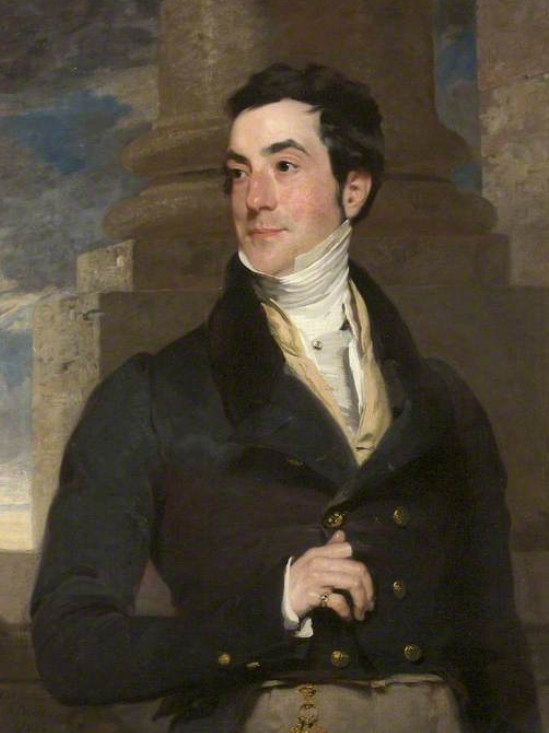
Despite the 18th-century setting, the film’s tone resembles, ultimately, that of late Victorian melodrama, where morality triumphs and women are idealized. In Barry Lyndon only Barry’s mother is a vivid character – the other women are types. The German girl Lischen is used by Thackeray in a farcical mistaken identity scene which is probably the funniest part of the book, livelier than the film’s ponderous little romance between her (Diana Koerner) and Barry. Kubrick’s camera idolizes the beauty of Marisa Berenson, playing Honoria. Although she does good work with her eyes, her vocal variety is limited. Hence the script gives her little to say, and much of that dialogue is stiff. For example, she always calls her first son ‘Lord Bullingdon’ even within the family. Honoria is also a flat character in the book, where her marriage to Redmond takes place only 70 pages from the end. Whilst the film is better structured, she remains a distant ideal, quite different from the vibrant women in films based on 18th– century originals, such as Tom Jones (1963). The death of Barry’s son Brian is glossed over by Thackeray (he finds himself here with an incident at odds with his authorial tone), but in the film there is a poignant, arguably mawkish, deathbed scene and funeral, punishing the protagonist even more severely than Scarlett O’Hara was punished by the death of Bonnie Blue. Strelow calls this, with justification, ‘the most openly emotional sequence in any Kubrick film’. An 18th-century viewer might recognize the look of Barry Lyndon – Hogarth, Gainsborough and others – but be perplexed by its earnest moral tone. Considering how out of key this tone is with the 1970s, it is amazing that this film was funded by a Hollywood studio. Beauty overcomes a lot. This beauty, the notion that the past was more picturesque, as well as more eventful, is what draws a lot of us to creating historical fiction. When writing, I often find myself inserting little homages to Barry Lyndon.
Let the final word rest with Kubrick himself. In a magazine interview published in 1972, he laid down a challenge (which applies to us novelists too): ‘I don’t think anyone has ever successfully solved the problem of dealing in an interesting way with the historical information that has to be conveyed, and at the same time getting a sense of reality about the daily life of the characters.’ (quoted by Strelow). Having identified this problem, Kubrick then made a film which – despite the few shortcomings I mention above – overcomes it in magnificent style.
References:
Pramaggiore, Maria, Making Time in Stanley Kubrick’s Barry Lyndon, London, Bloomsbury, 2015.
Strelow, John, The Big Movie: A Guide to Stanley Kubrick’s Barry Lyndon, independently published, 2023.
Two of these three are quite interesting, but rampant inaccuracy deprives Cromwell of any merit.
Thackeray, W.M., Sanders, Andrew (Introduction), Barry Lyndon, Oxford: Oxford University Press, 1984.
John Strelow proves that the composition of this shot was modelled closely on one in Hell’s Angels (1930).
About the contributor: Ben Bergonzi is an HNS reviewer and a member of the organizing committee for the HNS conference to be held in Ireland this August. His first novel, A Cruel Corpse, published last year, is a crime story with an eighteenth-century military setting. Its sequel, with a theatrical setting, will be published this year.
Published in Historical Novels Review | Issue 116 (May 2026)
When my mother-in-law called to discuss the film Hamnet with her resident Shakespeare professor (me), she noted that, while she had read the novel the film was based on when it came out in 2020, my father-in-law had not. At Paul Mescal’s smoldering first appearance on the screen, he whispered to her, “Is he gonna be Shakespeare?”
To borrow a line from the Bard, that is the question: How did Shakespeare become Shakespeare? It’s telling that, in Maggie O’Farrell’s lauded novel, the poet and his wife, Agnes (the name recorded for Anne Hathaway in her baptismal record), are referred to only by their first names. In Chloé Zhao’s 2025 film adaptation of Hamnet, Shakespeare’s full name is only spoken a few times at the very end, as Agnes seeks her husband in the busy London streets, heading for the Globe Theater to see his new play, which shares a name with their young son who died in 1596.
That loss is one of the few historical details we actually have on record about Shakespeare’s life. His baptism, marriage, death, and the deaths of his family members, are all recorded in Trinity Church in Stratford-upon-Avon. A few other documents include his will, some cheaply printed copies of individual plays, a few real estate deeds and lawsuits, and of course, the folio edition of his plays, lovingly collected and published by his colleagues seven years after his death in 1616.
On these bare fragments of fact a long fictional tradition has been built to explain just how the glover’s son from a small market town in the Midlands became the greatest writer of English plays. Much of this fiction has been presented over the years as biography, beginning shortly after his death, when a poet named William Davenant, who claimed to be Shakespeare’s illegitimate son, shared stories of the poet’s youth and romantic exploits. None of these seem to be based in anything other than Davenant’s wishful desire to become a literary celebrity, but they fed a centuries-long tradition of imagining Shakespeare as larger-than-life in both talent and intellect. Beginning in the 20th century, however, both fiction and biography have countered that romantic image of the lone, divinely-inspired figure of genius, the “Soul of the Age,” with depictions of Shakespeare as a writer-for-hire, inspired more by money than by the classical muses, and (at times) perhaps even a plagiarist of his colleagues’ work.
Chloé Zhao and Maggie O’Farrell’s 2025 adaptation of Hamnet is part of a growing collection of film interpretations not of Shakespeare’s plays (there are hundreds), but of Shakespeare the man. The last three decades have seen several big-budget, full-length film explorations of the biographical Bard, including Shakespeare in Love (1995), Anonymous (2011), and All is True (2018).
The L.A. Times calls the list of Shakespeare-bio films “surprisingly short,” but Shakespeare as a character has made hundreds of appearances in fiction, drama, and film/TV, frequently in contexts that poke fun at our own tendency to think of the Bard as a kind of patron saint of English-speaking culture if not a superhuman figure himself.1 Four “biographical” feature films, however, seem to be inspired by the trend in Shakespeare biography that dominated the first decade of the present century, with bestselling, revisionary treatments of the historical life of Shakespeare from scholars such as Stephen Greenblatt (Will in the World, 2004), Bill Bryson (Shakespeare: the World as Stage, 2007), Charles Nicholl (The Lodger, 2008), Jonathan Bate (Soul of the Age, 2008), and James Shapiro (1599: A Year in the Life of Shakespeare, 2005, and The Year of Lear: Shakespeare in 1606).
Each screen Shakespeare offers us a different take on the psychology of a literary genius. Shakespeare in Love, arguably the most popular of the four films, was designed, according to its producer, Edward Zwick, to be a “behind-the-scenes” comedy about the making of Romeo and Juliet; Kenneth Branagh’s hugely successful Henry V and Much Ado About Nothing had renewed interest in Shakespearean film in the 1990s.2 This Shakespeare is an incurable romantic who struggles to reconnect with the youthful passion that inspired his poetry. The goal of this film’s dazzling script, written by the late playwright Tom Stoppard from a story by Marc Norman, is to create a Shakespeare not out of historical fact but out of his own words in a playful, knowing way. Joseph Fiennes’ Shakespeare is moony and boyish, an opportunistic actor/writer who only becomes serious about his work when he learns about the real price of love from a brilliant young woman, Viola de Lesseps. Gwyneth Paltrow’s heroine is a complete fabrication; her plan to disguise herself as a boy to play the role of Romeo in Shakespeare’s new play (and win the heart of the playwright at the same time) reflects our own modern desire to give women a more active part in the cultural world of Shakespeare’s theater. While the romance of Shakespeare in Love is pure fantasy, it does offer a surprisingly accurate depiction of the practical aspects of play writing, rehearsal, and production, and possibly significantly encouraged public interest in the “authentic” productions of the newly-built Shakespeare’s Globe Theatre in London.
The less said about the 2011 film Anonymous the better; its fantasy Shakespeare is a “drunken oaf,” an extortionist and murderer who frames the idealistic courtier Edward de Vere, who has been allowing the poet Ben Jonson to claim authorship of his brilliant plays. Director Roland Emmerich and writer John Orloff have combined almost every known conspiracy theory about the Shakespeare “authorship question” into one fever-dream of a historical thriller. Rafe Spall’s handsome but amoral Shakespeare is the equivalent of a modern day “tech bro” – an amoral, narcissistic self-promoter who succeeds in a new form of mass media by exploiting the talent of more idealistic, less ruthless artists.
A more realistic and heartfelt attempt to explain Shakespeare’s life drives Kenneth Branagh’s All is True. The 2018 film, in which he directed himself as the poet, finds 49-year-old Will in retirement at his home in Stratford in the year 1613. Branagh, arguably the most successful Shakespearean actor of the late 20th century, was inspired by the same question that inspired O’Farrell’s Hamnet: what was the link between the death of Shakespeare’s only son and the play that shared his name? Branagh chose to answer this question in retrospect, having the playwright return home after the burning of the Globe Theatre, to reconnect with the memories of the son he has mourned for 17 years.3 Again, the women of Shakespeare’s life take center stage in this version, as the sad, bewildered poet rekindles his love for his wife, Anne (played by Judi Dench), and learns that his memories of his son as a brilliant young poet were false – his daughter Judith was the actual author of the boy’s poems. The plot is as much about his adult daughters’ efforts to forgive their father for his long absences as it is about their father’s attempts to mend his own relationships. Nostalgic visits from his affectionate patron, the Earl of Southampton (played by Ian McKellen) and his friend and rival Ben Jonson (Gerard Horan), create an elegiac mood, which is lightened by the witty dialogue by screenwriter Ben Elton, Branagh’s frequent collaborator, who also created a comic TV series about Shakespeare’s home life, Upstart Crow (2016-20).
Critics were respectful of the film but noted that it was largely a vanity project for Branagh: an opportunity to work with Dench and McKellen, two other towering Shakespeareans near the ends of their careers, and to imagine the legendary historical figures as ordinary aging family men and women, grappling with domestic rather than literary concerns. All is True and Hamnet share the impulse to “humanize” Shakespeare by presenting him in the context not of the stage but of his lovingly re-created home and neighborhood. Branagh’s Shakespeare spends most of his time renovating his garden and eating meals with his family, reveling in the peace and quiet of sleepy Stratford; Zhao’s Shakespeare, however, is a caged tiger, a young man bursting with ambition who finds the cozy confines of that hometown stifling.
Zhao and O’Farrell’s Agnes is the invention of Hamnet, while their Shakespeare adheres closely to the few facts that we know about him. That even less historical evidence outlines the life of his family didn’t discourage renowned feminist scholar Germaine Greer from convincingly imagining Anne’s life in Shakespeare’s Wife, the 2008 nonfiction bestseller that was an immediate influence on Maggie O’Farrell when she chose to focus on Anne/Agnes in Hamnet.4 The film’s star, Jessie Buckley, quietly but powerfully reveals Agnes’ inner and outer lives as a mother, herbalist, and healer whose place in her own society, while invisible to the men of her world, is in its own way as consequential as the poet’s status in the literary world.
Will, played by Paul Mescal, is a serious, kindly adolescent who loves his mother and siblings and resents his abusive, overbearing father; he grows up quickly when Agnes (eight years his elder) decides that he will be her path out of her stepmother’s grim farmhouse and encourages Will to impregnate her. While she adapts joyously to Shakespeare’s family home and to motherhood, her husband chafes at the thought of life as a glovemaker like his father. In O’Farrell’s imagining, Agnes is the one who (with the help of her devoted brother Bartholomew) engineers a plan to send Will to London to seek orders for gloves from the theaters. A flashback scene that is not in the novel depicts the happy family – Agnes, Will, and their three children – performing plays in their back garden, explaining Agnes’ insight that such a life would make her discontented husband happy.
Mescal’s gentle “beta male” version of the poet, a doting family man who offers his wife friendship as well as status, resonates with today’s tastes in male protagonists. One specific change from the book to the movie supports this characterization of Shakespeare as a modern ideal: the novel’s Agnes is angrily aware that her husband is having affairs in London, while the film’s Will remains a faithful partner.5
Greer and other scholars of women’s lives have recently developed a historical portrait of the influential community of hardworking women that organized and even financed much of Elizabethan society, although (until recently) invisible to historians of the period. The “girl boss” version of Shakespeare’s mostly-female family is very much of the present moment, and may account for the enthusiastic embrace the film has received from audiences and critics alike. And although its Agnes is a fiction, the biography Hamnet presents may well be the most accurate of all. At the time of this writing, the film has won numerous film festival awards and is expected to dominate the Academy Award and Golden Globes this spring.
All these examples remind us that the literary works we prize are inseparable from the human imaginations that created them, and that our own desire to understand those imaginations requires us to become storytellers in our own right, inventing the details of a long-past life when they are not available to us in documented form. The sights and sounds of the past that film adds to those stories give us a unique opportunity to empathize with the men and women whose cultural contributions remain with us today.
References:
Shrodt, Paul, “The surprisingly short history of movies about Shakespeare,’ L.A. Times, 5 December 2025. https://www.latimes.com/entertainment-arts/awards/story/2025-12-05/hamnet-movies-about-shakespeare-guide
Zwick, Edward, Hits, Flops, and Other Illusions: My Fortysomething Years in Hollywood, New York: Simon & Schuster, 2024, p. 116.
Kellaway, Kate, “Maggie O’Farrell: ‘Having to bury a child must be unlike anything else,’’ The Guardian, 22 March 2020. https://observer.com/2019/05/kenneth-branagh-all-is-true-shakespeare-vulnerable-side-interview/
Riefe, Jordan, “Kenneth Branagh on Finding Shakespeare’s Vulnerable Side as Star and Director of All Is True,” The Observer, 11 May 2019. https://observer.com/2019/05/kenneth-branagh-all-is-true-shakespeare-vulnerable-side-interview/
Shachat, Sarah, “Hamnet Changes the Maggie O’Farrell Novel’s Approach to Time,” Indiewire, 30 November 2025. https://www.indiewire.com/features/general/hamnet-movie-book-differences-hamlet-1235162820
About the contributor: Kristen McDermott is a Professor of English at Central Michigan University and reviews for HNR. She’s authored books on Renaissance drama and entries in The Dictionary of Literary Biography. Her in-progress novel, Stratford’s Will, won an Honorable Mention in the 2024 HNS First Chapters Competition.
Published in Historical Novels Review | Issue 115 (February 2026)
‘Throw away the history books and behold the majesty.’ This was BBC Movies’ review of Shekhar Kapur’s epic: Elizabeth: The Golden Age (2007).¹ The film was, by Kapur’s own admission: ‘…based on mythology. It is the story of a queen who became a myth.’² The defeat of the Spanish Armada in 1588 has remained memorable for over four centuries partly for this reason: it helped create the legend of Elizabeth I as an icon. ‘Not an earthly queen at all’, to use the words of one of Elizabeth’s ladies at Tilbury in Elizabeth I: A Novel (2011) by Margaret George. In this perceptive fictionalised biography, when Elizabeth appears in silver armour over her white dress before making her famous speech to the troops, she muses: ‘The look on their faces showed me that I had utterly transformed myself from the woman, albeit Queen, they served every day into something higher…’ Kapur went a step further and saw her as on the path to divinity, The Golden Age coming after the critically-acclaimed Elizabeth (1998), in a projected series which would end with a third film in which: ‘Elizabeth truly becomes divine.’³
To reinforce the interpretation of Elizabeth as icon, she is often depicted as central to the success of the fleet in battle, much as she appears in the famous ‘Armada Portrait’ commissioned to celebrate the victory immediately afterwards. In fact, she took no part in either campaign or command, though she did deliver a morale boosting address to her land forces at Tilbury. The problem with the Tilbury speech as a dramatic pivot around which to hang the triumph of England’s admirals is that it occurred eleven days after the crucial sea battle of Gravelines, at a time when the fleet had only just begun returning from pursuing the Armada as far as Scotland, and news of the victory was still trickling in. No-one really knew whether the victory had been decisive; the Armada had not been sunk, and the Duke of Parma remained with his invasion force massed near Dunkirk. So, novelists and film directors have frequently succumbed to the temptation to shift the timing, and place the speech before the battle, or even have Elizabeth dictating the action.
In the movie Fire Over England (1937) (loosely based on the novel by A.E.W. Mason), the heroic Michael Ingolby (Laurence Olivier) returns from Spain to find the Queen at Tilbury where he reveals the names of Catholic conspirators. She knights him on the spot, the would-be traitors are shamed into declaring their allegiance to her and accompanying Michael on a mission, masterminded by the Queen, to confront the Armada, then massing off the coast of England, and attack it with fireships. Of course, an attack with fireships really did occur and succeeded in breaking the Armada’s formation, but this happened the night before the battle of Gravelines, and off Calais, not the cliffs of Dover. It looks as if Kapur took his history from Fire Over England rather than the textbooks, because there’s a very similar but even more embellished scene in The Golden Age. Elizabeth (Cate Blanchett) appears in full armour astride a white charger to give her rousing speech to thousands of awe-struck soldiers who fall to their knees. Shortly afterwards, Sir Walter Raleigh (Clive Owen) leads fireships to set the Armada galleons ablaze, which come to grief at the foot of the cliffs of Dover, in the midst of a thunderstorm, while Elizabeth looks on from the heights in her shift, transfigured in white light. The New York Times called the film: ‘A kitsch extravaganza aquiver with trembling bosoms, booming guns and wild energy…’⁴ Bethany Latham neatly summed up the film’s impact in her book Elizabeth I in Film and Television (2011)⁵: ‘This focus on spectacle worked for productions from Hollywood’s golden age, but it does not fit well with the pretension and rampant symbolism of Kapur’s idiom.’⁶
Somehow, the history became almost altogether forgotten in The Golden Age. Raleigh was nowhere near the action in the defeat of the Spanish Armada, and the rest of the screenplay follows Kapur’s preoccupation with myth over reality. Interestingly, Graham Greene writing for The Spectator in 1937 acknowledged that Fire Over England was ‘well-directed and lavish’, but criticised its lack of historical realism. The production has ‘strayed out of history’ he said, and certain scenes were ‘absurd and embarrassing’.⁷ But while Fire Over England was a phenomenal success at the box office, The Golden Age was not (despite its stirring music, superb sets, fantastic CGI and a strong performance from Blanchett). Why? Probably because the former was released as part of a drive to engender patriotic fervour when fascism was on the rise in Germany, and there was not the same appetite for history mash-ups and British triumphalist myth-making in 2007.
This leads on to another aspect of the legend that has grown up around the Spanish Armada’s failure to invade England in 1588, and the mauling it received at the hands of the ragtag fleet commanded by Howard and Drake: that of the birth of Britannia’s rule over the waves. ‘For the Victorians, the Armada victory marked the start of the British Empire,’ said Lucy Worsley in her excellent myth-busting docudrama: The Spanish Armada (2020).⁸ In the nineteenth century, stirring stories involving Drake’s adventures were all the rage, such as Westward Ho! (1855) by Charles Kingsley. For Elizabeth, back in the sixteenth century, an empire was purely aspirational (based largely on Sir Walter Raleigh’s claim to Virginia in her name), but the defeat of the Armada did demonstrate that England had faster and more manoeuvrable ships than Spain and Portugal (then the global superpower, united under Philip II). It also showed that English guns and tactics were better, and it led to an appreciation that the navy was crucial to Britain’s survival and ambitions on the world stage.
From the success of the English fleet in battle (albeit defensive and without many of the Armada’s ships taken or destroyed in combat), there developed yet another legend: that of the triumph of freedom over tyranny. This was the message that underscored Fire Over England, and which was amplified in The Sea Hawk (1940)⁹ produced after the start of WWII. In the later film, Geoffrey Thorpe (Errol Flynn) is an English privateer on a secret mission to seize the Spanish treasure fleet who is later captured, tried by the Inquisition, sentenced to labour on the galleys, escapes, rescues his true love (serving as a maid-of-honour to the Queen), unmasks a Spanish collaborator amongst the royal advisors, and reveals the Spanish plan to invade England in time for Elizabeth to order the building of a great defensive fleet. In a superb performance as Elizabeth, Flora Robson declares: ‘When the ambition of one man threatens to engulf the earth, it becomes the duty of all free men, wherever they may be, to affirm that the earth belongs not to any one man, but to all men…’
This idea of the fight against the Spanish Armada being a fight for freedom has been taken up many times. Indeed, the words: ‘Let tyrants fear’ appear in the most famous version of the speech which Elizabeth is reputed to have made at Tilbury. It is this version, the ‘heart and stomach of a king’ speech, that Elizabeth delivers inspirationally in Alison Weir’s novel The Marriage Game (2014).¹º The speech was made much of in The Golden Age, a film in which the fight against tyranny is a recurring theme, for example when Elizabeth says: ‘God forbid it [the Armada] succeeds, for there will be no more liberty in England of conscience or of thought.’ Kapur saw Philip II as: ‘a man committed to a sense of purity… a certain singularity… [which] can give rise to fundamentalism… Whereas Elizabeth… her idea of faith was that it can encompass all faiths… that’s what we need now…’¹¹ The ‘now’ when Kapur said this was 2009, in the post-9/11 years that saw a growing appreciation of the dangers of extreme fundamentalism.
As terrorist threats on the scale of 9/11 have receded from the headlines, and fear of invasion for most of the free world is no longer an immediate concern, what is the relevance now of stories relating to the defeat of the Spanish Armada? Is anyone still interested? Thankfully, yes. Such stories seem to have come of age, not concerned with recycling myths about Elizabeth as Gloriana, or Anglophone countries as bastions of freedom, but with presenting a balanced view of what actually happened through different perspectives — with telling truth through fiction.
The distinguished naval historian J.D. Davies has recently written a cracking good novel, satisfyingly based on the historical facts: Armada’s Wake (2021). I asked him whether there were any underlying themes he wished to explore, such as religious intolerance v freedom of faith; tyranny v self-determination; and the birth of British national identity. ‘All the above!’ was his answer. ‘But one thing I was determined to do from the outset was avoid the nationalistic triumphalism that characterizes many accounts of the Armada… hence having one of the central characters in Armada’s Wake as a galley slave in the Armada, allowing readers to view the campaign from the Spanish perspective.’ Davies shows a multitude of viewpoints in the novel; the events are seen through the eyes of different members of a family divided by faith, circumstance and prejudice. There’s even a Catholic widow formerly married to a Spaniard brought to trial accused of witchcraft. Another novel which offers a balanced perspective is John Stack’s action-packed Armada (2012) which follows the path of a secret Catholic who is a trusted officer in Drake’s fleet, as well as one of the Spanish commanders whose determination, at the end of the story, is to ‘take the fight back to the English, for God, his King, and Spain.’ In fact, the fight did continue — two more armadas were sent by Spain only to be scattered by storms, and there was an unsuccessful Counter Armada launched by the English; all have become buried in history.¹²
There’s one other docudrama worthy of note and that’s Dan Snow’s well-researched Armada: 12 Days to Save England (2015).¹³ The events and battles are followed day-by-day with the help of an army of eminent historians, though there’s a bit of sleight-of-hand to reinforce the drama of everything hanging on a knife-edge. (I’m sure that Drake didn’t need to capture the Rosario in order to ‘discover’ that Spanish gun-carriages were designed for land warfare — he’d been attacking and seizing Spanish galleons and ordnance for years!).
Will the story of the Spanish Armada continue to be retold? I hope so; it’s thrilling and endlessly fascinating. As Lucy Worsley says: ‘It has a powerful legacy… [It] gives us the confidence to believe in ourselves.’
About the contributor: Jenny Barden is a historical novelist who has at various times been a farmer, artist and city solicitor. She is published by Ebury Press, and has just finished a psychological thriller set at the time of the Spanish Armada.
Notes:
¹ BBC Movies review, 2 November 2007
² Wild Films India interview with Shekhar Kapur, YouTube, uploaded 31 August 2024 (Translated from Hindi. Kapur went on to say ‘…like Ram and Sita’s story’)
³ Empire Magazine interview with Shekhar Kapur, YouTube, 14 September 2009
⁴ New York Times review, 12 October 2007
⁵ Bethany Latham, Elizabeth I in Film and Television – A Study of the Major Portrayals ⁶ Further evidence of Kapur’s fascination with Fire Over England is the curious fact that both films feature an assassination attempt upon Elizabeth with an unloaded pistol. This never actually happened. (For history nerds, John Somerville, a Catholic, did plan to kill Elizabeth with a pistol in 1583 but was arrested before he could attempt anything.)
⁷ The Spectator review, 5 March 1937
⁸ Royal History’s Biggest Fibs with Lucy Worsley, BBC TV Series 1:2, The Spanish Armada
⁹ The Sea Hawk took its name from an earlier popular novel by Rafael Sabatini to which it bore no resemblance.
¹º In Armada’s Wake by J. D. Davies there’s a very witty take on the speech in which the more famous version is delivered extempore by an actor, very few people being able to hear what the Queen actually said, and this version is written down by the Chaplain to Lord Essex who’d been called away from hearing the Queen’s oration by an urgent visit to the jakes!
¹¹ Empire Magazine – ibid
¹² A point made in Worsley’s docudrama, though she did allow Luis Gorrochategui Santos to bang on at length about the Counter Armada, someone who seems to be on a single-handed mission to promulgate a legend about that with as much zeal as the Elizabethans devoted to celebrating Flavit et Dissipati Sunt in 1588!
¹³ This excellent BBC mini-series is marred only by the appearance of Anita Dobson as Elizabeth wearing make-up applied with the expertise of a five-year-old and looking (at fifty-four) much older than her lady-in-waiting Blanche Parry (who would then have been at least eighty and going blind!)
Published in Historical Novels Review | Issue 114 (November 2025)
I love horror movies, especially the classic Hammer or Universal horror films featuring the likes of Christopher Lee and Bela Lugosi. My Saturday evenings are usually spent watching campy flicks like Dracula’s Daughter or Curse of the Werewolf. For me, the best ones have great origin stories explaining the monster’s motivations.
Horror is such an intriguing genre! Monsters drive the exploration of taboo topics. Vampires serve as a metaphor for sex. Frankenstein deals with science gone awry. Mummies and ghosts speculate on life after death. Werewolves are all about the wild and untamed beasts dwelling within us all. Horror is a safe space to experience these things, which is why I love Ryan Coogler’s Sinners. The movie’s horror flows organically from the historical context in which it is set. Neither overshadows the other. And with a variation of the monster’s motivation, a fresh new take on vampire films emerges.
Horror flicks written, directed, produced, and/or featuring Black actors are gaining traction. Though I’m not a fan of the blaxploitation films of the 1970s, Blackula, starring the late Willam Marshall (who also happens to hail from my hometown of Gary, Indiana) is a horror favorite. Aside from the awe of seeing a Black vampire, the origin story was different: Mamuwalde, an African prince, and his bride visit Count Dracula to stop the slave trade in the 1700s. Dracula, of course, refuses, and turns Mamuwalde into a vampire. The rest of the story takes place in then-contemporary Los Angeles, following the same premise of the vampire eating his way through the populace while seeking to reunite with the reincarnation of his lost love.
Black horror also tends to skew a bit to societal issues affecting Black people that are almost as terrifying as the monsters shown on the screen. Count Dracula in Blackula is not only a vampire, he’s also a slave trader. Sinners uses the vampire genre as the canvas to address both fictional and societal horrors.
Sinners is the story of Elijah and Elias Moore, infamously known as the Smokestack Twins (one is called Smoke; the other is Stack) in their hometown of Clarksdale, Mississippi. It is set in 1932 during Prohibition, the Great Depression, and the Great Migration, the time when many Black Americans left the Jim Crow South to find opportunities in the north and west. My grandparents did the same, leaving for midwestern steel mills. The Clarksdale depicted in the film, according to friends, is just as their grand- and great-grandparents described: barefoot and pregnant sharecroppers picking cotton under a blazing sun. Blues music and attending church, salves for the farmers’ souls and spirits. Automobiles and horse-drawn wagons crowd the wide dusty road in town. And of course, there’s the Klan. The Smokestack Twins did the opposite, returning south after a stint in Chicago, and laden with a suspiciously large supply of money and booze. Better to be around the devil you know, the twins offer, as the reason why they came back. Their goal: make money using liquor stolen from the Mob to open a juke joint. With a suitcase full of money, the twins purchase a sawmill from a white man (with a promise to shoot any of his Klansmen friends who cross onto their property). Then Smoke and Stack get to work. They employ an ensemble of friends and family to assist with the set up, including their cousin, Preacher Boy, who longs to leave the South for a chance to play the blues on a guitar he believes belonged to the twins’ deceased father.
Both Smoke and Stack are played by Michael B. Jordan (Creed, Black Panther) who successfully delineates the two on the screen through costuming (one is accessorized in red while the other dons blue), demeanor, and speech. Smoke presents as the leader and older brother whose mind is set on business and protecting his foolhardy twin. When some of the sharecroppers in the juke can only pay with wooden nickels, Smoke insists on cold hard cash. Stack, on the other hand, is the slick-talking one with a smile on his face and a ready quip on his lips. He tempers his brother’s anger about the wooden nickels, reminding him that the farmers need this brief respite from the cotton fields.
The twins’ disparate personalities are defined by their interactions with the people they collect for the juke. Smoke demonstrates his business savvy when he teaches a young girl to negotiate over how much he should pay her for watching his truckload of booze. He haggles over prices with the Chows, a Chinese-American family who run a couple of general stores in town. Without a second thought and in full view of onlookers, Smoke shoots two men attempting to steal his truck. His tough exterior cracks just a bit when he reunites with Annie, a Hoodoo practitioner and the mother of his deceased child, who agrees to fry fish at the juke.
In a different part of town, Stack and Preacher Boy secure the labor for transforming the mill. Veteran actor Delroy Lindo plays Delta Slim, a hard-drinking blues musician who agrees to join them in exchange for a bottle of ice cold beer and a promise of more. Stack’s jocular personality and dirty innuendos scare up a few more hands from the fields to clean and set up the place. Stack is also avoiding heartbroken Mary, a married white woman whose half-Black mother cared for the twins after their mother died. Just like with Smoke, Stack’s interaction with Mary shows the audience a different, more serious side of him: he struggles with shunning the woman he loves in order to protect her from those violently opposed to interracial relationships at the time.
A brief interlude between the preparation and opening of the juke joint introduces the audience to Remmick the vampire. As the sun begins to set, his smoldering body drops from the sky like a lead balloon in front of a cabin in the middle of nowhere. He begs the cabin’s inhabitants to save him from a group of Choctaw vampire hunters. When the hunters subsequently arrive at the cabin, their warning to not let the stranger in is too late. With this, some vampire lore is retained. The vampires can’t be in sunlight. They must be invited inside. Their bite/saliva turns their victims into vampires. The difference in this iteration is that blood is not what draws Remmick and his two new converts to the juke. It’s Preacher Boy.
In what I believe to be the most mesmerizing part of the film, the blues Preacher Boy plays summons the spirits of musical ancestors. Shadows of African drummers, old school hip-hop artists, Chinese folk and Native American tribal dancers appear among the juke’s patrons. But Preacher Boy’s power also summons the vampires. Remmick is a collector of memories and talents. His desire to possess Preacher Boy’s musical gift is a nod to the historical appropriation, and at times outright theft, of Black music. When the twins heed Annie’s warning and refuse entry to the vampires, Remmick uses his Irish background (though there are some hints that he is a much older vampire) to try and convince everyone they are on the same side when it comes to American oppression: the enemy of my enemy is my friend, so to speak. Yet it is one twin’s weakness that ushers the monsters inside.
Surprisingly– or maybe not– the title of the movie applies to more than just the vampires and the Klan, who make their expected appearance near the end of the film. Preacher Boy eschews joining his father in the pulpit (hence his nickname) for a chance to play at the juke. Delta Slim is an affable alcoholic. Pearline, who caught Preacher Boy’s eye, and Mary cheat on their husbands in the back rooms of the juke. Bo Chow is insinuated as a gambler.
With all that, can the term antihero can be applied to the Smokestack Twins? Antiheroes are deeply flawed main characters we’re supposed to root for. They straddle the line between right and wrong. In their minds, the ends justify the wicked means they are engaged in to accomplish their goal. But the dirt the twins are known for happens off-screen and in their past. The audience is led to believe the twins are bad, that there is an ulterior motive to opening the juke joint. But without spoiling the movie, I wonder whether the ending makes them good or still bad, but justified.
The Smokestack Twins aren’t completely bad, though. The pair served in World War I. Given their actions near the end of the movie, they couldn’t have been cooks or truck drivers, roles Black soldiers were mostly relegated to. Though it’s not mentioned in the film, I like to think the twins were Harlem Hellfighters, the 369th Infantry Regiment of the New York National Guard who spent more time on the front lines than any other American regiment during the war. Henry Johnson, a real-life Harlem Hellfighter, was one of the first African-Americans to earn France’s highest award for valor, and was posthumously awarded the Medal of Honor. I wonder if Smoke’s confrontation with the Klan is an homage to Johnson and the Hellfighters. Or maybe I’m trying to impute some goodness onto them.
But that’s just one bright spot. The twins killed their father. They rubbed elbows with the Chicago Outfit, alluding to the provenance of their suitcase full of money and truckload of quality booze, not the cheap stuff brewed in bathtubs at the time. Their devilish reputation precedes them. But there are reasons for their actions, and the audience feels justified in rooting for their redemption and/or success, even before the vampires arrive. Much like the George Clooney character from Robert Rodriguez’s From Dusk Til Dawn, the Smokestack Twins come into the movie with heavy baggage and then become the heroes needed to fight off the actual evil in the movie. Whether or not that evil is solely the vampires is debatable.
Given the time period and setting of Sinners, there is a lot of history and themes to unpack that can’t fit in this space. Even the lyrics in the two musical portions– one by Preacher Boy and the other by Remmick– are metaphors for something much deeper than what’s presented on the screen. This horror movie is not solely a vampire flick touching on the usual vampire tropes and themes. Contrast this to the long-awaited (third?) remake of Nosferatu, which was visually stunning, but basically the same story as its predecessors. One viewing of Sinners isn’t enough to catch everything the film slips to the audience. Though the movie is still fairly new, it should be added to the canon of excellent horror storytelling.
About the contributor: Michelle serves as the Registration Chair for the HNS North American Conference and is a Board member of Midwest Writers Workshop. Her debut novel, American Ghoul, was released in 2024 by Blackstone Publishing.
Published in Historical Novels Review | Issue 113 (August 2025)
If there are multiple films set in 1750s Jutland, I’m woefully uninformed about them, so when I came across The Promised Land (titled Bastarden, “the bastard,” in Danish), its unique historical location was a draw. Based on the novel Kaptajnen og Ann Barbara (The Captain and Ann Barbara) by Danish author Ida Jessen, which was itself based (loosely) on the life of Captain Ludvig von Kahlen, The Promised Land has been described as a Nordic Western epic.
The film opens with titles across a forbidding landscape detailing that the king (Frederick V) wants settlers lured to the vast heath of Jutland so the colony can increase his wealth, but this is a land plagued by outlaws, brutal elements, and barren soil. All who have attempted cultivation have failed miserably: “The heath cannot be tamed.” The scene switches to the dimly-lit interior of the “Poorhouse for Veterans,” where Silesian war veteran Captain Ludvig Kahlen (Mads Mikkelsen) fastidiously polishes a medal before pinning it to his uniform and striding to the Ministry of the Treasury. He has a plan for colonization and an innovative crop to cultivate, which the foppish ministers scoff at from this “presumptuous soldier in a flea-ridden uniform.” But when he notes he’ll finance the venture himself using his pension, they agree; it’s a win-win. They’re out nothing when Kahlen fails, and meanwhile they can pretend to the king that they’re pursuing the royal pet project of settling the heath. In return for success, Kahlen wants a noble title, estate, and servants.
The film warrants the Western designation for a few reasons: it is technically “West”– Jutland makes up the western, continental peninsular portion of Denmark, as well as parts of what were traditionally German territory. There are settlers sent out into a vast, difficult frontier to homestead, and interactions with Taters (Danish Travellers, or Romanisael) and their nomadic existence on the heath evokes the dynamic between the Native Americans of the American West and its early settlers. There are outlaws, sudden violence, men on horses with guns, campfires on open range. The film’s score is orchestral, usually swelling or ominous strings underscoring sweeping cinematography that showcases both the harshness and beauty of the heath, and its emptiness, much as the American West is often shot in films. Against this background, Kahlen, alone, augers the soil again and again, through all kinds of weather, day and night, testing, seeking. He finally finds what he’s looking for and begins building his house (Kongenshus, “King’s House,” an ostentatious name for a building barely distinguishable from his barn) with a motley crew of men from the local village and two runaway “tenants,” Johannes and his wife, Ann Barbara. They’re on the lam from a cruel local landowner. Though feudalism is supposedly past, the plight of Johannes (Morten Hee Andersen) and Ann Barbara (Amanda Collin) illustrates that it’s actually de facto alive and well. A Tater child (Melina Hagberg) and kind-hearted local priest (Gustav Lindh) complete Kahlen’s immediate circle.
Of the heath, novelist Jessen states that Kahlen is “going to war against everything that’s fundamental to that place.” She was “captivated” by this outsider who not only seeks to prove something, but also to become something other than what he is, something he simultaneously hates and covets: noble and wealthy. “The heath is a fascinating space because it is completely empty,” Jessen says. “There is a wonderful liberation in being allowed to retreat to such a space, where there is only the necessary.”1 The novel is intentionally unsentimental, “showing” not “telling”; the characters have no interior monologues, thoughts, flashbacks. It’s an approach that translates well to film, and a choice Jessen made for a reason: unlike we moderns with our boundless comforts and free time to constantly complain, this is a period and a place that doesn’t lend itself to navel-gazing or talking about how everyone feels – there’s simply too much work to be done and adversity to overcome in order to survive. There isn’t time or effort to be spent on anything that isn’t, as Jessen puts it, necessary.
Mikkelsen shares an understanding of how this historical mindset informed his character in particular and character interactions in general: “If you live in the 1750s, you don’t come in from a hard day’s work and talk about your day. That kind of behavior belongs to now. It doesn’t belong to then.” Thus, there are long stretches with little dialogue, especially out on the heath, where Mikkelsen excels at conveying the essence of stoic determination through expression alone. Kahlen is single-minded, unfailingly stubborn, confident in his abilities and his sense of righteousness. He is also hard. One isn’t meant to like him, at first. He will need to be fully revealed; he will need to grow. It’s a near-lost skill called character development.
Yet even in the beginning, he appears to much better advantage when compared to his adversary, Frederik (de) Schinkel (Simon Bennebjerg). Schinkel is the local landed baron; his father scraped from humble origins to win wealth by hard work and perseverance (from “two cows and a plow”), just as Kahlen intends to do, but Schinkel has always been spoiled by privilege. Schinkel insists on being called de Schinkel as he thinks it sounds more aristocratic, and his megalomania is all-consuming. Bennebjerg affably delivers insult after insult from an eminently punchable face. From the beginning, though Kahlen’s attempt to settle the heath costs Schinkel nothing but ego, Schinkel cannot abide it. Schinkel insists the land is his, not the king’s, and uses his position as a county judge to make his whims, however twisted, the law. He sabotages, he rapes, he tortures, he murders with impunity. And most of all, he cannot cease to wage his self-imposed battle against a man who refuses to bow to his will. As Mikkelsen says of Kahlen, “If he could bend his morals just a little, life would be so much easier for him, but he won’t do it.”2 This leads to a seemingly endless round of setback after setback after setback, to the point where Kahlen’s striving begins to feel Sisyphean — every step forward is met with three back — and yet he persists. Every man has his breaking point, and the viewer is left wondering how much this man, no matter how indomitable, can take, or what he’s willing to sacrifice in the obsessive pursuit of his goal. Nordic films aren’t known for happy resolutions — where will all this end?
The contrast between Kahlen’s hardscrabble rusticity on the heath and the ease, beauty, and sophistication of Schinkel’s estate are aptly conveyed by the cinematography, which focuses on suffused candlelight for evening scenes (some have compared the film’s look to Kubrick’s Barry Lyndon) and bright, elegant interiors during the day. Among Schinkel’s lovely possessions is his noble cousin, Edel Helene (Kristine Kujath Thorp), who loathes him but is powerless to stop the engagement her father has forced her into … unless she can find another wealthy match to offer as substitute. Enter even more motivation to succeed for the tireless Kahlen.
The scope of the film feels epic for a few reasons: its run-time (over two hours) showcasing months of plot, its setting, and its large cast of characters. The Promised Land’s writer and director, Nikolaj Arcel, has “a deep-seated love for epic movies,” which he feels are “a little bit like reading a novel.”3 And for this particular story, it was the combination of the intimate and the epic that appealed — to create a film epic in scope, but with the intimate character development and storytelling that provides emotional resonance. It’s the type of offering that used to be a staple of American film, but would be difficult, if not impossible, to make in modern Hollywood. Arcel has done Hollywood, with some success and some notable failures (e.g., 2017’s The Dark Tower, an official “bomb” that some called — incorrectly, it turns out — career-ending). He notes the “profound difference” between American and Danish filmmaking. “In America, especially if you’re working on a studio film, it’s barely your own film. It’s not really your vision, your artistic expression. It’s about creating something that’s meant to make a lot of money, that’s meant to reach a large audience, or please the studio executives.” Arcel says Hollywood made him feel like “a workman for hire,” when what he really loves is telling stories.4 As counterintuitive as it seems, modern Hollywood makes it very difficult for creative filmmakers to provide what many (potential) moviegoers crave: a good story, well told. I have wondered, of late, how bad at the box office (they’re fairly abysmal currently) things will need to get before the Hollywood machine pauses and reflects?
And this is why, perhaps, critics were fairly positive about The Promised Land (it was shortlisted for an Oscar for Best International Feature Film), while leavening with condescension, calling the film “old-school,” “old-fashioned,” and “nostalgic” — terms that appear in these pieces almost as universally as “granite-faced” to describe Mikkelsen. He seems to be the factor that elevated the film for critics, given that it doesn’t tick a lot of their usual boxes. One even called him a “Euro Gary Cooper,” in keeping with the Western idiom.5 Admiration of Mikkelsen, especially his ability to convey so much through his distinctive facial features, is well-deserved; this film is a vehicle for him, and I’m not sure anyone else could’ve done the role justice in the way he does. His performance, and that of the rest of the cast, allow for a kind of character development that doesn’t often happen in movies with shorter run times meant to cater to nonexistent attention spans. As one critic noted: “what makes it finally work as well as it does is that it largely avoids the ennobling clichés that turn characters into ideals and movies into exercises in spurious nostalgia — well, that and Mads Mikkelsen.”6 Critics these days tend to sneer at anything ennobling (nihilism seems the norm) and at nostalgia. Yet nostalgia appeals for a reason: it’s a longing for a past (real or otherwise) perceived as superior to what is currently being experienced. It’s difficult to argue that the majority of films being produced by today’s American film industry, especially that based in Hollywood, aren’t more than enough cause for viewers to long for a cinematic past — for Hollywood’s Golden Age when epics with a moral center, novelty, character development, and engaging storytelling were standard. The supercilious viewpoint, thankfully, isn’t universal — some recognize the value of films like The Promised Land. “The Promised Land is the kind of sweeping big-screen epic that will make you say, ‘They don’t make them like this anymore.’ Thank goodness Nikolaj Arcel still does.”7
References:
1. Mathilde Moestrup
“Book news Ida Jessen: The Jutland heath fascinates me because it is completely empty.” Information, October 2020. Accessed 9 April 2025. https://www.information.dk/kultur/2020/10/bogaktuelle-ida-jessen-jyske-hede-fascinerer-fordi-fuldstaendig-tomt.
2. Alex Welch
“Mads Mikkelsen Shares the Joy of Stepping Into ‘Other People’s Dreams” Oscars Newsletter, 1 February 2024. https://newsletter.oscars.org/news/post/mads-mikkelsen-the-promised-land-interview
3. Alex Welch
“How ‘The Promised Land’ Director Nikolaj Arcel Pulled Off His Historical Epic” Oscars Newsletter, 31 January 2024. https://newsletter.oscars.org/news/post/nikolaj-arcel-the-promised-land-interview
4. Scott Simon
“‘The Promised Land’ is a western that follows a retired Danish officer in 1755)” NPR.org. 3 February 2024. https://www.npr.org/2024/02/03/1228839409/the-promised-land-is-a-western-that-follows-a-retired-danish-officer-in-1755
5. Peter Bradshaw
“Mads Mikkelsen is a Euro Gary Cooper in Nordic western.” The Guardian, 14 February 2024. https://www.theguardian.com/film/2024/feb/14/the-promised-land-review-mads-mikkelsen-is-a-euro-gary-cooper-in-nordic-western
6. Manola Dahrgis
“Coaxing Crops from a Wild Land.” The New York Times, 1 February 2024. https://www.nytimes.com/2024/02/01/movies/the-promised-land-review-mads-mikkelsen.html
7. Katie Walsh
“In Denmark’s ‘The Promised Land,’ the virtues of an old-school western still blaze.” The Los Angeles Times, 2 February 2024. https://www.latimes.com/entertainment-arts/movies/story/2024-02-02/the-promised-land-review-mads-mikkelsen-nikolaj-arcel-denmark
About the contributor: Bethany Latham is a professor, librarian, author, regular book reviewer for various venues, and Managing Editor of Historical Novels Review.
Published in Historical Novels Review | Issue 112 (May 2025)
“There’s little humanity, and what there is is veiled in transgression, but this is the bold, barnstorming filmmaking of the Lynchs, the Cronenbergs, the Kubricks. Robert Eggers is weird. And he knows it. In fact, he revels in it.” 1
Auteur Robert Eggers, who burst onto the moviemaking scene a decade ago, has had a noticeable impact on the genre of historical film. He’s proved to be “cinema’s premier researcher, capable of evoking a historical period with centuries-old vernaculars, period-accurate tactile details, and a visual schema rooted in the past.”2 His directorial debut, The VVitch, had critics effusing over its originality, some going so far as to call it one of the best historical horror films to date. Its theatrical release grossed $40 million on an infinitesimal (by Hollywood standards) budget of $4 million.3 My initial impression was that this was like nothing I’d seen before, a unique work, offering as close as one could get to a clear-paned window into the past. The plot: in 1630s New England, a fiercely devout Puritan family – father, mother, teenaged Thomasin, her slightly younger brother, a set of fraternal twins, and baby brother – must leave the settlement due to religious dissent. Alone, homesteading on the harsh colonial frontier, they face the prospect of starvation if they cannot make adequate provision. When Thomasin’s infant brother disappears (literally in the blink of an eye as she plays peek-a-boo with him) and the twins mention they’ve been conversing with the family’s goat, forces out of Increase Mather’s worst nightmares close in.
While the plotting contains folklore and the supernatural (the subtitle is “A New England Folktale”), The VVitch still demonstrates what, after four films, has become a hallmark of Eggers’s work – historical verisimilitude. He is obsessive about research, especially of the primary source variety, and in a landscape of “historical” film which delights in revising and “reimagining” the past, Eggers strives instead to precisely recreate it. He doesn’t pander and his characters don’t talk like us, act like us, think like us – they are of their time. And thus, they feel authentic. This is not to say his films are flawless, and their appeal is far from universal. I’ve seen the first three (his last, Nosferatu, just having been released as of this writing) and his detractors make valid points: 1. His films can exhibit problematic pacing. (One critic’s take: “Atmospheric it may be, but … in other key aspects, very, very dull indeed.”4) 2. They can be opaque, ambiguous, anticlimactic in resolution (when they offer one at all). 3. This has led to the ultimate criticism, that Eggers sacrifices substance for style. For this last, I somewhat disagree. Style may come first (atmosphere and tone seem paramount to him), but that doesn’t mean his films lack substance – one simply has to exert effort to engage with it. These are disturbing, strange, and thought-provoking movies, sometimes referential and allegorical. Yet even for those who eschew a puzzle, these films are well worth a watch for their historical world-building alone. From the visuals to the costumes to the feel of each film, Eggers excels in capturing the period in which it is set.
So far, Eggers has focused his flair for historical detail on colonial America (the VVitch), 9th-century Scandinavia (The Northman), 1890s New England (The Lighthouse), and 1830s Europe (Nosferatu). I think I enjoyed The VVitch most, with The Northman a close second, but perhaps we’ll take a look at The Lighthouse, since it’s the most visually arresting, and Eggers’s most polarizing when it comes to audience reception. It’s also the one Eggers himself would choose: “If I had to watch one of my movies, which I would prefer not to do.”5
From the first frame of The Lighthouse, one is struck by how very different this film looks. Shot in high-contrast black and white at a 1.19:1 ratio called Movietone (almost square, rather than theatrical widescreen), it mimics the visual record of the time period – Movietone had its day during the transition between silent film and talkies.6 Eggers and the movie’s cinematographer, Jarin Blaschke, utilized camera lenses from the turn of the last century. It’s not explicit in the film exactly what the time period or precise location is – late 1800s and New England from context clues in clothing and dialogue; given the accents and vernacular employed for this dialogue, perhaps somewhere off the Maine coast. The film shoot, a grueling affair, was conducted on Cape Forchu in Nova Scotia, where Eggers had a working lighthouse constructed for filming. The apect ratio makes the most of the lighthouse’s structure – everything looks taller and thinner when shot this way, the focus always on the vertical, the camera often elevatoring up from bottom to top, or looking straight down from God’s eye view.
There are elements of a historical event, the Smalls Lighthouse tragedy (a fascinating real-life horror tale), but Eggers has roamed far afield from source, describing the film as “Waiting for Godot in a lighthouse.”7 In the 1890s, two men arrive on an island to take their 4-week turn as lighthouse keepers. The film opens with a dense fog, which eventually resolves to a ship’s prow slicing through the waves, and a view of the lighthouse framed between the shoulders of two men standing on deck. Once upon shore, they trek their belongings up the rocky slope, passing without a word the keepers they’ve relieved, who are on their way back to the boat and off the isolated island. The viewer is given the first glimpse of these new keepers’ faces as they’re looking, seemingly, directly into the camera – the effect is nigh on indistinguishable from a photograph of the era. The elder seems pleased, and it is he who turns and heads blithely inside while the younger, looking unhappy and perhaps anxious, continues to stare into the camera. What he’s actually looking at is the boat as it disappears from the island, leaving him alone with his companion.
The score could best be described as atonal and dissonant, and there is the constant thrum of the foghorn, which lends a melancholy and increasingly menacing cadence to life on the inhospitable island. Though there’s no dialogue for some time, finally the viewer learns via conversation over an unappetizing meal that the elder man is Thomas Wake (Willem Dafoe), taken to lighthouse keeping after a long career at sea. Given the pronunciation, it appears in reading reviews that I wasn’t alone in hearing his name as “Wick,” which seemed some sort of play on “wickies” – his historically-accurate name for lighthouse keepers. Dafoe does a fantastic job with dialogue; I was tempted to turn on subtitles, and there is definitely a Long John Silver vibe here, says I. Eggers draws heavily from the literature, especially surreal and sea: Coleridge, Melville, Stevenson, Lovecraft. Wake speaks equal parts poet and pirate. Eggers stated that he relied on the work of Maine author Sarah Orne Jewett (1849-1909) for the region-specific voice adopted by Wake and his subordinate,8 who introduces himself as Ephraim Winslow (Robert Pattinson). The two main characters are entirely dissimilar, and it quickly becomes clear that neither can be trusted as narrator, with the point of view being primarily Winslow’s.
Wake is in charge, a fact he lords over the greenhorn Winslow. Wake notes that the light is his and his alone, referring to it as “she” and proclaiming he’s “wedded to this here light,” that it’s truer than any wife he’s known, and he’s not unknowledgeable about such things. The light, the sea, and a mermaid make up a feminine triad of power in this movie fraught with sexual frustration on the part of its isolated male duo. Winslow covets working with the light but is relegated to the Sisyphean grunt work – endlessly hauling this and that (coal, kerosene, etc.) in a wheelbarrow in the mud and cold and driving rain. There are overfull chamber pots to be emptied and heavy canisters to be dragged up stairs and lobster pots to be laboriously pulled out of the raging sea, all of these shots framed to reinforce the harshness of the historical environment. Eggers described the shoot as “miserable,” and for a New Hampshire native to say, “There were days when I wanted to die, and I love the cold,”9 belies hyperbole. It’s reflected in the actors’ portrayals. This, like The VVitch before it, is a tale of isolation, loneliness, and hardship. It’s steeped in the lore of the sea: merfolk appear, and Winslow is idiot enough to kill a seabird despite portentous warnings from Wake. All of Eggers’s films have a folkloric aspect. He’s noted, “The idea of a fable or a myth is definitely at the forefront of our process. I start with atmosphere…in story beats and mythological motifs.”10
It all feels pitch-perfect. Eggers is meticulous in his staging, especially when he has photographs or paintings for visual reference. He read keepers’ logs, the lighthouse keeper’s code of conduct manual, and worked all this into the film; he used lists of the stores wickies had available to get the meals, tools, and other details right. He offers insight on those “period-accurate” details and how historicity can make a filmmaker’s job easier: “All of my collaborators are on the same page and we know what we’re after. There’s no discussion of, ‘Would a peak lapel be better? What says more about the character?’ … There are so many choices to be made that it’s nice to have choices being made for you by research.”11 If more filmmakers adopted this approach for period offerings, would we, the viewers, enjoy a more immersive experience in an authentic historical space?
Yet authenticity can also offer excuse for aspects we might prefer not to consider. The Lighthouse has its fair share of … we’ll call it vulgarity. “The Lighthouse is inundated with urination, vomiting, fecal matter in the wind, an intense masturbation scene, monstrous tentacles, and a mermaid’s slimy labia. It’s all rather gross and juvenile at times.”12 The reviewer forgot flatulence – enough to be a character trait and plot point. Argue amongst yourselves about preferences for monochrome cinematography, but there were times where I was sincerely grateful for it; seeing certain things in Technicolor would’ve been unbearable. Be forewarned that there are elements of this film that are viscerally distressing. Things go off the rails as the drink (rum?) flows like water, and by the time the keepers exhaust the supply and begin consuming whatever fuels the lamp (turpentine? kerosene?) cut with honey (?) we know that however bad we thought it might get … it’s gonna get worse. Given the onanism and questionable spirits, it’s a miracle no one goes blind, and this film would make an effective scared-straight PSA to show at Alcoholics Anonymous meetings. It may beggar belief, but there is also an undercurrent, thanks primarily to Dafoe, of black comedy. After a terrifying, minutes-long Shakespearean tirade of curses from Wake triggered when Winslow casts aspersions on his culinary ability, Winslow, having been knocked flat on the floor, replies with exhausted understatement, “All right, have it your way – I like your cooking.” Wait: is this trying to be … funny? Apparently.
The list of actors who could succeed in the the kind of movies Eggers makes is a short one. (He gave Anya Taylor-Joy her first film role.) Serious chops are necessary. Both Dafoe and Pattinson approached Eggers after seeing The VVitch, asking to be part of whatever project he next pursued. Dafoe is a natural in his role and in general for the kind of creepy, arthouse sensibility Eggers delights in – no one does slightly (or entirely) unsettling like Dafoe. Pattinson proves that he’s far outgrown his sparkly heartthrob vampire origins. Both he and Dafoe are excellent, there is much scenery chewing and overwrought performance. The melodrama doesn’t feel out of place for the period; rather, it conjures the overstatement of Edwardian theatre tradition. Though, truly, what actions or affect would be off the table for a person sloshed on a quart of turpentine? But the crux, reached well before the film’s midpoint: if the viewer is seeing events from the perspective of such characters, how can we tell what is real and what is madness?
Given Eggers’s love of ambiguity, it’s no spoiler that, in the end, it’s up to the viewer to decide much of this: “It’s important for us to leave the questions open … If we’ve succeeded in our efforts, the ambiguity should be keeping you engaged as an audience.”13 I couldn’t say if the ambiguity kept me engaged, but the adept evocation of the past, the sensory experience of watching an Eggers film and feeling submerged in a historical time and place – that does.
About the contributor: Bethany Latham is a professor, librarian, author, regular book reviewer for various venues, and Managing Editor of Historical Novels Review.
Published in Historical Novels Review | Issue 111 (February 2025)
The Democratic National Convention set in Chicago August 19-22 this year could not help but recall the turmoil in the city on August 26-29, 1968.
A sitting president drops his bid for a second term. In a letter on July 21, Joe Biden acknowledged that it was “in the best interest of my party and the country for me to stand down and to focus solely on fulfilling my duties as President for the remainder of my term.” On March 31, 1968, Lyndon Johnson told the nation: “I will not accept the nomination of my party for another term as your President.”
A divisive war intensifies overseas. More than 40,000 Palestinians have been killed since October 7, 2023, when Hamas attacked and killed 1139 Israelis and took 251 hostages. During the Tet Offensive in early 1968, massive numbers of military and civilians were killed or wounded: between 32,000 and 45,000 People’s Army of Vietnam/Viet Cong, 10,000 South Vietnamese, and 8000 US troops.
Shots are fired at a presidential candidate. On July 13 a gunman shot and killed one and wounded two other spectators and injured Republican presidential candidate Donald Trump at a rally in Butler, Pennsylvania. Robert F. Kennedy was shot and killed at the Ambassador Hotel on June 5, 1968, after winning the California primary.
Protestors demonstrate. The Coalition to March on DNC and US Palestinian Community Network expected thousands of protestors in Chicago over the 2024 four-day convention. The National Mobilization Committee to End War in Vietnam (MOBE), Students for a Democratic Society (SDS), and the Youth International Party (Yippies) drew between 9000 and 10,000 demonstrators in 1968. 1,2
Many have forgotten about Chicago and the summer of 1968. Many have no idea who the Chicago 7 were and what happened to them the following year.
An Internet search of 1968 reportage returns: indelible images of journalists being forcibly ejected from the convention floor, live television coverage of the 17-minute melee known as the Battle for Michigan Avenue, police pushing protestors through plate-glass windows and beating them as they lay on broken glass on August 28, and the prosecution of protest leaders called the Trial of the Chicago 7, beginning in March 1969, lasting nearly five months, calling more than 50 witnesses, and handcuffing and gagging a Black man while he sat at the defense table during testimony.
The two films do more than observe; they provide context and perspective, blending history, cinematography, and drama to capture that point in time and reflect on today. Medium Cool (1969), re-released in 35 mm in 2024, incorporates footage of police-protestor interactions over the course of the 1968 convention. Trial of the Chicago 7 (2020) relies on courtroom testimony to reveal the leaders of protest movements who were prosecuted in federal court for actions they took in Chicago: Rennie Davis, David Dellinger, John Froines, Tom Hayden, Abbie Hoffman, Jerry Rubin, and Lee Weiner, as well as Black Panther Bobby Seale.
Protest
Medium Cool took its name and inspiration from Marshall McLuhan, a Canadian communications scholar who coined the phrase “the medium is the message” in 1964. McLuhan called television a “cool medium” that involves people in what they see but doesn’t require viewers to engage, turning viewers into spectators who move from news segments to paid commercials and back again.3
The film follows news cameraman John Cassellis, played by Robert Forster, as he’s swept up by events at DNC 1968: staged war-game preparations by Illinois Army National Guard, actual face-offs between police and protestors, emergency care of wounded individuals, and even scenes of votes tallied by DNC delegates.
Although scripted, the film is intentionally disjointed as it slips between documentary and drama, using only natural sound, few artificial lights, and no sets, placing fictional characters in actual situations and real people in fictional ones.4
In 1968 Haskell Wexler was a well-known cinematographer. He’d received the Academy Award for cinematography for Who’s Afraid of Virginia Woolf in 1966 and had produced documentaries on Freedom Riders (The Bus) in 1965 and Chicago (The Living City) in 1953.5
When he came to Chicago in the summer of 1968 as the writer, director, and cinematographer of Medium Cool, he didn’t know what he would find. In 2015 at age 91, he explained in an interview upon the Criterion Collection’s release of a restored 4K digital transfer of the film: “I knew there would be demonstrations and that the police would suppress them. But I didn’t build the story or the script around that. It just sort of unfolded before me.”6
During six weeks of filming, Wexler capitalized on media access. He and his actors were considered to be part of a news crew and so were able to move in and out of the action. Before arriving in Chicago, Wexler had received permission to shoot National Guard troops in Fort Ripley, Minnesota, as they engaged in pre-convention “practice riots,” wearing jewelry with peace signs and “Flower Power” shirts, carrying “Draft Beer not Students” signs, marching arm-in-arm and singing We Shall Overcome. He also had credentials to film Democratic Party delegates on the convention floor.
The result was considered to be a radical, experimental film, one known as guerilla-style, vérité filmmaking for handheld camera sequences, and one that had a frighteningly real consequence—a canister of tear gas bounced off Wexler’s camera and exploded, sending the man to the ground and permanently diminishing his eyesight.7
Prosecution
Screenwriter Aaron Sorkin first heard about the Chicago 7 and their trial for conspiracy to cross state lines to incite riots in 2007 when Steven Spielberg asked him to write the screenplay for a film he would direct. Because of budget cuts and a strike by the Writers Guild that year, Spielberg dropped out of the project. More than ten years later, Sorkin took the helm as both writer and director.8
The project was a natural fit for Sorkin, involving courtroom dramatics a la A Few Good Men, real stories of real people in complicated times like his biopics of Steve Jobs and The SocialNetwork’s Mark Zuckerberg, thorny social and political themes and the way people learn about them, think The West Wing and The Newsroom.
The Trial of the Chicago 7 centers on courtroom theatrics, the intended peaceful demonstrations that turned violent, and the personalities, differences, and rivalries between two principal defendants: the intellectual and restrained Tom Hayden (Eddie Redmayne), and the flamboyant, in-your-face Abbie Hoffman (Sacha Baron Cohen).
The film has been criticized for playing fast and loose with fact and the portrayals of those involved. David Dellinger (John Carroll Lynch), did not punch a courtroom guard. Prosecutor Richard Schultz (Joseph Gordon-Leavitt), was not sympathetic to the defendants. Chicago Leader of the Black Panther Party Fred Hampton did not sit behind fellow Panther Bobby Seale and offer advice during the trial.
Parts of the script conflate timelines. In the film, Seale is told that Hampton was shot to death by Chicago police while he was seated at the defense table. In reality, Hampton was shot in December 1969, months after Seale’s case had been severed and he was sentenced to jail on 16 counts of contempt of court.
Yet Sorkin’s vision earned praise from an antiwar protestor who was on the streets of Chicago in 1968 and followed the trial of the Chicago 7 as it was happening. Robert Levering welcomed the film’s humanization of the antiwar movement and shift away from Hollywood Vietnam-era features that highlighted war scenes, or depicted antiwar activists as hostile to returning vets or self-serving draft dodgers.9
Today & Yesterday
Medium Cool fit right in with so-called 60s rebel films like Easy Rider and Midnight Cowboy that delved into counterculture, taking stories off the back lot and out of the film studio and into actual settings. But it was roundly criticized for lacking cohesion, failing to make plot connections, or including discrepancies, such as Cassellis mysteriously appearing to cover proceedings at the DNC after he had been fired from his TV news job.
Fragmentation was actually the point. In keeping with the cool medium of television, the film captures images as they occur without providing background, point of view, or explanation. As Wexler himself noted, the cameraman influences “reality” by choosing which image to take, and the video presents a highly selective view of what’s happening—the action directly in front of the camera lens.10
The film’s message is spot-on today. “Medium Cool offers us a thoughtful examination of our position as spectators of and performers for an ever-present media. The film is more relevant now than ever, in our YouTube, cell-phone-camera age where nothing goes undocumented,” wrote Brett McCracken in 2015.11
And it turns an inquiring eye on viewers. At the end, a TV cameraman turns his camera away from the scene of an auto accident toward the screen as if to challenge the audience: what do you think? What are you doing while the protestors of 1968 chant, “the whole world is watching”?
The Trial of the Chicago 7 takes a different approach. It is highly polished, carefully scripted, driven by dialogue—so much so that the historical liberties it takes worry some critics who believe viewers may take this version of events as gospel fact, when it alters time, testimony, and the personalities of characters. 12
Yet its dramatization carries messages with contemporary relevance. The tension and threat of violence are present today just as they were in 1968. As Aaron Sorkin told an interviewer for WBEZ TV Chicago in 2015: The film “is chillingly relevant when, suddenly, Donald Trump at rallies, you know, when a protestor in back would shout something and he’d be getting dragged out, and Trump would start reminiscing about the good old days when we’d carry that guy out of here on a stretcher and I’d like to punch him right in the face and beat the crap out of him—when protest was being demonized….”13
And the film gives the final context—the why. At the end, when Eddie Redmayne stands to make a statement to the court on behalf of all defendants, he starts to read the names of nearly 5000 GIs who recently died in Vietnam. Though the incident did not happen when and how it’s depicted, the scene illustrates the reason protestors had gathered—to stop the war in Vietnam, save lives, and change government policy while the whole world was watching.
References:
1.Mark Rivera and Chuck Goudie, Chicago DNC 2024, WLS-TV, various dates.
2. History.com editors: 1968 Democratic Convention, May 3, 2024.
3. McLuhan Organization: The Medium Is the Message, August 17, 2023; McLuhan, Marshall: Understanding Media, McGraw Hill, 1964; CreativeSpace Publishing, 2016.
4. Brett McCracken: Haskell Wexler Medium Cool and the Unscripted Drama of 1968.
5. IMBD: Haskell Wexler (1922-2015).
6. TimeOut: Haskell Wexler on the Criterion Collection Release of Medium Cool Interview, 2015.
7. McCracken.
8. Andrew R. Chow: The Trial of the Chicago 7 Is a Riveting Movie, But the True Story Is Even More Dramatic, TIME, October 16, 2020.
9. Robert Levering: Why the Trial of the Chicago 7 deserves praise from an antiwar protestor who was there. Waging Nonviolence, October 30, 2020.
10. Chicago Sun-Times: Chicago laced through the life of renowned cinematographer Haskell Wexler, July 7, 2024.
11. McCracken.
12. Jeremy Kagan: How ‘The Trial of the Chicago 7’ gets history wrong. Forward, October 26, 2020.
13. Terry Gross, Sam Sanders: In “Chicago 7” Aaron Sorkin Sees Chilling Parallels between 1968 and today, WBEZ Chicago, November 21, 2020.
About the contributor: K. M. Sandrick is a reviewer for HNR and was one of the first-round judges in the HNS 2024 First Chapters Contest. She is author of the historical novel The Pear Tree, recipient of Chanticleer International Book Awards’ 2018 Goethe Award for Late Historical Fiction.
Published in Historical Novels Review | Issue 110 (November 2024)
There seem to be few new offerings today, television or film, that simultaneously offer production value, superior acting, and depth of viewer engagement. Everything is a tired retread, a sequel, a prequel, a reboot, a Message. Hollywood shills call them “familiar IP,” a positive spin on: we made money on this before; we’re not risking anything original. As one critic admitted, “TV, for the past decade, has been in out-of-control copycat mode, and the returns have been diminishing.”1 I’d not realized how low the bar had fallen (step over, it’s on the floor) until I came across FX’s Shōgun. It reminded me of what prestige television can and used to provide more regularly – eager anticipation of each new episode and immersion in a storyline and the lives of characters whose experiences are both unfamiliar and fascinating. Perhaps it exemplifies the silver lining to the cloud of mediocrity – the gems shine brighter by comparison.
Shōgun, of course, isn’t “original” material and could’ve fallen into the trap of the “tired retread” or inept “reboot”; the novel on which this latest series is based was published in 1975 and saw its first miniseries adaptation in 1980. The miniseries won award after award, with viewer numbers so phenomenal that over 40 years later, critics were justified in asking, “Could there possibly be any point, beyond the entertainment industry’s thirst for familiar IP, to revisiting this story in 2024?”2 The third book in James Clavell’s Asian Saga, Shōgun was immensely popular, quickly selling over six million copies. I saw the 1980 series at some point, but remember almost nothing except that Richard Chamberlain played the main role. I’ve not yet read the novel, primarily due to time commitment. To employ an illustration: a patient anxiously awaits the doctor’s prognosis – how long do I have to live? The doctor replies, “Let’s just say there’s no point starting a Clavell novel.”
This one (circa 1200 pages) provides a great deal of dramatic fodder across an epic canvas: feudal Japan, immediately preceding the Edo period. Clavell had an interesting perspective when it came to Japan. As a British Army officer during WWII, he was captured by the Japanese and endured unspeakable conditions as their prisoner in a camp in Singapore. He considered his survival a miracle occasioned only by the timely dropping of The Bomb. One could be forgiven for thinking his war-time experiences might foster an aversion for Japan, its people, and culture, but instead, they were the impetus for Clavell’s Asian Saga. It began with thinly-veiled autobiography of his time imprisoned (King Rat), and by the time Shōgun was released, Clavell was having dinner at the White House to honor the Japanese Prime Minister, since his work was a “cross-cultural phenomenon” that had improved the post-war perception of Japan with Westerners.3
Clavell’s novel may take place in Japan, but the worldview is Eurocentric. It’s a quintessential “outsider” perspective on a culture. In 1600, Englishman John Blackthorne, pilot of the ship Erasmus, is taken prisoner in a Japanese fishing village, along with the rest of his perishing crew. Their status is uncertain. Japan is in a state of flux. The Taikō (a sort of chancellor) is dead, and his heir is a child. A Council of Regents made up of five warrior lords has stepped into the vacuum, but theirs is a tenuous balance. As the title cards of the 2024 series tell viewers: “All of them would seek the title that would make their power absolute … Shōgun.” Title cards also tell us that the English are late to the game; the Portuguese gained a foothold decades earlier and have grown rich off of Japanese trade. As Catholics, they present a staunch barrier against the Protestant English. Blackthorne (Cosmo Jarvis), whom the Japanese refer to as Anjin (pilot), soon finds himself a pawn in the power play of Lord Yoshi Toranaga (Hiroyuki Sanada) against the other four members of the Council.
The cast of characters is large, so we’ll introduce those of most import. There is Mariko (Anna Sawai), a noblewoman who has converted to Christianity and serves Toranaga. The daughter of a traitor, she wants nothing more than an honorable death. Instead, Toranaga gives her another duty: translate for the Anjin, since she has learned Portuguese from the priests who converted her, a lingua franca for Blackthorne. Mariko’s husband, Buntaro (Shinnosuke Abe), is a fearsome samurai who is able to conquer everything but the aversion his wife holds for him. His father, Hiromatsu (Tokuma Nishioka), is Toranaga’s general, trusted advisor, and best friend. Toranaga’s oldest son, the puppyish Nagakado (Yuki Kura), and the constantly calculating vassal Yabushige (Tadanobu Asano) round out the cast. Ranged against them are the Council of Regents, led by Lord Ishido (Takehiro Hira), and Ochiba-no-kata (Fumi Nikaidô), the mother of the heir and childhood friend of Mariko’s.
All of these characters are based on historical persons. Blackthorne is a stand-in for William Adams, an English navigator on a Dutch ship that arrived in Japan in 1600. Adams later rose to become a direct retainer of Lord Tokugawa Ieyasu, the historical model for Toranaga. Another of Shōgun’s strengths is its ability to provide a plotline that doesn’t condescend to viewers, without requiring a minute knowledge of early 17th-century Japan to follow along (though it helps). By the time Shōgun’s action takes place, Japan had been at war off and on for centuries. The emperor, who originally ruled from Kyoto, had essentially been a puppet of the shogunate since the 12th century, and the country experienced various periods of near chaos as warlords came and went, all seeking their own power, none interested in the unity Japan had enjoyed under the earlier emperors. But by the late 1500s, the country had finally experienced a level of peace and stability for several decades. This came to an end when its ruler died and left a council of five regents to govern until his son, an infant, came of age.
This is the context for Shōgun’s characters and its political machinations – the reason Toranaga displays reluctance to pursue another shogunate and risk a period of relative peace devolving into yet more chaos for the country. The other side of the coin is the strengthening of Japan’s position in an encroaching larger world, seemingly possible only when unified under a single, strong military ruler. This is the duality that Toranaga’s characterization must exhibit, and Sanada is perfect to personify it. He constantly leaves the audience searching for what he may be thinking, what his plans and motivations are, where this is going next. There are many areas where the series excels, but perhaps the most important to viewer engagement is the complexity and emotional depth conveyed by the actors’ portrayals. Toranaga’s relationship with Hiromatsu is entirely convincing – there is the comfortable familiarity of two comrades who have seen years of battle together, but also deep affection, respect, and humor. Such portrayals make later events all the more emotionally engaging … and devastating.
While there is pervasive realism for all characters here, another aspect that sets this series apart is its treatment of the female characters and respect for historical context (and reality). These are women who are strong – but not in the tired trope of being abrasive and condescending to all males while “kicking butt” in ways that laughably defy the laws of physics. In one of the few scenes where a female character is forced to fight, as one critic noted, “since this is not a Marvel movie and she is just one woman against fifteen men, she is unable to overcome them.”4 One feels her despair at the futility of the exercise and knowledge that the only reason she survives is because the men, due to her rank and position, stand back and choose not to kill her. So instead of unrealistic physical force, these are women who exude strength and command respect through their very nature: dignity, determination, wisdom, loyalty, and an iron-clad grip on emotion. Sawai’s Mariko is stoicism personified: a paragon of self-control, of calm within despite chaos without. She is also representative – if she can help Blackthorne (and, by extension, the Western audience he represents) understand her motivations, he will better understand the culture which fashioned her. It is Mariko who explains to Blackthorne the concept of the “eightfold fence,” a self-constructed inner stronghold to which the most vulnerable parts of self can retreat, allowing focus on one’s duty in the outside world, no matter how difficult, painful, or cognitively dissonant. It’s also a metaphor for “the Japans,” as Blackthorne knows them. In a modern, Western world determined to glorify selfishness, crass conduct, unchecked attention-seeking, and the inability to appreciate even the greatest of gifts, Shōgun plunges viewers into a different realm. Interspersed with the power play and blood (of which there’s certainly a respectable amount), it focuses on self-sacrifice (sometimes in the most literal and visceral sense), of seeking stillness, pausing to ponder and appreciate beauty, to understand where true meaning can be found.
Shōgun’s world is a complex and intricately structured one. In a word, this series is subtle. It subverts expectations in the best of ways – though there is plenty of action, it eschews forgettable blow ‘em up set piece battles. This is about strategy. The 1980s miniseries had characters speaking Japanese with no subtitles; the idea was to offer the viewer the same level of confusion and uncertainty as Blackthorne, who couldn’t understand until he learned the language. A conscious choice was made with this Shōgun to provide the viewer with more information than Blackthorne can glean, but subtly. It is primarily in Japanese with English subtitles. This was done to allow the viewer to understand the nuances of the Japanese characters and the complicated political and personal situations – to give viewers the information necessary to see the Japanese perspective. It’s also a more subtle take on putting Blackthorne in the backseat, intentionally minimizing his importance (since he’s a straight white male European). This wasn’t Clavell’s portrayal or that of the earlier miniseries. Blackthorne isn’t the hero here – like so many of the characters, he’s just a pawn. And while the Japanese characters, to varying degrees, understand their places on the chessboard, Blackthorne is a piece who often doesn’t even recognize he’s being maneuvered, much less comprehend the overall strategy of the gambit.
The costuming is impeccable, and despite being filmed in Canada rather than Japan, as was the previous miniseries, as one critic noted, “production design is flawless. Cinematography is gorgeous.”5 Another pointed out, “Style is easy. Substance is hard.”6 Shogun excels in substance. It is often unpredictable, with the occasional unforeseen gut punch, and it takes its time to create its emotional investment and immersive experience. One of the few criticisms leveled at the series is its pacing, that it can occasionally be slow moving. Yet I see this as a feature rather than a bug. “Shōgun asks us to become a different type of spectator, more patient, less distractable … Shōgun is not just a voluptuously mounted historical epic, it’s a daring experiment in the kind of narrative we can immerse ourselves in.”7
The experiment seems to have been a resounding success, currently sitting at 99% positive with critics and 91% with viewers.8 Still, success can breed its own dangers. Shōgun’s ending, which mirrored the book’s conclusion, was close to perfect in its execution. This was intended to be a limited series, a one ‘n done. Yet due to its unanticipated success, there is talk that a Season 2 might not be outside the realm of possibility. Usually one wants more of a good thing, but in this case, the story has been told, and the viewer is left with a conclusion that doesn’t need or warrant revisiting. I don’t want more, with the inherent risk of diminishing quality. Please don’t ruin a good thing. Instead, learn from Shōgun, and apply its subtlety and substance to the telling of other — perhaps even new? — stories.
About the contributor: Bethany Latham is a professor, librarian, author of three monographs and a number of scholarly articles. She is HNR‘s Managing Editor and a regular reviewer for Booklist.
Published in Historical Novels Review | Issue 109 (August 2024)
“The vampire I play is the vengeance of my sex upon its exploiters. I have the face of a vampire, but the heart of a feminist.” —Theda Bara
In spite of the fact that she was an international sensation during the silent film era and starred in more than forty films, Theda Bara (unlike Charlie Chaplin or Mary Pickford) is not well known. There’s a reason for her relative obscurity: most of the films in which she appeared burned in a fire in 1937. Only four films survive along with a few clips and photographic stills from others. Bara’s heyday only lasted a few years (1915 – 1920). In that short time her portrayal of a vamp (from the word “vampire”) — a confident and cunning woman who uses men for her own purposes — became notorious around the world.
Another reason modern film fans may know little to nothing about Theda Bara could be that, for all the scandal and titillation surrounding her vamp persona, the actress herself is not a tragic figure. When her stellar career faded, she set up house in Hollywood with her director husband, Charles Brabin, and became popular as a hostess, where at parties she sometimes made fun of her vamp image.
Of greater interest to me than her obscurity is her meteoric rise to stardom. As her biographer Eve Golden writes, “Theda Bara was the first film star to rise overnight from anonymity into superstardom. In the fall of 1914, she was an unknown actress. Four months later she was the world’s most famous star. She was also the most reviled, which in itself added to her fame.”
The seeds of her success can be attributed to a myth created by the public relations team at Fox Studios, which involved an encounter in the Egyptian desert between an Italian artist and a French actress, whose passionate union resulted in the birth of the future actress. According to this legend, Bara had a brilliant stage career in Paris before making her film debut in 1915. (An earlier film in 1914 is conveniently ignored in the myth.) The public ate it up.
Theda Bara was not her real name, of course. Born Theodosia Burr Goodman (she was named after Aaron Burr’s daughter), she was a “nice Jewish girl” — as she liked to tell people later — from a prosperous family in Cincinnati. And her stage career was anything but brilliant.
So, what qualities did Bara possess that transformed her from a third-rate stage actress into a mega-star of the screen? Like many a young girl with a dramatic bent, Bara dragooned siblings and neighborhood children into her homespun productions, but what may have had a more significant influence on her future was her mother’s successful business as a wig maker. The role model of a respected, successful woman was augmented by an impressive clientele.
In the late 19th century, when Bara was growing up, Cincinnati had a thriving theatrical scene, including road shows from New York. High-class Vaudeville acts as well as famous performers such as Eleanora Duse and Sarah Bernhardt made appearances in venues such as the Music Hall, the Grand Opera House and the Lyric. And the services of wig-maker Pauline Goodman were in demand. The presence of these women who were successful in their own right in her mother’s salon most likely fueled the dreams of stage success in the young girl.
Another consideration is the fact that Cincinnati was home to a strong and vibrant Jewish immigrant community, which most likely fostered an ethic of hard work and determination. Bara was always proud of her Jewish roots.
One mystery is how a woman who, by all accounts, was kind and warm-hearted in real life managed to portray such a cold and calculating villain? Part of the answer lies in her acting abilities, her costumes, and her make up — those kohl-rimmed eyes! — but there may be a personal inspiration as well. Bara reputedly had her heart broken by an artist in Paris (a relative of Isadora Duncan). When she returned from Europe, she threw herself into her work, perhaps in an effort to forget her personal and professional failures. Her iron will to succeed may have been what Frank Powell saw when he cast her in a small role as a nun in the film, The Stain.
Powell insisted that she, rather than a known star, play the “vampire” in his next film for William Fox. Powell’s instincts were right. Bara had the strength of character to portray a self-assured, ruthless woman — the precursor to the femme fatale that Barbara Stanwyck and Lana Turner would later play in noir films. Even Vivien Leigh’s Scarlett O’Hara with her reckless insouciance owes something to the vamp. Although the words “vamp” and “vampire” were used interchangably, these were women who sucked the life force out of men, not their blood.
Another factor in Bara’s rise to fame has to do with timing. In the early silent films, women often played virginal and saintly characters in need of saving by a manly hero. It’s noteworthy that 1914 saw the rise of The Perils of Pauline and The Exploits of Elaine — two series featuring hapless heroines who epitomized the “damsel in distress.” The vamp, on the other hand, has no need or desire for a male savior. In fact, she devours those who attempt to rescue her.
The vamp’s assertion of power over a man must have been eye opening in an era when women across the country were fighting an uphill battle for the right to vote, discouraged from meaningful careers, and sometimes trapped in oppressive marriages where they had no rights at all. A devious woman who uses her sexuality to get ahead may not seem like the ideal feminist icon, and yet women at the time must have thrilled to see a powerful woman who was not the mere pawn or plaything of men, but who lived her life on her own terms. The vamp was just such a woman. Though there were earlier depictions of this female vampire in paintings, poems, and plays, Theda Bara’s savage performance in the film A Fool There Was established the vamp in the public consciousness at a new level.
To understand the impact of the vamp on the public psyche, it is instructive to take a closer look at Bara’s debut, which can be seen on YouTube in its entirety.
The film opens with a poem by Rudyard Kipling on the title cards. One line in particular captures the essence of the vamp: “We called her the woman who did not care.” In a world where women were expected to constantly care for others, to care for their reputations, and to care about the opinions of men, here was a revelation. A woman who did not care!
After the poem, the film opens with a full shot of Bara against a plain backdrop, looking around. Her eyes light upon a vase of roses. Taking one of the flowers, she holds it to her nose and smiles as if enjoying the aroma. With her smile frozen in place, she rips the petals off the stem and crushes them. Her smile grows as she looks from the crushed petals in her hand back to the demolished stem. At this moment, we understand she really doesn’t care.
After this strange and unsettling prologue, the plot is set into motion with a long shot of a society woman and her little girl, both dressed all in white. They are the “angels” of the house, smiling and happy. Once the “good girls” are established, we cut to Bara and her victim/companion.
Unlike the angels, the vamp does not smile. Her costume consists of a dark (probably black) blouse with long sleeves and a high neck and a skirt of dark and light stripes. Scowling with her fists clenched, she conveys her annoyance with her silly, drunken companion. At this point, it is not her beauty (such as it is) that is alluring so much as her strength. She is imperious.
In the credits, Bara’s character has no name. She is simply called “The Vampire,” and her companion is listed as “One of her Victims.” He also needs no name. He represents all the men who have been ruined by this wanton woman.
When we first see them, the vamp and her victim are in trouble with the hotel management. After a brief confrontation, Bara jerks her companion away. Obviously she’s the one in control. In the next scene, she wears a white flower affixed to her dark bosom. She spies the angelic mother and daughter and desperately wants to make a good impression, patting the flower as if to signify her own purity.
When the little girl finds another flower at Bara’s feet and hands it to her mother, the society woman grimaces and tosses the flower away without acknowledging the vamp’s existence. The white flower on her bosom cannot diminish the effect of the dark lips, the kohl-rimmed eyes and the dark outfit. The mother knows an unsavory woman when she sees one.
The aggrieved look on the vamp’s face at this snub, followed by the title card “Someday you will regret that” foreshadows the tragedy to come. The vamp will destroy the society woman by seducing and then ruining her husband.
In another early scene, we find the vampire in her lair, her long hair down, her face deathly white, wearing a filmy white negligee. The strap of her gown constantly slips off her shoulder, emphasizing her sexuality. Here is the foundation of her power: the appearance of feminine vulnerability juxtaposed against the malevolent glee on her face when she’s crushed her victim just as she crushed the rose petals.
Suffice to say, the husband doesn’t stand a chance when the vamp sets her sights on him. But the plot is almost beside the point. The raw power the vamp holds over men in an oppressive patriarchal society is reminiscent of the power that women such as Salome and Cleopatra (both roles that Bara later played to great acclaim) wield. But in this movie, the vamp could be any woman. What a revelation that must have been in 1915!
The allure of the vamp archetype eventually faded, and Bara grew tired of the monotony of playing the villain. She wanted to be known as a serious actress but had only modest success in other roles. After her contract with Fox Studios lapsed, she made some half-hearted attempts to revive her career, but nothing came of it. However, her retreat into a happy domestic life could be construed as the ultimate vamp move. She had what she wanted. The vamp had healed Bara’s broken heart and given her the success and fame she craved. It was time to discard her and move on.
References:
Golden, Eve. VAMP, The Rise and Fall of Theda Bara. Vestal Press. New York. 1996.
Watch A Fool There Was (1915) here: https://www.youtube.com/watch?v=NHiDBo6ajoo
3.Here’s a useful documentary called The Woman with the Hungry Eyes (2006): https://www.youtube.com/watch?v=ZjwGsPf6GyM
Opening quote from Genini, Ronald. Theda Bara: A Biography of the Silent Screen Vamp. McFarland & Co. 1996.
Portrait of Theda Bara (1921), wikicommons.
About the contributor: Trish MacEnulty is the author of four novels, a short story collection, and a memoir. She is currently working on a series of historical novels. www.trishmacenulty.com
Published in Historical Novels Review | Issue 108 (May 2024)
Many of the interviews featured in Waltz with Bashir were shot in live action, which was later animated using a combination of digital painting and Flash animation. This led to a common misconception that rotoscoping was used in numerous scenes in order to achieve the film’s unique realist aesthetic.
I remember the exact moment that I began to take animated documentaries seriously. I was a first year Master’s student at Oxford University with a head full of theory, very little practical experience, and an absolute certainty that I knew exactly what documentary filmmaking was all about. I was, of course, quite wrong.
On an idle morning in October 2008, I decided to go to a screening of Ari Folman’s pseudo-biographical documentary, Waltz with Bashir, and never saw animation the same way again. The film, which explores the themes of memory and post-war trauma, uses a combination of flash, traditional, and 3D animation, moving from a grounded realism in its present-day interviews to a more surreal quality when the interviewees discuss their memories and experiences as Israeli soldiers in the 1982 Lebanese Civil War. In the final scene, the animation suddenly fades away, dissolving into live action archival footage of the aftermath of the Sabra and Shatila massacre. For many critics, this signifies the protagonist’s willingness to confront his repressed memories, coming to terms with the reality of his actions in the military.
Sitting in the theatre, however, overwhelmed by the film’s aesthetically beautiful and often gut-wrenching artwork, I couldn’t help but read something else into the sudden transition from animation to live action footage. The flexibility of the conventions of animation allowed the filmmaker to explore his relationship to the past and his psychological trauma in a way that felt more compelling and, frankly, more tangible than real-world archival footage ever could. To adapt Robert Peaslee to my purposes, I realized that the film was more than a meditation on memory and trauma.¹ It was also a critique of photographic realism and the role of animation in documentary filmmaking itself.
In generic terms, documentaries strive to represent real-world events with a high level of fidelity, which is typically achieved through realism; while animation, for much of its history in Western filmmaking, has been used to create and explore fictional worlds, which led to a pervasive cultural sentiment that animation is not well-suited to non-fiction. Waltz with Bashir is one of a handful of animated documentary films made between 2007 and 2009 that upended this sentiment for critics and theorists, helping to establish animation as a powerful tool in telling non-fictional stories.² Following the recent success of animated films like Tower (2016) and Flee (2021), which received multiple Academy Award nominations including Best Documentary and Best AnimatedFeature, I don’t think that it’s an overstatement to say that animation is gaining mainstream acceptance as a way of representing the ‘real’.
These days, with my university years long behind me, I am the writer and co-producer of an animated historical documentary series of my own, called The Animated History of Tibet (more on that below). Working as a historian on the series and collaborating closely with animators, I often find myself returning to Waltz with Bashir and the sentiment that I first felt in 2008: Relative to live action footage, in some cases, animation is simply more evocative in the way that it represents the real world. And, as animated documentaries continue to grow in popularity, I can’t help but wonder why. Why is animation such an effective tool in representing our history and in teaching us about the past?
Well, for one thing, as any fan of anime will tell you, one of the great strengths of animation is that it allows us to depict things that can’t be filmed using practical effects. A director can create anything that they can imagine (within the limitations of their budget, of course). Whether it’s the iconic nuclear infernos of Katsuhiro Otomo’s Akira (1988) or the claustrophobic surrealism of Jason Loftus’ magnificent Eternal Spring (2022), animation excels at representing objects that are difficult, if not impossible, to film. As an artform, this provides a number of advantages, one of which is that animation is an ideal medium for depicting rare historical settings, which are often prohibitively expensive for live action productions to faithfully reproduce. Most of us, after all, don’t have Netflix money.
Speaking from my own experience, this is also a quality that makes animated documentary an ideal medium for telling the histories of socially marginalized groups that would otherwise be difficult to film. The history of Tibet, as it so happens, is an excellent example. For over seventy years, Tibet has been occupied by the People’s Republic of China, which rigorously polices access to ethnic Tibetan regions and has gone to great lengths to penalize Western production companies that make films critical of Chinese state historical narratives. If you’re interested in how they do this and the way that it affects the US market, go ahead and google: “Disney’s groveling apology to China for distributing Martin Scorsese’s Kundun”. You won’t be disappointed.
The geographical and practical political inaccessibility of Tibet, combined with the fact that a significant part of the Tibetan population lives in exile, spread across India, North America, and Europe, means that live action films that take place in Tibet and feature Tibetan-speaking actors are few and far between. I should note that there is a small and tremendously talented community of Tibetan filmmakers, which includes the late, great Pema Tseden (1969-2023); however, with a handful of exceptions, period pieces and good faith historical documentaries set in Tibet are exceptionally rare.
Enter ANIMATION, screen right. Using traditional animation as a medium, we can sidestep these problems entirely. Having built a small brain trust composed of cultural consultants and fellow historians, we’re able to collaborate with an animation team to represent the complex material culture of Tibet and the Tibetan landscape across more than one-thousand years of history. Our only real obstacles in that regard are issues of style and the ever-present albatross of staying on budget.
Flee (2021) intersplices its subtle, realist visual key with highly abstract 2D charcoal animated sequences, which resonated powerfully with me on a first viewing – in no small part because of their stark contrast with the rest of the film.
The value of animation to documentary and history, however, goes far beyond cost cutting measures and the flexibility of its visual aesthetics. Animation can also provide anonymity, protecting a protagonist’s identity while still allowing the audience to fully visualize and empathize with their character. This can be of profound importance to refugees and political dissidents who would otherwise risk reprisals for their participation. This is the case, for instance, in Jonas Rasmussen’s Flee (2021). Amin Nawabi, the main character, is a pseudonym, concealing the identity of the film’s protagonist as he relates his experiences as a refugee, fleeing his home country of Afghanistan to finally settle in Denmark. The film focuses on Amin’s personal journey and his recollections of the past. And, much like Waltz with Bashir, uses a mixture of grounded realism to depict the present day and a variety of abstract, almost surreal animation styles in representing his past experiences to the audience. This blending of styles (executed seamlessly in Flee) is another profound strength of animation as a storytelling medium, which is often overlooked in the theoretical literature on documentary filmmaking.
Where traditional documentaries might rely on archival footage, black and white segments, or creative camerawork and editing to communicate a break in tone to establish emotional resonance, animation allows for an enormous degree of creative latitude in how human emotion and memory are represented visually. The ability of animated documentaries to retain their historical credibility while changing visual styles is well established and, looking at a cross-section of feature films released in the past decade, appears to be part of the genre’s emerging visual lexicon.
Throughout The Animated History of Tibet we’ve opted for a realist aesthetic that draws inspiration, in part, from the landmark US series Avatar: The Last Airbender (2005-2008).
While I may, admittedly, wax a bit poetic about the versatility of animation in teaching history, by way of conclusion, I should also mention that there are significant shortcomings with the medium, as well. For some documentary directors – and independent creators making historical videos on platforms like YouTube – animation often serves an entirely pragmatic rather than stylistic end. And as animation continues to emerge as a legitimate means of depicting factual events, online communities are increasingly overwhelmed with animated content, much of which is low-effort and reflects a poor understanding of history. That’s not to mention the potential propagandist uses of animated history, of which there are many, or the effects of generative AI on the way that animated documentaries are both understood and viewed by audiences conditioned by market-driven content. Despite all of these issues, however, I remain highly optimistic about the future of animation in both science communication and historical documentary filmmaking. Even on YouTube, there is still enormous latitude to move the medium forward, passing through the current glut of algorithmically driven content towards a new generation of visually compelling, critical, and accurate historical media.
References:
1. Peaslee, Robert Moses. 2011. “It’s Fine as Long as You Draw, But Don’t Film”: Waltz with Bashir and the Postmodern Functions of Animated Documentary” in Visual Communication Quarterly 18.4, pp.223-235.
2. Ryan 2004, Persepolis (2007), Chicago 10 (2007), and Slaves (2008), in particular, come to mind.
About the contributor: Dr. Smith holds a PhD in the anthropology of Tibet and the Himalayas from the University of Paris, France, and an MA in Tibetan studies from Oxford University. In association with Tibet House US, he is the co-producer of The Animated History of Tibet.
Published in Historical Novels Review | Issue 107 (February 2024)

 When my mother-in-law called to discuss the film Hamnet with her resident Shakespeare professor (me), she noted that, while she had read the novel the film was based on when it came out in 2020, my father-in-law had not. At Paul Mescal’s smoldering first appearance on the screen, he whispered to her, “Is he gonna be Shakespeare?”
 ‘Throw away the history books and behold the majesty.’ This was BBC Movies’ review of Shekhar Kapur’s epic: Elizabeth: The Golden Age (2007).¹ The film was, by Kapur’s own admission: ‘…based on mythology. It is the story of a queen who became a myth.’² The defeat of the Spanish Armada in 1588 has remained memorable for over four centuries partly for this reason: it helped create the legend of Elizabeth I as an icon. ‘Not an earthly queen at all’, to use the words of one of Elizabeth’s ladies at Tilbury in Elizabeth I: A Novel (2011) by Margaret George. In this perceptive fictionalised biography, when Elizabeth appears in silver armour over her white dress before making her famous speech to the troops, she muses: ‘The look on their faces showed me that I had utterly transformed myself from the woman, albeit Queen, they served every day into something higher…’ Kapur went a step further and saw her as on the path to divinity, The Golden Age coming after the critically-acclaimed Elizabeth (1998), in a projected series which would end with a third film in which: ‘Elizabeth truly becomes divine.’³
 I love horror movies, especially the classic Hammer or Universal horror films featuring the likes of Christopher Lee and Bela Lugosi. My Saturday evenings are usually spent watching campy flicks like Dracula’s Daughter or Curse of the Werewolf. For me, the best ones have great origin stories explaining the monster’s motivations.
 If there are multiple films set in 1750s Jutland, I’m woefully uninformed about them, so when I came across The Promised Land (titled Bastarden, “the bastard,” in Danish), its unique historical location was a draw. Based on the novel Kaptajnen og Ann Barbara (The Captain and Ann Barbara) by Danish author Ida Jessen, which was itself based (loosely) on the life of Captain Ludvig von Kahlen, The Promised Land has been described as a Nordic Western epic.
 The Democratic National Convention set in Chicago August 19-22 this year could not help but recall the turmoil in the city on August 26-29, 1968.
 There seem to be few new offerings today, television or film, that simultaneously offer production value, superior acting, and depth of viewer engagement. Everything is a tired retread, a sequel, a prequel, a reboot, a Message. Hollywood shills call them “familiar IP,” a positive spin on: we made money on this before; we’re not risking anything original. As one critic admitted, “TV, for the past decade, has been in out-of-control copycat mode, and the returns have been diminishing.”1 I’d not realized how low the bar had fallen (step over, it’s on the floor) until I came across FX’s Shōgun. It reminded me of what prestige television can and used to provide more regularly – eager anticipation of each new episode and immersion in a storyline and the lives of characters whose experiences are both unfamiliar and fascinating. Perhaps it exemplifies the silver lining to the cloud of mediocrity – the gems shine brighter by comparison.
 “The vampire I play is the vengeance of my sex upon its exploiters. I have the face of a vampire, but the heart of a feminist.” —Theda Bara