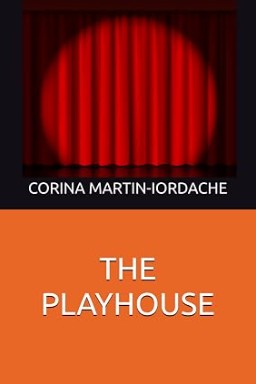
Launch: Corina Martin-Iordache’s The Playhouse
INTERVIEW BY KATHERINE MEZZACAPPA
Corina Martin-Iordache(opens in new tab) is an educator who has taught English and French at all levels of the public education system. In 2001 she completed a PhD in Comparative Literature at the University of Toronto. In 2021 she published a book on education entitled Education with Meaning. A Teacher’s Journal from the Years of the Covid-19 Pandemic, 2019-2021. In 2026 she published her first World War II historical novel, The Playhouse.
 How would you describe The Playhouse?
The Playhouse(opens in new tab) is a quest for a path to follow in uncertain times. It tries to answer the question of how to live one’s life when its course is no longer within our control. It affirms the value of individual experience under the exceptional circumstances of World War II from a specific and less known French-Algerian angle. The story brings to light the complexity of the French-Algerian connection in its unity rather than its division with a nuanced perspective on human relationships.
What was the spark behind writing The Playhouse?
My inspiration for this story started from a simple observation. On May 8, 1945, when the world was celebrating Victory Day over Nazism in Europe, a similar celebration was taking place in Setif, Algeria. As part of France, Algeria had made a significant contribution to this victory. During the street celebrations in Setif, native Algerians asserted their own desire for independence from France by raising an Algerian flag. The result was a brutal reprisal from the French army and the French settler militias. This was the spark that started a new war of independence, which ended only in 1962. So, we could say that on the day one war ended, another war began. It was this sudden awareness which started my entire exploration in The Playhouse.
The Playhouse is a work of fiction, but in historical terms it is extremely well-researched. What came first as you developed this project? Plot or historical events?
The initial spark was a historical event. Then came the plot, or as I like to call it, the architecture of the novel. Yet, at every stage of the scaffolding, the historical reality is in the background. Maintaining historical accuracy and objectivity has been a constant preoccupation. For example, most of the historical events and organizations mentioned in the story are true to history even though some names have been changed.
In the prologue to The Playhouse, I sense a regret at the passing of an Algeria in which diverse people had lived together for centuries. What message do you think a story like Algeria’s can teach us about current world order?
Algeria has had a complex history in which political conflict has always been close to the fabric of everyday life. But too often it is only the negative outcomes of this historical situation which are brought to light when, in reality, people have also lived together as good neighbours. This good co-habitation is historical reality, not fiction, and more focus should be placed on it. Perhaps this is a good lesson for our times.
When a country has had a multi-cultural history, its story is sometimes told in very different ways according to the allegiance of who is writing. Tell us something about your own research process and what preconceptions of your own you might have come to question?
It is true that partisan views often mark history. They are at the origin of political extremism. This is because people live through historical reality as subjects affected by it to various degrees. All personal experiences have a core of authenticity which needs to be valued and this understanding is at the basis of any good dialogue. In the context of my story, I was surprised to discover how, in the artistic milieu, people of different ethnic backgrounds worked together towards similar goals. Perhaps on this level life should imitate art, after all.
Who was the most difficult character to write and why?
All my characters posed challenges. Somebody once said that creating a character is like giving birth to a child. Indeed. As a writer, I found that, despite being the creator of a character, my control over him or her is limited because, just like children, in the context of the story, characters develop on their own, often surprising the author.
What are you working on now?
I’m writing a book which further explores the power of art in our lives, this time through painting. The main character is a painter who under the weight of personal and external/historical circumstances becomes both the conduit and the illustrator of his surrounding reality. If in The Playhouse the focus is on history and theatre, in this new book, the focus will be on history and painting.
 What writing tips would you like to share?
Love the process; the results will follow.
Always surround yourself with your work: your books, your notes, your thoughts.
Leave your desk in mid-sentence, so you can come back to your writing seamlessly as if life interrupted your work, and not the other way round.
What is the last great book you read?
Jeff Koehler’s Matisse in Morocco. Highly recommended.

HNS Sponsored Author Interviews are paid for by authors or their publishers. Interviews are commissioned by HNS.