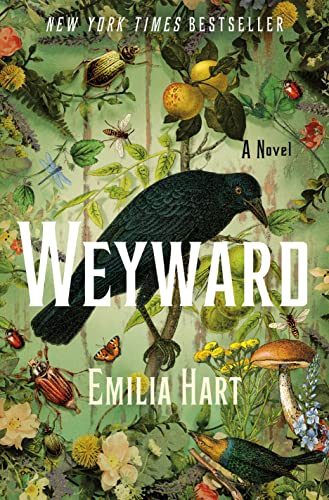
Weyward
Weyward is a compelling intergenerational novel of female empowerment and of how far modernity has strayed from our inherent connections to the natural world. In 1619, Altha Weyward, a healer like her mother, is tried as a witch. At Orton Hall in 1942, Violet Ayres spends her time outdoors befriending spiders and flies and climbing trees, rather than behaving like a lady―until one fateful day. In 2019, Kate Ayres escapes an abusive relationship, moving north to a small cottage, central to the novel, which her great aunt left to her in her will.
Hart develops the women’s stories separately, occasionally revealing tenuous connections―a locket, a character trait, a gravestone. Historical records of the Weywards disappeared in 1619, only reappearing in 1925, but a powerful legacy survives nonetheless, handed down through the female line. The need to escape the influence of cruel men is a strong theme, developed through incidents of sexual abuse, rape, and witch-hunting, the retaliatory actions unleashing quite violent supernatural occurrences. The author delves into male apprehension of female assertiveness and fear of those who are different. Grief and loss pervade all three lives. All have an affinity to nature; all must break free of their past and harness their power with strength drawn from their lineage.
This is not a novel easily picked up and put down, partly because the stories, particularly Altha’s, are compelling. Cliffhanger chapter endings can be frustrating when a reader is juggling three independent storylines, and they aren’t necessary here. The plot drives itself, but the urge to jump ahead sometimes took me out of the story. When the three narratives unite, they illuminate an unspoken sisterhood which survives centuries. Readers of Paula Brackston, Katherine Howe and Deborah Harkness will enjoy this.