In praise of disagreeable women: The Mourning Necklace and The Repentants by Kate Foster
 BY KATE BRAITHWAITE
“None of my women are perfect or even likeable and that is deliberate,” declares Kate Foster, but having read her two most recent novels, The Mourning Necklace (Mantle, May 2025) and The Repentants (Mantle, May 2026), I can only agree with this in part. Perfect? No, Foster’s characters are far from perfect. But likeable? Well, that depends on your definition of likeable.
In The Mourning Necklace, set in Scotland in the 1720s, Maggie Dickson has survived her own hanging. She wakes up in a coffin to the shock of her grieving relatives, and her first need is to find out if she can be hanged for the same crime twice. The story of that crime, how she came to commit it, and what will happen to her next, takes the reader from the fish industry in Musselburgh to a remote inn in Kelso, and from there to the Edinburgh Tolbooth. Will Maggie remain free? And what price might she be prepared to pay for that freedom?
Along with Maggie we meet her duplicitous sister, Joan, and Dorothy, a woman of dubious moral character with a penchant for laudanum.
“Maggie is naïve; her sister is vain,” says Foster. “Dorothy begins her relationship with Maggie by stealing from her. Then the women in The Repentants are all difficult!”
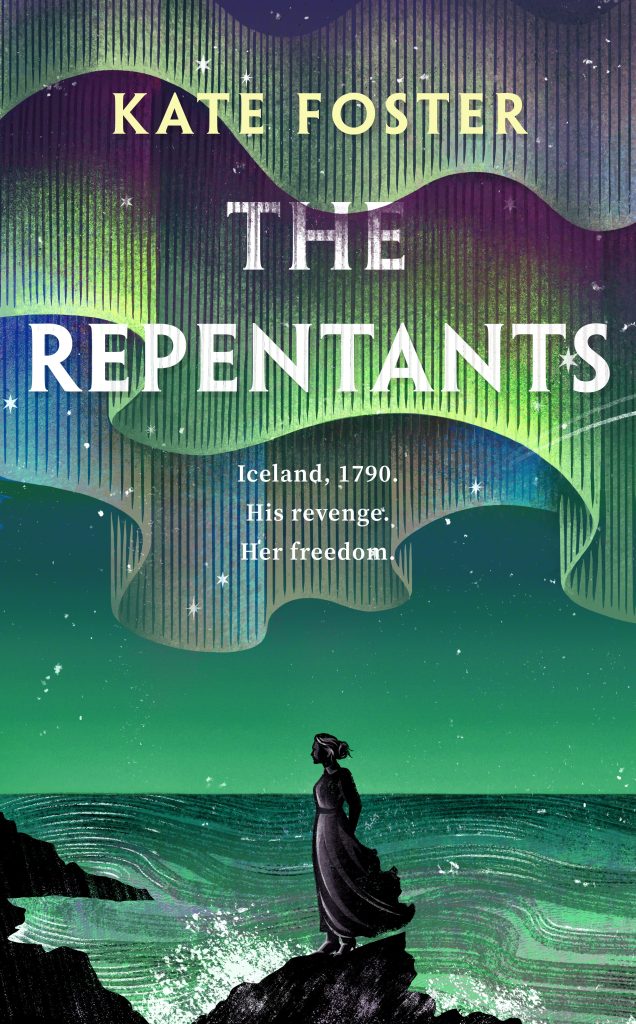
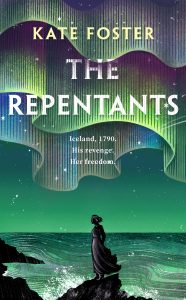 The Repentants, set in 1790s Scotland and Iceland, features three separate women whose fates become intertwined through poor choices and misfortune. First Florrie, the wife of the master of a St. Monans salt works, is caught in flagrante delicto with a man who is not her husband. Forced by the church to pay penance, she encounters Eliza, one of Florrie’s husband’s serfs, who reluctantly agrees to travel to Iceland with Florrie and her husband. There, they meet Hallgerd, a woman with her own troubles who is thoroughly unimpressed with “rich foreigners who think Iceland is a place of adventure.”
But why are these women so difficult? Because, Foster says, “of what life has thrown at them.”
“If I am writing feminist novels,” she continues, “then what use is there in writing nice, agreeable, innocent women?” Instead, she brings us gritty, hard-working women: “Maggie Dickson was a fishwife and expected to carry on in the family tradition, which she rebels against. I come from a working-class family including a line of fishmongers, and I suppose it comes instinctively to me to describe those harsh lives. Eliza, a main character in The Repentants, is a salt serf and bonded to her master in St Monans. This was a real state of affairs for many Scots working in the coal and salt industries and they had no freedom to move between jobs. I felt moved to write about women who were alive during the age of expansion and discovery, which was mostly undertaken by wealthy men.”
In the 18th-century, women were bound by strict moral and religious rules, and in both novels, Foster’s women fall foul of the times in which they live. “I tried to make the sex normal rather than elevate it to something overly romantic,” Foster explains. “And when something goes wrong for them as a result of their sex lives, the stakes are particularly high. Maggie gets pregnant and when the baby dies she is accused of murder. Florrie, a main character in The Repentants, has a high sex drive and a disinterested husband. Disaster!”

author photo by Sonia Fitoussi
Foster embraces the research required to bring us the stories of women in the past. “I spend a huge amount of time looking into the historical facts and the way people lived their lives. I like to find academic research into the time as well, as a backbone to the fiction. I am a former journalist so I feel more confident if there is a source backing up my claims!”
In the case of The Repentants, she “was inspired by a number of significant things including a real, doomed plan by British merchants to annex Iceland as a penal colony for the British empire. It is set at a time when salt workers were bonded to their masters and most people were forced to live constrained lives under the watchful eye of the church.” And for The Mourning Necklace, she reimagined the life of Maggie Dickson, who survived her own execution in 18th-century Edinburgh.
“Both books go back to retell women’s lost histories, but The Repentants is far more of my own story. It is not based on any singular person but rather on the women I imagined.”
The Repentants was also “more of a juggle” to write, as Foster offers up three first-person narratives instead of just one, as in The Mourning Necklace. It’s a juggle that pays off, however. In both books, Foster’s complex women offer up narrative twists that may remind readers of Sarah Waters’ Fingersmith, a book Foster greatly admires. She cites both historical and contemporary novels for her inspiration, telling me, “the page-turning power of Lisa Jewell is amazing. But for immersion in the past, I loved The Glutton by A.K. Blakemore and Melmoth by Sarah Perry.”
“I use sisters and female relationships in novels to give my characters something to come up against,” Foster explains. “They need to feel emotions like grit and jealousy and anger in order to progress through their character arcs.” And progress they do. Maggie, Joan, Dorothy, Florrie, Eliza, and Hallgerd all have journeys to go on and stories to tell. Difficult they may be. Unkind to each other at points? Yes. But in the end, I think readers will find them likeable, perhaps even lovable. Foster’s women are nothing if not tenacious, determined, brave, and bold. There’s a lot to like here.
About the contributor: Kate Braithwaite is the author of five novels, including The Scandalous Life of Nancy Randolph (Joffe Books). An editor for the Historical Novels Review, she also publishes SIS-stories, a substack about sister relationships in history and fiction.