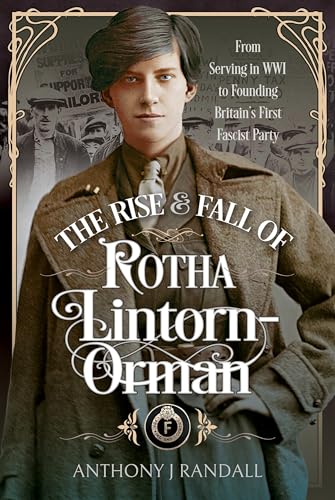
The Rise and Fall of Rotha Lintorn-Orman: From Serving in WWI to Founding Britain’s First Fascist Party
The name Rotha Lintorn-Orman is not well known today but was once a household name. Rotha was born in London in 1895 to Charles and Blanche Orman. Both came from military families, but her grandfather was Field Marshal Sir John Lintorn Arabin Simmons, a rich and powerful man. Rotha’s father changed his name to Lintorn-Orman, probably to ingratiate himself to his grandfather-in-law.
Rotha had a privileged upbringing and spent her formative years at her grandfather’s estate in Hampshire with Nesta Ashworth, a girl of similar age who was hired as a companion for Rotha. A major influence came when they were given a copy of Baden-Powell’s Scouting for Boys, which sparked an interest in outdoor pursuits and led to them becoming early Girl Guides.
During the First World War, Rotha became an ambulance driver in Serbia showing considerable bravery but contracting malaria. After the war, she founded The British Fascisti, but she never embraced anti-Semitism and was sidelined by other Fascist groups.
This is a thoroughly researched book. Rotha seems to have left no diaries or journals, and Randall has had to rely on secondary sources. Nesta wrote a memoir which was clearly helpful in describing their childhood. In adult life, Rotha took to wearing male clothing, and there were rumours of lesbianism at her farm in Somerset, but there is no mention of any long-term relationship.
Her political views were based on loyalty to Monarchy, Country and Empire and are probably better described as Ultra-Conservative rather than Fascist. All her endeavours were financed and supported by her mother, who had inherited the family fortune. Rotha took to drink and possibly drugs and died alone in Las Palmas in 1935.
This is a fascinating account of a remarkable woman and a very good read.