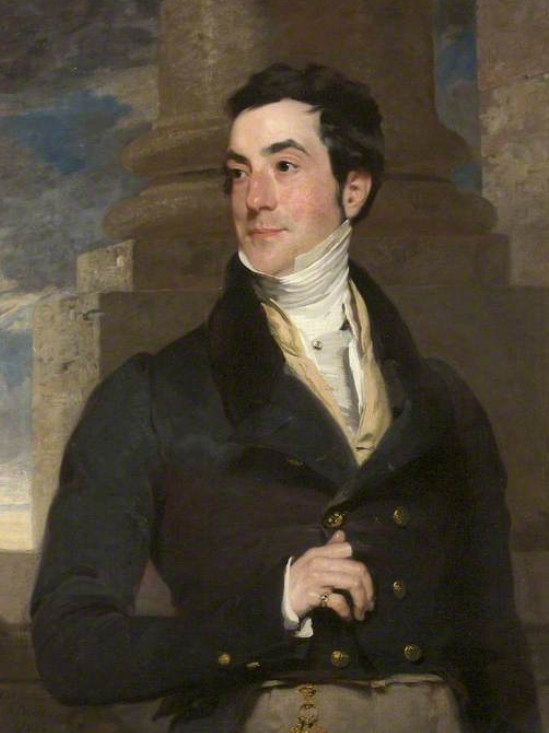
Dual Portals into a Faded Past: Almost English by Barbara Sibbald
 BY LEE ANN ECKHARDT SMITH
Author Barbara Sibbald’s path to writing her latest novel, Almost English (Bayeux Arts, 2025) began in a cemetery in Kolkata, India. This is the burial site of her three-times-great grandfather, Samuel Munckley Duntze. “He was the starting point of our family’s time in India,” she explains. “He was born in England, and had worked for the East India Company for six years, long enough to partner with a Parsi woman and sire two daughters.” As her fingers traced the inscription on her ancestor’s monument, she started to wonder: what was the rest of the story? “Suddenly,” she says, “it was all very clear: I had to know more.”
Needing to know more is inherent to Sibbald’s background as a journalist, something she says “feeds my curiosity about the world.” As she dug more deeply into her ancestors’ lives, she discovered the starting point for the book was not what she had expected. Although Samuel had provided the spark, she didn’t end up writing about him. “Instead,” she says, “I delved into my mother’s partly finished genealogy and found Stephen and Lily Turner, my great grandparents who were together from 1885 until Lily’s death in 1912.” In Stephen and Lily’s lives, she found “a real conflict, which is the key to any story. Even though Stephen was a gentleman, educated in Britain, he was a quarter Indian, which meant he could never be part of the ruling British Raj. Their racism relegated him to poorly paid jobs on the railway or as a clerk. Despite this treatment, Stephen longed to be accepted by the Raj, and Lily backed him. They endured poverty and ill health, they ran a dairy, sold tea and raised a family of seven children, including my grandmother. Above all, this novel is a story of their quest for acceptance and their enduring love.”
The author uncovered the facts of the story by researching several different sources, all of which she found very rewarding. She pored over family letters, surprising in number. “There is an undeniable attraction reading someone else’s letter,” she says, “it is forbidden fruit.” The “interminable” number of history books she read allowed her “to become more skilled at critically evaluating materials and culling.” Best of all was researching in The British Library’s Asia and Africa Reading Room, “a spacious area with long tables punctuated by a series of green desk blotters and matching green banker’s lights. I felt I had arrived as a researcher!”
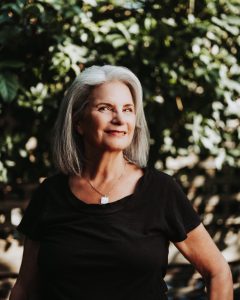
author photo by Curtis Perry
Sibbald decided early in the writing process that she needed to combine fact with fiction as a way to depict a truer picture of her ancestors’ life under the Raj. Drawing on her experience as a writer of short fiction, poetry and four other novels, Sibbald created dialogue, relationships and interior lives. “The cardinal rule of creative non-fiction is you can’t make stuff up,” she laughs. “But I needed to hear Stephen and Lily speak to each other. To hear his anxiety over being overlooked for yet another promotion. I needed to know what they were thinking. To know how Lily fretted when Stephen was absent for long periods. I needed both speech and thought to inhabit their lives fully. For the book to really come alive, for it to be real, ironically, it had to be fiction.”
She also includes a series of interstices. In these, she writes directly to the reader as the researcher, great-granddaughter and writer, and so moves “beyond the confines of the historical novel.” She explains that she “broke the fourth wall, that metaphoric barrier separating reader and writer. I visited the text through touchstones: letters, a tea pot, a bangle, a cookbook, photos, paintings, a grave marker. These provide cracks through which we can glimpse the factual underpinnings behind the fiction, and a larger narrative beyond.” Overall, she contends, “the dual narratives – their history and my efforts to recover it – work together to present a fuller version of a faded past.”
The interstices also reveal discoveries she made about herself and her connections with her ancestors. “I realized that I shared a common quest with my great-grandparents: a quest to belong, to be part of something larger than ourselves. For Stephen, it was the Raj. Initially, I thought my quest involved finding a place where I belonged, but I gradually came to the conclusion that it was not where I belonged, but to whom. The Turners are part of that because they are part of me. Their past entered my present as I explored the connection between us.”
As for the lasting effects of that initial spark from her three-times-great grandfather, Sibbald says, “I discovered the vital importance of my extended family, how they inform who I am, how they are a part of me. I dream of them still. I write poems about them. I know them in my heart.”