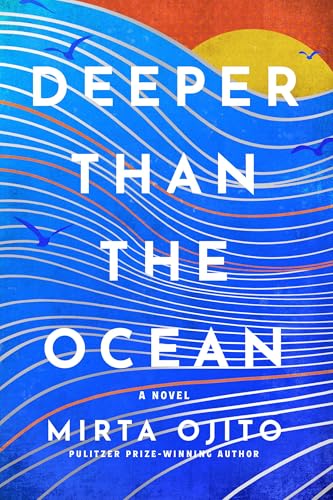
Deeper than the Ocean
The author writes, “The stories my mother told me… are the backbone of this book.” It is a very personal work, weaving fiction into and among events that mostly took place more than 100 years ago, viewed through the eyes of Mara, a journalist researching in 2019.
Her ancestor, Catalina, born in 1900, grew up in La Palma, a volcanic speck in the Canary Islands. She falls in love with Juan Cruz, who says his love for her is “Higher than the sky and deeper than the ocean.” However, she is forbidden to marry him and is forced to marry Antonio, who wishes to migrate to Cuba.
Together with Carmen, her daughter from Juan, and even with a concealed Juan himself, they sail towards Cuba in the ill-fated ship Valbanera, which calls at the port of Santiago de Cuba. Catalina goes ashore and is stranded as the ship leaves. Distraught, she is assisted by Juan’s friend Ramon. He supports her as she learns later that the ship has sunk, taking her husband, her lover and her child.
Catalina’s love for Juan is the focus of the novel, although the author also writes of the generations of women between Catalina and herself. This ‘deeper than the ocean’ love and its repercussions dominate the action. But the emotions involved in each step of the story are the primary focus. Bound together by the metaphor of the ocean, Mara feels deeply for Catalina’s emotions as she struggles to survive her losses and to survive as a migrant in a new country. Despite Catalina’s long marriage with the caring Ramon, the overall tone of this exquisitely written novel is one of emotional pain.