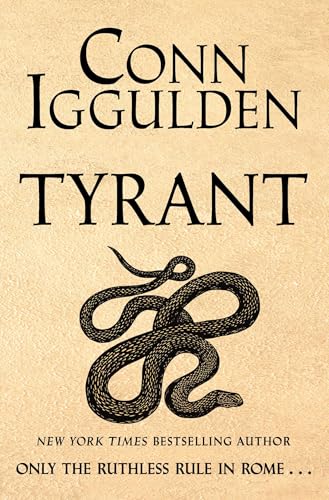
Tyrant (The Nero Trilogy)
Nero, the first novel in Iggulden’s trilogy set in first-century Rome, ends with a marriage proposal. Tyrant, the second book, opens where the first one left off: with a wedding, that of Agrippina to her uncle, Emperor Claudius. A brilliantly executed prologue embodies the lethal imperial Roman society of the day as it relates to Agrippina’s ruthless scheming to make her son Lucius, now Nero Claudius Caesar Augustus Germanicus, emperor of Rome. This dramatically sets the scene for the rest of the book. Agrippina has survived Tiberius and Caligula—there’s nothing she can’t do. She takes praetorian guard Burrus into her confidence, binding his loyalty to her; Seneca is brought back to Rome to rein in her out-of-control teenage son and his close friends, Otho and Serenus, who will continue to influence Nero as emperor; Claudius grants the toga virilis to Nero at 13-years-of-age, then moves, under Agrippina’s duplicitous plotting, to make him temporary heir ahead of Claudius’s own son Britannicus, thereby supposedly protecting the latter, a younger and more vulnerable boy.
Conn Iggulden is a prolific writer of historical fiction styled to pull in a wide readership. I’ve followed his various historical series over the years. If he sometimes manoeuvres historical fact, it is usually in aid of a better story and plots, which move lightning-fast, and his historical notes are full of enticing research detail. He is a masterful storyteller, totally in command of his scenes and characters, allowing modern-day readers to be swept into the ancient worlds he creates. The novel takes Nero through boyhood to early manhood, marriage, mistresses, entertainment such as the magnificent arena naumachia, violent plots and intrigue, and, eventually, the conundrum over Agrippina and her matriarchal vise-grip. This kept me up well into the night.