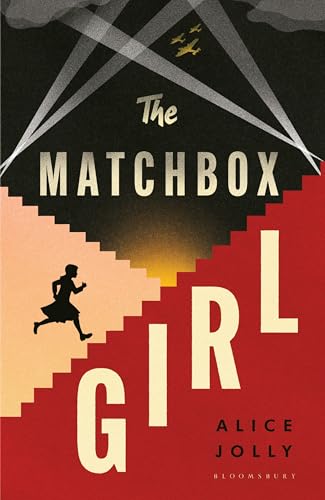
The Matchbox Girl
Whatever happened to Asperger’s Syndrome? Short answer: once a separate diagnosis, it was recently merged into Autism Spectrum Disorder. Why? A much fuller answer emerges from Alice Jolly’s deeply researched, deeply disturbing novel, whose main character, Adelheid Brunner, is the Matchbox Girl.
She is twelve in 1934, when her grandmother commits her to the children’s psychiatric clinic in a Viennese hospital, where “curative education” is offered. Although highly intelligent and observant, Adelheid is mute. She writes brilliantly, however, in a series of idiosyncratic notebooks, and, always craving order, she is a phillumenist: she collects matchboxes, or rather, their decorative labels. (Phillumeny is still a recognized, if unusual, hobby, somewhat like philately, or stamp collecting.)
She joins a group of troubled child patients and medical professionals who are studying and attempting to treat what is now called autism, including an important pioneering researcher called “Dr. A.” As the novel moves through the 1930s and 1940s, the clinic serves as a microcosm of Vienna under rising Fascism and war. Exploring autism, totalitarianism, and the question of evil, Jolly’s novel is ambitious and challenging. Characters are vivid, but chronology is complex. Adelheid’s notebooks are journals, and The Matchbox Girl is her autobiography, or “posthumous life,” for she recounts her story after her death, occasionally as a phantasmagoria and sometimes through other points of view.
She presents Dr. A. as a fundamentally decent man tragically entangled in the Reich. As “racial hygiene” progressed, and his patients were seen as defective and “useless eaters,” the actual Asperger signed paperwork sending some children to their deaths. When this was revealed after his own death, the term “Asperger’s syndrome” was abolished. But is truth simple?
“You say Murderer,” writes Adelheid. “I say Doctor.”
Jolly’s very long, powerful, painful novel suggests: “Both.”