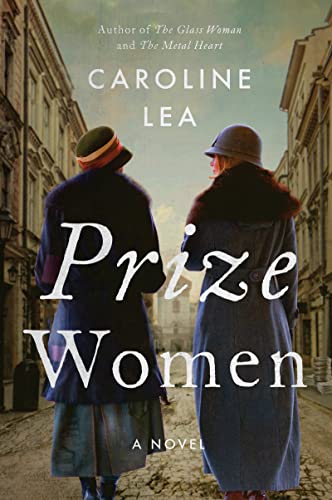
Prize Women
Poverty may strip a woman of basic support, and abuse can take her self-esteem as well as her safety. But if she has children she loves, she’ll fight for them. That’s the premise Caroline Lea offers across a decade of two women’s lives, beginning outside Toronto, Canada, in 1926. Lily di Marco, an Italian immigrant abruptly widowed after her husband’s violence cost her pregnancies and threatened her life, has little awareness of the world beyond her home. But when she seizes her chance and runs away with her young child, fate crosses her path with that of the glamorous Mae Thébault, who lives in the bewilderingly large city of Toronto under conditions that look unbelievably elegant to Lily.
Yet Lily readily senses Mae’s tormented emotions and offers the tender caring that Mae needs so badly. The two women become interdependent and stronger—until a contest posed by a dying childless millionaire, leaving his fortune to the woman who bears the most children in the ten years after his death, pits the two against each other. Under the tumult, the true enemy for both women as they struggle through the Great Depression comes in the accusations of men who accuse Lily in particular of manipulating the contest. Her insight, through her grief, is this: “To make someone understand, she would have to starve them, and then give them nine children to look after.”
Lea’s writing, deceptively straightforward in phrasing and pace, lays bare the true costs of poverty, bigotry, and misogyny. Prize Women offers heartache and tragedy—only the bonding of two women who come to understand sacrificial love between equals can provide another resolution.