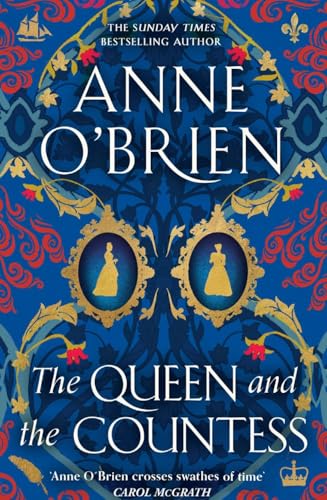
The Queen and the Countess
Contemporary accounts presented Margaret of Anjou and Anne, Countess of Warwick, in connection with their respective husbands: King Henry VI and Richard, Earl of Warwick, known as the Kingmaker. Anne O’Brien’s novel places the two women at centre stage, the first-person narrative alternating between them. They were, of course, on opposite sides of the Lancaster-York conflict, at least until 1470 when Warwick abruptly switched allegiance, but O’Brien portrays them as discovering a certain affinity with each other, expressed in guarded conversations and letters.
In fictional reconstructions of women’s experience in the remote past, the temptation is to credit them with a much more active role than they could possibly have played. O’Brien does not succumb to it. Instead she cleverly makes the ‘sidelines’ the centre. Warwick’s 1460 invasion is seen from Anne’s viewpoint with her seeing him off from Calais and then waiting there over long weeks in the hope of news. Her husband keeps most of his plans from her, so when they cross back to Calais in 1469, she has no idea that her daughter Isabel is to be married to the Duke of Clarence. In frustration, she carefully gathers information, eavesdropping Warwick’s conversation with the king of France while pretending to admire a tapestry. Once in possession of the facts, she is strongly critical of Warwick’s stratagems and strives to rein him in. In the end, both she and Margaret lose everything.
This is not a tale of women on the margins of male violence: Margaret is only too happy to mete it out herself. Rather, it is a gripping story of human beings, caught up in the consequences of the struggle for power.