Launch: Tara Lynn Masih’s The Silent Women
INTERVIEW BY ELLEN IRWIN
Tara Lynn Masih(opens in new tab) is an award-winning American author of place-based historical novels and short stories, including the acclaimed YA novel My Real Name Is Hanna. Hanna was honored as a National Jewish Book Award Finalist and won several awards, including a Julia Ward Howe Award. The Silent Women is her adult debut.
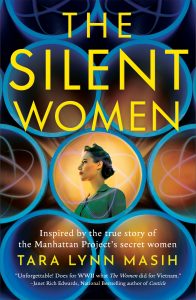 How would you summarize The Silent Women(opens in new tab)?
I’m going to borrow some of the words of Rae Meadows, one of my blurbers. I think she captured it best: The Silent Women is a sweeping history of a remarkable woman living through an extraordinary period of American history. From the dust bowl to the making of the atomic bomb to post-war Florida, this is a sprawling story of courage, clandestine love, war trauma, and resilience, and at its heart is the indomitable character of Song.
What was your catalyst for crafting a story that revolved around the top-secret WWII Manhattan Project?
It’s a very long story. I started researching another time period in my local historical society (in Andover, Massachusetts) and began a discussion with the director, who told me about a female WWII parachute rigger from Andover. Intrigued, I began researching her story and the history of the WAVES (Women Accepted for Voluntary Emergency Service). Somewhere along the line, I found Denise Kiernan’s book The Girls of Atomic City, which included many oral histories of women who worked at Oak Ridge, one of the forgotten Manhattan Project sites (the attention has mostly gone toward Los Alamos).
Once again, I changed gears, and the parachute rigger became a side friend. Song, my character, is based on many leak testers who worked at Oak Ridge (most of them women). I was intrigued with the job. It had a science fiction feel to it, in the middle of a muddy outpost. The fact that so much of that city was secret (it has been called the Secret City), was a bonus.
Tell us a bit about your heroine, Song Holloway. What is it about this woman and the cast of characters surrounding her that moved you to share their stories?
As a historical writer, I love doing research and finding little-known facts or stories. While Kiernan’s nonfiction book was a huge bestseller, the fiction crowd for the most part doesn’t know about Oak Ridge and the stories of women who worked there. I also wanted to highlight some minority contributions as well.
I think what really captured me about the Manhattan Project was how in tandem most humans were during that critical point in time. There’s so much beauty in people sacrificing their own needs for the good of the larger community. Isn’t that what all those superhero cartoons and movies are all about? We’re hungry to know that it can be done, I think. I also believe that women are often left with the responsibility of holding up their communities and get little credit for it. Hopefully Song’s story highlights a bit of that.
Your novel’s title—The Silent Women—references both the secrecy required by the Manhattan Project and the silenced voices of the women involved. How did you approach researching and writing about characters who had to conceal what they know?
Oak Ridgers’ oral and written interviews were crucial. Hearing in their own words how they navigated such a tough terrain helped me create characters that had to do the same. Wives who had no idea what husbands were doing, neighbors spying on neighbors (even friends and coworkers), sweethearts unable to share their deepest worries or fears because it would give away their mission.
As the author, I know what’s happening, and I did my best to keep it from the reader until it was time for them to know.
What were some of the most compelling things you discovered while researching for this novel? Did any of those things make their way onto the pages?
It would take another book to answer this fully! So just a few things from my seven years of research: I loved discovering that the Kahnawake Natives helped build K-25, one of the largest buildings in the world at that time. Ed Wescott, the official photographer of Oak Ridge, left behind one of our most important photographic archives in modern American history. I could not have written this book without those photos, and I had to make Ed a bit character. And the women’s stories—there were so many inspiring ones, it was hard to narrow them down to the main characters I invented. I also discovered the story of a secret army project, which made it in. Very few people know this history, as it was only recently declassified.
In the Florida setting, I came across a Native myth that explains the existence of Spanish Moss. I had to include that. And give a nod to the importance of being a laundress in the days of slavery.
I could go on and on…
How have your own life experiences influenced this story?
I wrote my maternal grandfather and grandmother into the book. My grandfather served stateside during WWII. I learned much about his history, and one of his army pins made it in, in reference to the above question. So did one of the cards my grandmother, who was an artist, made for him during the war.
I think my real-life family of artists influenced my ability to create Hol, an army artist. And my mother’s love of gardening and all she taught me flows into the gardens and fields that Song works in.
 What writing advice are you willing to share with aspiring authors of this genre?
Research more than you need to, as you don’t know till you begin to write what’s needed in the story. Having too much is better than not enough. In retrospect, I may have spent too much time doing research for this novel, but I don’t regret it. I learned a great deal, and I’m gifting some of those resources to each historical society that assisted me, as I found material they don’t even have in their records. So, don’t feel you have to put it all in, but know you or someone else will be enriched by what you learn.
What is the last great book you read?
Pearly Everlasting, by Canadian author Tammy Armstrong. I love how she mixed historical fiction with fable, realism, and poetic prose. And, of course, I love that it was set in the natural world. Like Song, it’s my favorite place to be.

HNS Sponsored Author Interviews are paid for by authors or their publishers. Interviews are commissioned by HNS.