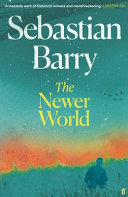
The Newer World
Tennessee, 1840, and an unknown narrator tells of ‘my father’ and his courtship of ‘my mother’. It is not until chapter two that we learn the name of this narrator: Tennyson Bouguereau.
Tennyson, we discover, was born as property. Much like a dog or a mule, his value is for labour, or for ‘sport’ – as foxes were hunted for ‘sport’. As for the fox, ‘sport’ can be deadly.
As we follow Tennyson’s life, we see how freedom at the end of the Civil War was manipulated by the powerful into a life still undermined by oppression and hatred. A world in which a person could go to work in the morning and be dead by nightfall. Even when a well-wisher tries to save him, Tennyson himself still is given no choice in the matter.
Despite this, the relating of Tennyson’s inner life reveals a man who loves, who thinks, and who does make choices: Tennyson chooses to survive.
Characters from Barry’s previous novels, Days without End and A Thousand Moons, are featured, but this works as a stand-alone novel. The narrative style is one long stream, as of a man recalling his life. It mixes Barry’s trademark lyrical description and philosophical musings, with understated, plain telling of abuse, persecution, and murder. The violence is all the more devastating for the starkness of its reporting. Hence, inner life and outer events combine in a vivid imagining of how it might be, to be born as chattel.
There’s a lot packed into a short read: a life that fathoms both depths of hatred, and heights of love. Recommended.