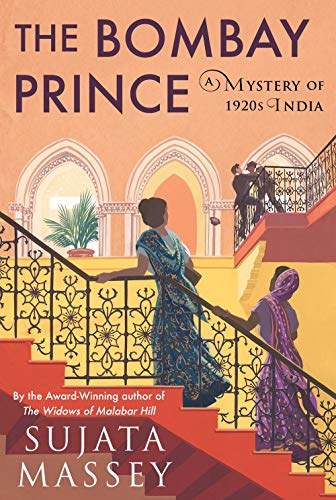
The Bombay Prince (A Perveen Mistry Novel)
Sujata Massey’s third mystery novel featuring Parsi solicitor Perveen Mistry occurs during the visit of Edward, Prince of Wales, to colonial India. Historically speaking, the November 1921 visit was greeted with empty streets all over India to protest British rule. Riots and police brutality occurred in Bombay, the setting for this novel, and this creates a background of danger.
At her father’s law firm, Mistry is a solicitor, a lower-level lawyer who cannot represent clients in court. When a young Parsi college student activist drifts in seeking legal advice, Mistry tries to help her. The day of the Prince’s visit, Mistry happens to be at the college when the girl is found dead under suspicious circumstances. Although Mistry doesn’t legally represent the girl, and the girl’s parents don’t want her help, Mistry takes an interest in uncovering what happened.
Parsis are well-off in India, and Mistry lives in a mansion, with drivers and servants at her disposal. She is sometimes present at the right place and time, but she uncovers important parts of the mystery and puts the pieces together. Dressed in colorful saris, Mistry proceeds with an awareness of her limitations as an Indian, a Parsi, a solicitor, and a woman. She does not so much battle the system as diffidently worm her way through it, visiting an aviary, the morgue, a coroner’s inquest, the college, hospitals, and the dead girl’s family and friends.
A dashing British diplomat adores Mistry. A brash American reporter figures prominently into the plot, but his sudden appearance at a crucial moment makes the book’s denouement feel contrived. Mistry’s character was inspired by Cornelia Sorabji, India’s first female lawyer. The Bombay Prince gives its readers a feel for Indian society in the 1920s, as pressure builds for freedom from colonial rule.