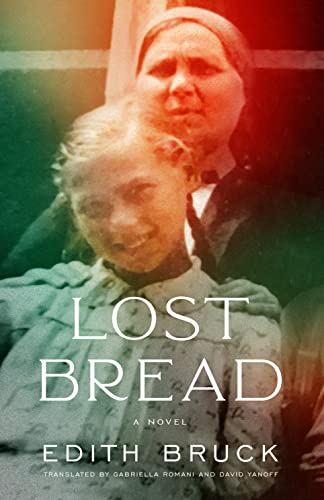
Lost Bread
Edith Bruck is a respected author and a Hungarian Jewish survivor of Auschwitz, who has been living and writing in Italy for six decades. Lost Bread is not a novel so much as a recounting of her experiences from her youth in her native Hungarian village, to her family’s deportation to a Nazi concentration camp, to her peripatetic life after the war until she settled in Italy, where she resides today.
As author Bruck states in a Q & A at the end of the novel, bread has significant meaning in her life. It reminds her of her mother, a baker of bread, who died in the camps. Her family survived on the flour provided by a neighbor when they were hungry, and bread was in the oven when the Hungarian police abruptly swept Bruck’s mother, father, sisters, and brother from their home.
Each experience is a crumb of memory from that last loaf of bread never eaten. It is a way of never forgetting those who passed through Bruck’s life. But beyond a retelling of her experiences, Lost Bread is a dive into the woman herself, how she survived not only the camps but an abusive relationship after, how she became the woman, wife, Holocaust lecturer, poet and author she became, an independent spirit who challenged the world to define her.
Many stories have been written about the Holocaust. Lost Bread spends only one chapter on Bruck’s months in the camps. Rather, her story examines the complex response individuals had post-war, asking the important question: what have we learned, if we have learned anything, for Jews as well as non-Jews. While Bruck’s faith remains unsullied, the question she asks remains unanswered.