New books by Historical Novel Society members, November 2026
We love hearing about HNS members’ new historical releases. If you’ve written a historical novel or nonfiction work published (or to be published) in June 2026 or after, send the following details to us (select “New books by members” on our Contact form) by January 7, 2027: author, title, publisher, release date, and a blurb of one sentence or less. Please shorten your blurbs to one sentence, as space is limited. Details will appear in the February 2027 issue of HNR. Submissions may be edited.
In The Water Lilies of Mishipeshu by Karla Cruise (History Through Fiction. Jan. 27), across centuries of war and cultural upheaval, generations struggle to protect a hidden botanical manuscript containing the secrets of an ancient medicine society, including a hallucinogen that can grant prophetic powers—or kill those who use it.
Jean Baveystock’s Fleeting Glory (Troubador, Mar. 27) is set in the turbulent Napoleonic era, a world of political intrigue, fierce battles and romantic escapades, as three very different men, a French marshal, Ney; an English general, Sir Robert Wilson; and an immoral Etonian, Michael Bruce, take centre stage as they witness the fall of Napoleon’s empire.
Inspired by true historical events, The Playhouse by Corina Martin-Iordache (Inkwork Editions, Apr. 17) is the story of a friendship tested by the gripping events of World War II in Algeria and France.
In Susan McGuirk’s Dear Missing Friend (Sea Crow Press, May 19), a true story set in 1840s Sag Harbor, New York at the height of the whaling era, an Irish immigrant narrates through letters being torn between her ambition to be a governess, the missing seaman she married, and the wealthy speculator she didn’t.
On the windswept 17th-century Yorkshire coast, an honest herb-peddler’s apprentice and his master’s sharp-witted daughter find their lives entangled in a game of impossible riddles and quiet devotion in Scarborough Fair by Keith Laughton (Market Cross Publishing, July 20).
Set in the early 20th century, Cynthia Mines’ Heaven in a Wildflower (Meadowlark Press, June 23), a coming-of-age novel, takes on Oz overtones when Kristin Thorsen, who lives in a lonely parsonage on the Kansas prairie with her stern father, is befriended by a neighbor widow and cultured seed salesman.
Kathleen Williams Renk re-imagines the life of novelist Kate Chopin in Toward Her Awakening (Bedazzled Ink, July 14), which lets readers experience the vibrant and colorful world along the Mississippi and the unique Louisiana 1800s culture that permeates Chopin’s writings and her approach to life.
Disgraced privateer Gideon Locke joins the crew of the Priscilla in the hope of reversing his fortune, only to find himself caught up in a treasonous plot in Privateer by Dan Donato (Sapere, July 26).
Shadows in the Starry Air by Trisha Phillips (Troubador, July 26), opens in September 1916, where the lives of two women converge to seal the fate of an innocent man, accused of wartime espionage, before sweeping back to 1913, where secrets, betrayals and loyalties unfold, and a charming stranger casts a shadow as dark as the approaching Zeppelin.
Natalie’s First Noël by C. A. Seaman (Atticus Publishing, July 28) tells the story of a young couple, accidentally separated from their baby daughter when the Nazis occupied the Channel Islands in 1940, struggling to balance duty to their country with their aching desire to bring their little girl home.
E. J. Widmark‘s Casona (Independently published, July 28) is a debut short story cycle about a fractured 1950s town in West Texas and a mysterious writer who exposes the town’s deepest secrets.
Pilgrims and Strangers by Sarah Austin (CairnCroft Press, Aug. 1) is a medieval romantic drama where an illegitimate baby, a leper, and a stray dog all play their part in bringing Fulk and Elena together, but their love is torn apart by circumstances they have no control over.
A fugitive from Caligula’s anger, ex-tribune Marcus Carinna must plunge into the dark menace and magic of the Germanic wilderness to recover his beloved Aurima and his own honor in Sherry Christie’s Amber Road: A Novel of Danger and Desire on the Roman Frontier (Bexley House, Aug. 1), an enhanced edition of her second novel about the early Roman Empire.
In Carlo Gibbs’ debut novel, Silver’s Phoney War (Sapere, Aug. 7), conscripted into the navy as Britain’s war effort gathers pace, Oscar Silver has to quickly adapt to life at sea while the enemy lies in wait.
Prelude of Promise by Sherry A. Jones (Inicio Press, Aug. 27) is a sweeping, multigenerational family saga that brings the glamour of the Gilded Age and grit of 1870s New York to life through the large Endicott family, who become embroiled in a variety of clandestine affairs, ambition, greed, and treachery among some of the most villainous and affluent people of 19th-century New England.
In Ivy in America by Diane Helentjaris (Alkira Publishing, Aug. 28), Ivy O’Neill must make a pivotal choice as her new life in 1702 Maryland is threatened by pirate raids, religious persecution, and a sudden, devastating tragedy.
They survived the war—what came next nearly broke them, thrusting Zora Nikolić and her fellow Serbian émigrés into the uncertainty of displaced persons camps throughout Italy and Germany in 1945, where hope becomes their only path forward in A Place Between Borders by Mila Evanovich (Independent, Sept. 1), second in the Nikolić Sisters Trilogy.
In 1764 colonial Pennsylvania, when an actor from a traveling theater troupe is found dead in their tavern stable, constable and tavern owner Miles Tucker and cook Penelope Corbitt scramble to discover the killer before the tavern is ruined or anyone else gets hurt in Terri Karsten’s A Player’s Exit (Wagonbridge Publishing, Sept. 1), book 2 in the Tucker’s Crossing Mystery series.
In Dreams of Earth and Sky by Shirley Perez West (Lake Union, Sept. 1), a ranchero’s daughter in 1845 California fights for her home in a sweeping historical romance of rebellious love, family loyalty, identity, and sacrifice.
What Love E’er Meant (Independent, Sept. 7), second in Janet Wertman’s Regina series, shows us the newly crowned Elizabeth I under pressure to marry; in the end, Elizabeth chooses not as a woman but as a queen, and learns the sobering truth of sovereignty: to rule is to stand alone.
Constance Hays Matsumoto’s Fact & Fiction: How to Write a Novel Inspired by Family and History (How2Conquer, Sept. 8) is a candid, practical resource that shows aspiring fiction authors—especially those drawn to family and history—how one first-time novelist went from “Where do I start?” to publish an award-winning historical novel, and how they can do the same.
In 1912 St. Louis, a young woman’s forbidden dream of flight draws her into danger, long-buried secrets, and the realization that ambition can be as dangerous as the sky itself in Beyond the Sky’s Edge by Pat Wahler (Evergreen Tree Press LLC, Sept. 8).
A Boston lawyer must decide if he will break every rule in the book to recover seven Soutine paintings looted in France during WW2 from his client’s late father, a victim of the Holocaust, in An Unknown Destination by Henry Alan Brown (Independent, Sept. 8).
Hankow, 1926: a Nationalist army sweeps north, foreign gunboats ride at anchor, and a young Marine officer and an American reporter uncover a blackmail scheme binding Japanese ultranationalists in J. R. Kendall’s The Dragon Gate Conspiracy: Espionage, War, and Passion in 1920s China (Red Fox Press, Sept. 9).
A dual-protagonist historical saga, set among Dover’s White Cliffs at the end of the 19th century, The Papermaker’s Daughter by Adrienne Terblanche (UK Book Publishing, Sept. 15) tells of Sarah’s search for the truth about her mother, Elizabeth, with the help of Edwin, a dockworker with ambitions above his station – a story of a love that crosses class lines and a secret that waited a generation to be found.
In RJ Verity’s Poole of Honour (Vazon Press, Sept. 15), set in London in 1965, a rising criminal barrister must choose between the life he has built and the only one he can honestly live.
As told in Lizzie’s Oath by Diane Wahn Shotton (Independent, Sept. 21), she followed every rule, made every sacrifice, and still lost what mattered most—then broke every rule, made one mistake, and got the life she always wanted.
Bestselling author Leslie Howard’s new novel Shades of Emily (Douglas & McIntyre, Sept. 22, Canada; May 2027, US) is based on the life of one of the world’s first famous female painters, Emily Carr; the story slips back and forth over a gap of more than a century to solve a great mystery of the identity of Carr’s one true everlasting love.
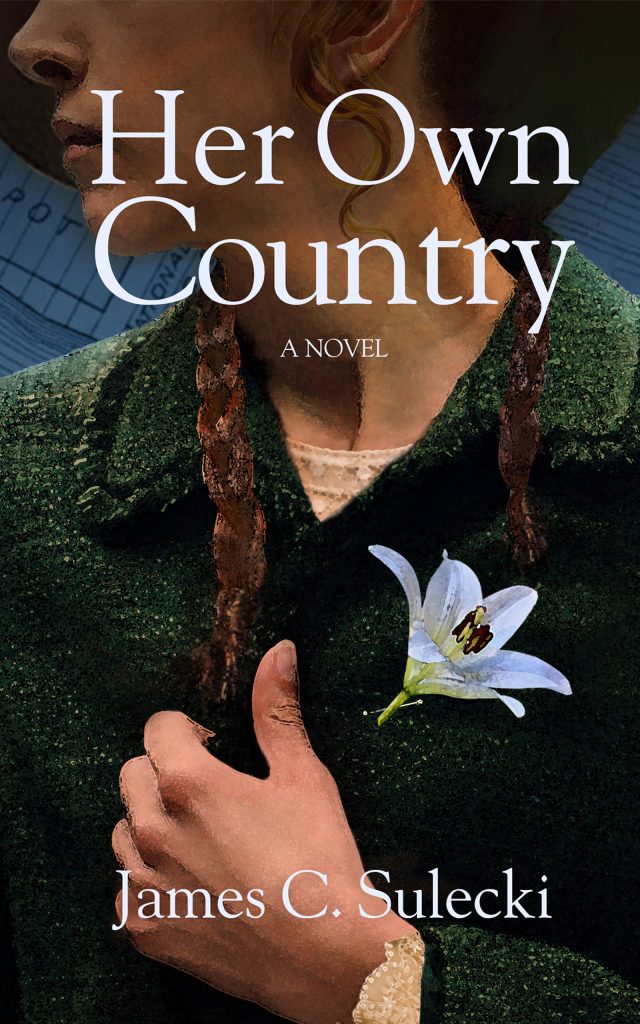
Inspired by real historical events, James C. Sulecki’s Her Own Country (40 Seasons Press, Sept. 24) is a sweeping novel of Irish immigration, the Great Steel Strike of 1919, and the Irish War of Independence.
Crossing the Lines by Charles Searle (The Book Guild, Sept. 28), second in the Dark Years trilogy, follows the adventures of French secret service agent Antoine Martinet, who now finds himself undercover in German occupied Paris and Marseille during the Second World War, aiming to thwart the attempts of collaborators and their allies in the criminal underworld to turn France into part of Hitler’s new European Order.
In Edge of Heaven by J. Lynn Rowan (self-published, Sept. 29), a Southern widow and a reclusive Union officer must overcome everything that divides them when an unwanted attraction becomes impossible to ignore.
A dual timeline/time-slip novel, with the atmospheric setting of a coffee shop on Oxford’s High Street, Secrets of the Penny University by Amanda Roberts (Independently published, Oct. 1) follows the story of Tilly in 1656 and Amy in 2025, whose lives become entwined following the discovery of an unusual painting on a wall.
In Winifred Peters is Not Sorry for Her Loss by Louise Jensen Duffy (Headline Accent, Oct. 8), set in a tiny outback town in Australia in 1933, Winifred Peters buries her husband before a surprise inheritance takes her, and a young wife fleeing abuse, to bustling Sydney where they find unexpected adventures, new friends and a chance to finally find their voices. The novel was released on April 9 in Australia.
Two luthiers with two hundred and fifty years between them find their lives upended by their encounters with a valuable and highly contested cello in The Violin Maker by M. Terrill (Koehler Books, Oct. 13).
Finn’s Legacy by Chris Hind (Maelstrom Publishing, Nov. 7) retells the fragmentary Old English “The Fight at Finnsburg” through the eyes of legendary rover Hengest and forgotten queen Hildeburh, who ally during a Jute uprising in 5th-century Frisia.
A former bonded servant risks his life and fortune to fight tyranny and injustice in fifth century BC Rome in Richard Barager’s The Twelve Tables: A Novel of Ancient Rome (Koehler Books, Nov. 17).
In Tracey Warr’s Salt’s Wound (Meanda Books, Nov. 17), the second book in the Trobairitz Sleuth series, the female troubadour Beatriz and her patron journey into the Pyrenees mountains, where winter and mistrust close in on the travellers with murder, the fear of poison, and sightings of a revenant.
Thrown Away by John Kachuba (Beck and Branch, Dec. 1) is a sweeping historical novel that interweaves the lives of two young men—Gianni Gagliardo, a Sicilian immigrant in New York City, and Plenty Horses, a Lakota man in the Dakota Territory—whose parallel journeys illuminate the brutal realities of identity, displacement, and prejudice in 19th-century America.
In Jeri Westerson’s The Magician’s Misadventure (Old London Press, Dec. 1), fifth in the An Irregular Detective Mystery series, former Baker Street Irregular Tim Badger and his detective partner Ben Watson, join forces with Sherlock Holmes to investigate why the magician’s assistant had to die.
As told in Craig Le Clair’s The Tale of Two Margerys (Greenleaf, Dec. 1), before the art world went abstract, it went to the streets—and while many know Robert Henri for teaching America to find beauty in soot-stained, turn-of-the-century New York, few know the two women who ignited his revolution and carried the flame of American realism into the modern era.
Moscow, 1985 to the fall of the Berlin Wall: a closeted CIA officer and the Soviet physicist he’s ordered to recruit find in each other the one true thing that could survive the Cold War’s collapsing certainties in M.K. South’s Of Our Own Device (South Publishing, Dec. 13).
In The Voyage (Kensington, Dec. 15), a historical novel about love, grief, and the devotion of dogs in the face of danger, V.S. Alexander brings new perspective to a story that still resonates and fascinates today, as a young couple and their Newfoundland dog, Finn, set sail on the Titanic’s ill-fated maiden voyage.
Kent M. Schwendy’s Sailing Toward the Levant (Black Rose Writing, Jan. 7, 2027) opens in 1796, as war rages across Europe: Captain Joseph Duncan and the crew of HMS Enchanté are sent on a clandestine diplomatic mission to the Ottoman Empire, where they must navigate treacherous political waters—and the guns of the French Navy.
In the summer of 1866, the Fenian Brotherhood invades British Canada, and heroine Rory Chase again steps to the forefront in Tim Wendel‘s historical novel Irish Falls (Three Hill, Apr. 15, 2027), a stand-alone sequel to his W.Y. Boyd award-winner Rebel Falls.