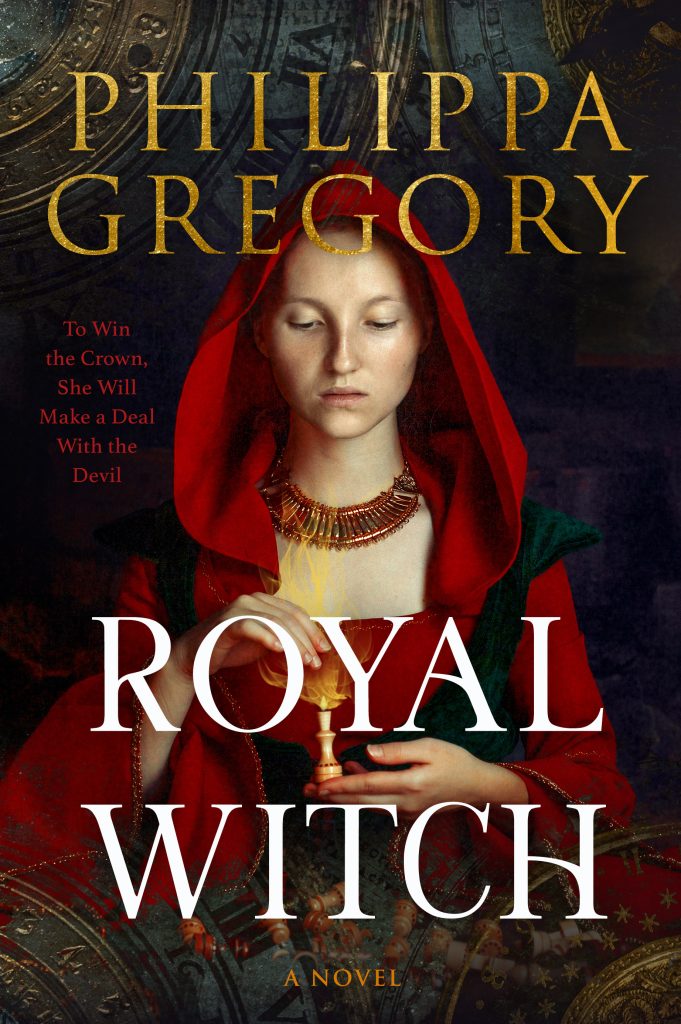
A Completely Free Imagining: Royal Witch by Philippa Gregory
 BY LEE ANN ECKHARDT SMITH
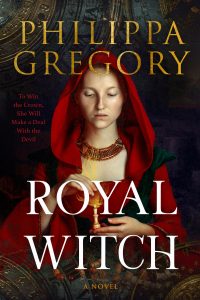
To author Philippa Gregory, “history is almost always more exciting than anyone could imagine.” However, history is almost blank when it comes to the three 15th-century women featured in her latest novel, Royal Witch (William Morrow, 2026).
This novel– her 47th book – tells the stories of these three remarkable women and their interconnected lives. Countess Jacqueline of Hainault, the rightful heir to Hainault, Holland and Zeeland, had her lands stolen from her by her cousin, Philip Duke of Burgundy; she secured an army to get them back. Eleanor Cobham’s first job at court was to serve Countess Jacqueline; Eleanor later became a duchess and conspired to be queen. Margery Jourdemayne was a highly respected herbalist and healer, a successful working woman and entrepreneur who advised Eleanor.
Gregory declares that the scarcity of historical data about the women made this book a joy to write. “It was a completely free imagining and my job as a novelist was to create a version of Eleanor Cobham and the two other unknown women.”
One of the benefits of writing about lesser-known characters, she explains, is that “readers come fresh to the history, so they don’t have any preconceptions of who these women were, and that leaves me free to reimagine them as fully rounded characters, not clichés of good and evil. I was not going to follow the traditional historians’ view and write about Eleanor Cobham as an ambitious woman who reached too high, who was rightly punished. In this novel, Marjorie Jordamayne is not a witch, Jacqueline of Hainault is not a damsel in distress, and Eleanor Cobham is a woman with no regrets.”
Women, Gregory contends, are often forgotten by history because history is “of men, written by men.” Yet, women leaders like Countess Jacqueline of Hanault were not uncommon. “You’d think she’d be well known as a feminist heroine,” says the author, “but even in her hometown of Le Quesnoy she’s hardly recorded.”
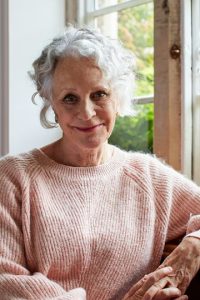
author Philippa Gregory
Similarly, there have been countless women throughout history and from many cultures with skills like Margery Jourdemayne. These healers were recognized as successful practitioners in herbalism, bone setting, dentistry, surgery, midwifery, making medicines, and veterinary work. They could also find things and conduct blessings and curses.
There were, however, strict rules about blessing and cursing in Margery’s time, and these rules had significant impacts on the lives of two of the women in the novel. Gregory explains: “It was lawful to prepare herbal potions, make wishes to call down blessings, and invoke the help of saints or angels. Conducting chemical experiments and attempting to create life were also permitted. Turning dark material into gold or creating the elixir of eternal life was allowed under a licence from the royal court. But, calling down curses or invoking the help of demons or the newly dead was forbidden.” That type of practise was considered witchcraft, which was punishable by death.
In addition, casting a spell to cause the death of the king was treason. So was drawing up a horoscope that predicts the death of the king. “Eleanor asks for a horoscope to show her how far she’ll rise,” Gregory reveals, “but her rise depends upon the king dying.” Eleanor and her advisor are accused of reciting a spell to cause this death — a spell called the Vindica Troia, which the author explains “is so well recorded that I could find the exact words for killing a king in a reprinted spell book. During an early draft I was dictating the spell into my document on a quiet evening alone in my study, and I immediately stopped. Rationally I know I wasn’t going to cause the death of King Charles III, but I thought it best not to take the risk.” She adds, “the two years I spent on this book have been one of my most haunted periods of research.”
At this point in Philippa Gregory’s long and distinguished career, she finds she has become “more interested in the lives of all women, however they are recorded.” She considers her biggest change came with the work on her non-fiction women’s history, Normal Women (HarperCollins, 2024). In it, she presents the history of women in England over 900 years, focused on the vast contributions of women to England’s social and cultural fabric. “I now feel very strongly,” she declares, “that it’s part of my job to contribute to the restoration of women to the historical record. When we do, we show that women have done everything in the past – and therefore can do anything in the future.”
About the contributor: Lee Ann Eckhardt Smith’s passion for history and storytelling has driven her writing career. She is the author of two acclaimed non-fiction history books: Strength Within: the Granger Chronicles (Baico, 2005) and Muskoka’s Main Street: 150 Years of Courage and Adventure Along the Muskoka Colonization Road (Muskoka Books, 2012). She’s written articles for many magazines and newspapers, primarily about how to write family history and memoir. She is currently working on her fourth collection of photographs and poetry, inspired by the beauty she finds in her everyday world. Find out more at her website.