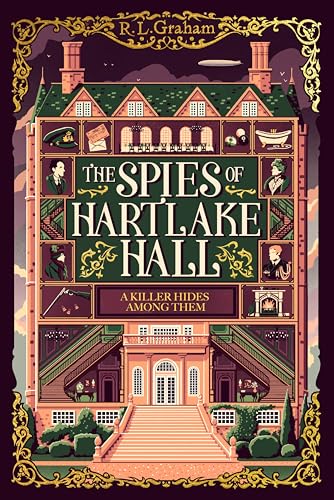
The Spies of Hartlake Hall (Patrick Gallagher, 2)
In the winter of 1917, beneath the labyrinthine corridors of the Admiralty Building in Whitehall, the body of a murdered naval officer is discovered in a locked stationery room. The finder of the corpse is recently widowed Mrs. Jonquil Vane, secretary to Rear Admiral Hall, and—by an elegant stroke of narrative convenience—an initiate into the secret service. The case, at once sordid and suggestive of espionage, is entrusted to Patrick Gallagher, senior detective of the service, whose partnership with Jonquil forms the axis of the novel.
The investigation leads them to Hartlake Hall in Kent, Gallagher’s melancholy family seat, where a decaying house and a clutch of embittered family and guests provide the setting for a weekend of intrigue. The familiar trappings of the country-house mystery are transfigured here by the pervasive atmosphere of war: political maneuverings, personal betrayals, and clandestine allegiances intertwine in a pattern of deception that demands the reader’s vigilance. What lends the novel its particular ballast is the convincingly rendered milieu of naval intelligence and Great War espionage. The detail feels authentic without descending into pedantry, anchoring the story in a world where secrecy and peril are quotidian. The narrative moves with assurance, though the recurring motif of the nearby train line—its rumble invoked almost ritualistically—risks becoming an unintended distraction, a piece of atmospheric embroidery overworked.
As the second novel in a series, the book strikes a careful balance: enough backstory is supplied to orient new readers without bogging down the momentum of the present tale. The effect is a novel that stands firmly on its own. It is not merely a historical crime story, but one that engages with the larger anxieties of a nation at war, where even domestic spaces and private loyalties are permeated by espionage’s ever-corrosive shadow.