Victorian Psycho
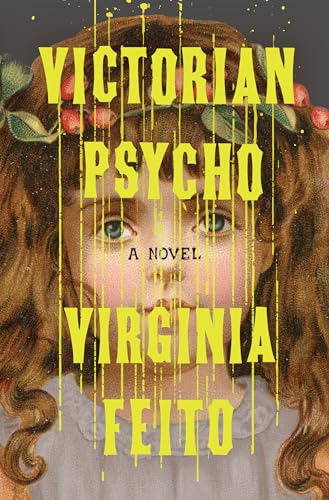
Welcome to Ensor House, where Winnifred (Fred) Notty accepts a position as governess. Ensor is the home of Mr. and Mrs. Pounds, who lay claim to two precocious and unlikeable children. Fred’s interaction with the children ranges from dry sarcasm to bizarre, to outrageous, but that’s by the by. Mr. Pounds exhibits an unusual liking for Fred as they stroll the grounds together, and his phrenology studies lead him to state that in a skull-to-skull comparison, he and governess Fred are a perfect match. So where does that leave Mrs. Pounds? Well, she exhibits a nasty kind of vindictiveness, such as forcing her children’s governess to sleep in the dog kennel. A scene of Fred biting a horse’s rump, to deliberately cause an accident, reminds readers that all is not quite well here!
Several violent incidents play out in real time, including two murders, one of a baby. In each case the events go unnoticed, the conclusion being that they are sequences in Fred’s head, but are they? A grotesque and macabre bucket list, perhaps? Or is the point less the actual murders, but rather, what can be perpetrated without anyone paying due attention?
As with her novel Mrs. March, Feito’s protagonist envisions dreamlike revenge sequences, murders, and blood. Literary icons such as Jekyll and Hyde, and Dr Frankenstein and his monster come to mind—the darkest inhuman nature of mankind, which for the most part, thankfully, runs unseen beside our better natures. The Twelve Days of Christmas is an unusual denouement sequence, as is the allusion to the ‘last supper’ of Ferrante of Naples. Tagged as dark humour, satire, and horror, this is a study of the psychopathy of human nature and, on this level, it works brilliantly. Whether it works as a gothic historical novel, I will leave for other historical novel aficionados to decide.