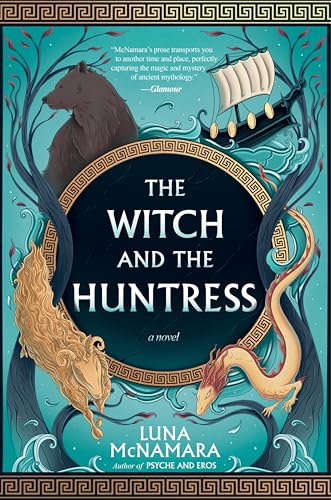
The Witch and the Huntress
This vibrant reimagining of Greek myth centers on Princess Medea of Colchis, a daughter of the goddess Hekate. Eager to escape her tyrannical father, she becomes entangled in the Greek hero Jason’s quest for a magical fleece. Following the tradition of Euripides, this novel centers Medea’s desire for freedom and respect among Greeks who devalue women and foreigners.
Medea—one of the most complex female characters in the Greek mythological tradition—is somewhat defanged by this portrayal. Her worst impulses are curbed, which regrettably robs her of some autonomy and nuance. Atalanta, the titular huntress, hasn’t been as widely portrayed in popular culture as other Greek heroes, but her robust treatment here does justice to one of the most adventurous women in myth.
Honoring its epic forerunners, the novel uses poetic prose with uneven effect. There are moments where the author sets the scene so vividly that one can almost picture themselves amidst rolling seas and perfumed gardens. At other times, disappointing prose weighs down the narrative. The novel is only loosely based on the original myths, so readers who value strict accuracy should consider themselves warned. This is a revisionist tale that includes familiar characters and places from mythology.
Readers who love Greek mythology and are in the mood for a bittersweet romance will find themselves satisfied. It will appeal especially to fans of Madeline Miller’s Circe or The Song of Achilles.