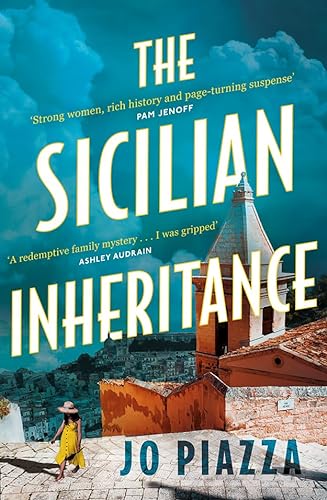
The Sicilian Inheritance
Sicily, 1920s and present day: enticed by the inheritance of a plot of land, Sara flees Philadelphia for the village of her ancestors in Sicily, leaving behind a failed marriage and business. But she has another reason for the visit: her beloved great-aunt Rosie was convinced that Sara’s great-great grandmother, Serafina, a skilled healer, was the victim of an honour killing (the plot was inspired by the murder of one of Piazza’s ancestors). But where is Serafina’s grave, and why does asking about her meet only with omertà?
This novel is a thriller, in which an alternating dual narrative keeps the tension high, as the physical threats to Sara multiply. Piazza paints a vivid picture of why rural Sicily of a hundred years ago was significantly different from the boot of Italy. Mass migration of men of working age to the United States meant women took on men’s roles, much as happens in wartime, yet whatever the absent husbands did, their wives were expected to maintain their honour at all costs. The novel is also a paeon to female solidarity, in both strands of the narrative, in a society which, in Piazza’s presentation, diminishes the female role: nuttata persa e figlia fimmina (a wasted night and a female child), as Inspector Montalbano was wont to say.
Only after finishing the book is there a bit of an aftertaste that perhaps Piazza has not given enough credit to modern Sicilians for their resistance to Mafia dominance. And a tactless and inaccurate referencing of Amanda Knox is merely playing to the gallery rather than advancing the plot. But read Piazza’s novel for her engaging prose, and for her masterfully constructed, fast-paced plot. It’s certainly a page turner.