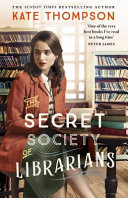
The Secret Society of Librarians
London, 1939, and as Chamberlain declares war, a group of women drink a toast to their absent friend: Dorotha in Poland. They are the Secret Society of Librarians, founded at Library Association Summer School, inspired by passion for the writing of Virginia Woolf. The story mainly follows Joyce, in Camden, London, and Dorotha, in Łodź, Poland. While Joyce suffers the London Blitz, Dorotha endures the Łodź Ghetto. Both believe in ‘Freedom through Reading.’ In London, books offer escape during bombing raids. In Łodź, they offer freedom to remain human. Hence, Joyce and Dorotha determine to bring books to their people.
While Joyce’s mobile library faces bureaucracy and bombs, Dorotha faces systematic persecution. In the ghetto, the Nazi regime aims to strip people of their humanity, through starvation, theft, disappearances, and murder. Possession of a book risks death. Daunted but not deterred, Dorotha creates a secret library.
Unlike many World War II novels, it’s not all camaraderie and courage. These were tough times, and Thompson doesn’t shy from the horror as bombs in London kill, and friends and family disappear from the ghetto. But it’s not all doom and gloom. Friendship and love emerge as the force to keep people going.
The writing style mirrors typical reports from survivors: straightforward, factual. There is no need for fancy tricks to make it powerful. The Blitz is scary: the horror of the Ghetto worse. Despite this, the book is easy to read, the characters’ lives drawing the reader in.
Thompson is a journalist, accustomed to checking facts. An author’s note describes the extensive researches that justify the cover line: ‘Inspired by True Events’. This is true historical fiction: a lesson from history, transformed into story.