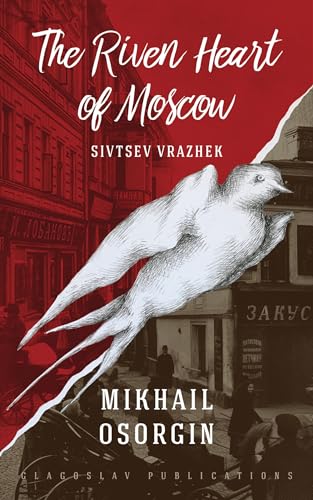
The Riven Heart of Moscow
Mikhail Osorgin (1878-1942) was a Russian writer who settled in Paris after the Revolution. His best-known work, published in Russian as Sivtsev Vrazhek (a street near the Arbat) in 1928 and later as A Quiet Street in English in 1930, is now reissued by Glagoslav, making this neglected novel of the First World War, Russian Revolution, Civil War and early Bolshevik rule available to a wider readership, something it clearly merits.
The novel tells of a group of acquaintances caught in the turmoil of those turbulent years. It recalls Dr Zhivago, but is tighter and easier to follow and a worthy rival to that more famous book. It centres on a family – ornithologist grandfather, a professor, his wife and granddaughter Tanyusha – and all the other lives radiate from this centre. With its focus on individuals, plus animals, birds and even insects, we see events from multiple perspectives. A host of characters come in and out of the narrative, of different types and backgrounds.
The story starts with a pre-war musical gathering at the house on Sivtsev Vrazhek, and goes on to describe how everything changes and what compromises and choices they make. Written in short chapters, the era is vividly described in authentic detail – dilapidation, shortages, rationing, and grim conditions. A house search by the Cheka is frighteningly real. Occasional real-life characters enhance authenticity. Wide-ranging and digressive, the narrative rattles along, with touches of humour and irony, always with compassion and insight, with death an ever-pervasive backcloth. The novel ends as it began, with a gathering at the professor’s house, in such different circumstances and with so many absent friends.