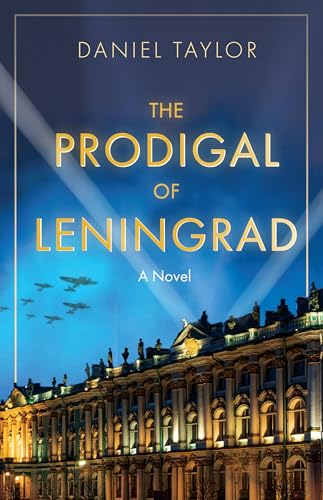
The Prodigal of Leningrad
This novel is set mostly during the Nazis’ horrific siege of Stalingrad with flashbacks to the earliest days of the Bolshevik revolution and the cold hell of the Siberian Gulag. Daniil Aslanov, a docent at the Hermitage museum, is leading tours of one of the world’s great art collections. As the war drags on, the pictures are taken for safe storage, and he is reduced to leading tours of empty frames, providing commentary on what people would see if the pictures were there.
In particular, Daniil is entranced by Rembrandt, and specifically The Return of the Prodigal Son, which inspires his memories of life as a boy during the Revolution, and his grandfather, a Russian Orthodox Priest whose faith is unshakable even amid the chaos of war. Daniil’s experiences with his neighbors and his memories bring him to an epiphany about faith and forgiveness, as well as how art speaks to the neediest of souls.
The individual scenes are well-written and rich in detail, especially the tour of empty picture frames, where the more Daniil discusses what should be in that empty gallery, the more he reflects on the biblical lesson of the Prodigal Son itself. Set pieces are beautifully depicted with plenty of detail, much of it heartbreaking. The characters are sympathetic and human, even if the way they speak serves more as exposition and lecture than actual conversation. The parts set in the Gulag are more meditations on faith rather than natural conversations. The author is perhaps best known for his nonfiction investigations of faith, and it is no coincidence that the book is published by a Benedictine press.
However, this is not a religious pamphlet by any means. It will be appreciated most by art lovers or those who crave a deep dive into WWII-era Soviet Union history.