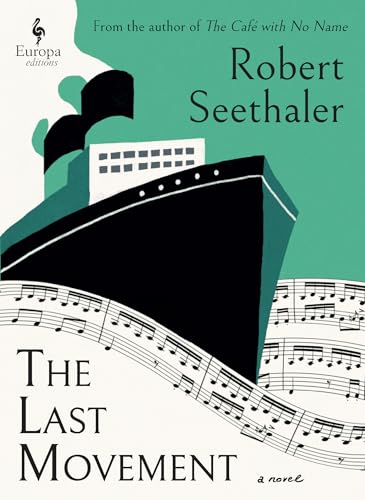
The Last Movement
Robert Seethaler’s latest work – more novella than novel – is an exquisite examination of the last few weeks in the life of Gustav Mahler as he returns to Vienna following his final concert tour in New York. The novel’s title – The Last Movement – is an obvious musical pun, although this miniature study displays more the small-scale intimacy of a chamber work than the ebullient grandeur of a symphony.
It is 1911, and an ailing Mahler sits on the deck of the SS Amerika contemplating his life. They have been at sea for six days. The reminiscences are not neatly ordered, Mahler’s thoughts always fretful and emotional. We move from his summer months, composing in glorious solitude in his rural hut in the forests of Tyrol; to his challenging of long-held traditions as director of the Vienna Court Opera House (including an attempt to stage Strauss’s Salome). We see his reluctance to pose for Rodin to produce his famous bust; and we feel his obsessive love for Alma and his doubts about their relationship, ultimately, and heart-breakingly, revealed in her affair. We experience his despair at the death of his daughter, Maria; and we hear of his visit to Sigmund Freud, seeking the answers that religion can no longer supply, but still uncomforted and concluding that life is essentially meaningless. Yet artistically, the last work to be premiered in his lifetime – the Eighth Symphony – was massive in its ambition and redemptive in its compass, garnering both critical and popular praise and, in Mahler’s own words, ‘joy-bringing’.
These biographical facts are well-known, but in Seethaler’s hands they become a melancholic, poetic, yet unsentimental, portrait of a great artist and a flawed man. Seethaler cleverly juxtaposes the music and the life: one a resounding success, the other riven with frustration, betrayal and anguish. Highly recommended.