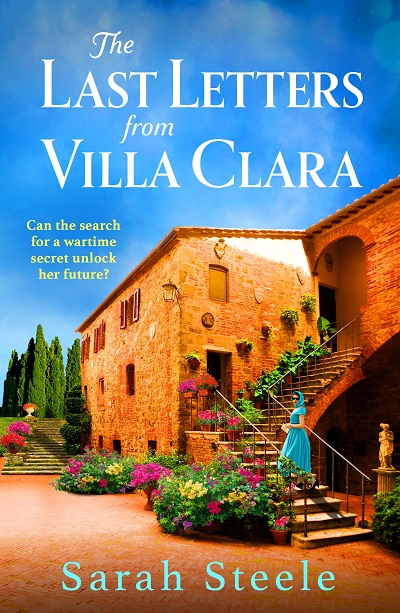
The Last Letters from Villa Clara
The event that kick-starts this story happens in 1939, but most of the action takes place in the early 1960s and late 1980s, in Tuscany and London.
In 1989, Phoebe Cato’s beloved uncle Bruce dies, leaving her with a dilapidated villa in Italy and a struggling art museum in London. But he has also left her a trail of clues to follow, to find out the truth about what happened to the painting that went missing in 1939 and the events that led to a very public court case in 1964, involving the owner of a prestigious Mayfair art gallery and the landlady of a boarding house in Pimlico.
Phoebe is reluctant to investigate at first; not only is she grieving for her uncle and dealing with the stress of her failing art gallery, but she is also newly single and beginning to realise she has feelings for her childhood friend Stefano. But gradually she is drawn into the mystery and becomes increasingly intrigued and determined to get to the bottom of it all – and to right the wrongs of the past. She is helped by, among others, the former residents of Leonora Birch’s boarding house. All is revealed through a series of flashbacks, letters, newspaper reports, and a transcript of the court case.
At first, the way the story unfolds is confusing because some of the flashbacks reveal information to the reader before Phoebe knows about it, so it’s difficult to keep track of what she’s discovered. But this could be deliberate on the author’s part, to convey the sense that Phoebe is not invested in the process herself at that point. Most of the characters in this novel are strong, interesting women from all walks of life, and the ending is both satisfying and poignant.