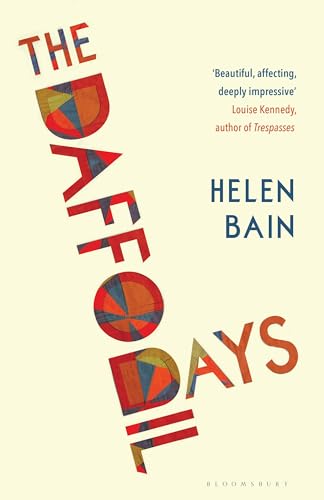
The Daffodil Days
The Daffodil Days covers a period of 18 months during the lives of the poets Sylvia Plath and Ted Hughes. Set mostly in Devon at the beginning of the 1960s, the story is told backwards, starting at the point where the marriage has disintegrated. It then traces events back to the optimistic start to their move from London to a Devon village.
Although Sylvia is the protagonist, we see her only through the eyes of others. The narrative is woven from the varying perspectives of a wide cast of characters, forming a kaleidoscope of views. Although neither Sylvia nor Ted comes across as entirely sympathetic, this style allows a rounded portrayal, with the odd glimpse of understanding and likeability.
We are also invited to immerse ourselves into the lives of the villagers and of the London intelligentsia, and into the social and political landscape of the 1960s. The characters may be provincial, but they have wide horizons – the shop girl who dreams of working in London, or the doctor who once practised in Nigeria. One of the many pleasures of this book is the complex, multi-faceted, picture that it creates of the period.
The writing is descriptive, with lots of domestic detail, and a minute exploration of nature and the landscape. There are running themes, including disarmament and pacifism, motherhood, childbirth and domesticity. Then there are the march of progress and the need for flexibility, leading to the suggestion that Sylvia finds it hard to adapt. The author is obviously intimately acquainted with Plath’s life and works, and with the literary scene of the day. The book required a close read: the prose is understated and allusive, and it would be easy to miss some of the literary and political references. But it was worth the effort. Thoroughly recommended.