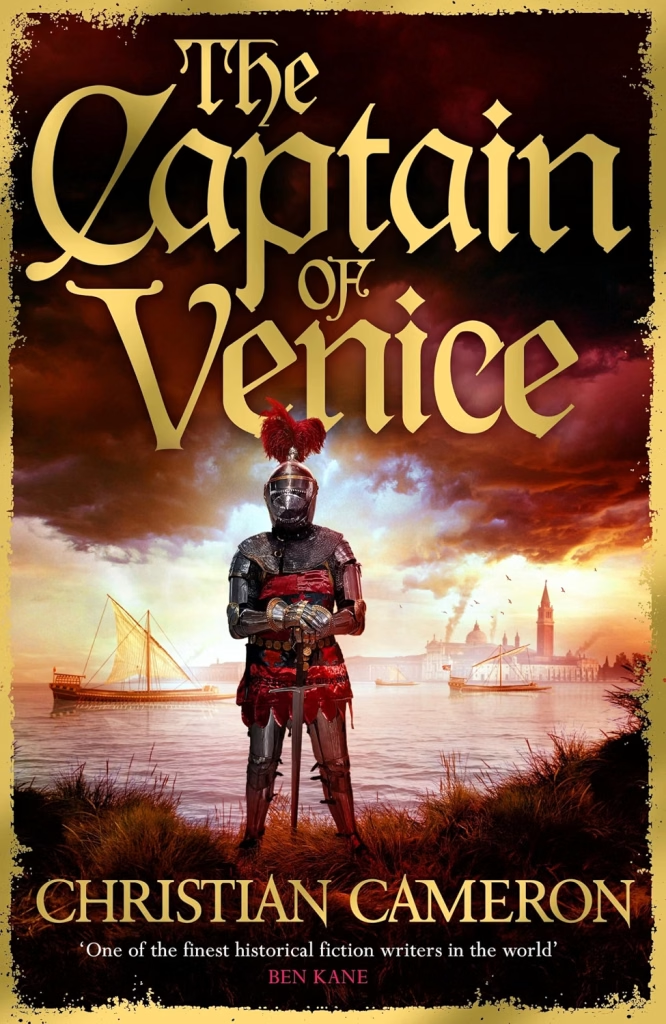
The Captain of Venice
William Gold is a mercenary in the service of John Hawkwood during the 1377-1381 ‘War of the Eight Saints’ and the War of Chioggia between Venice and Genoa. He is a new sort of routier, ‘banker, diplomat and warrior’. This ‘good, fat war’ was especially exciting, as at one point, Venice looked doomed, but then finally triumphed. The story is as narrated to Geoffrey Chaucer.
Defying the pope and cardinals, William’s troops raid Tuscany, falling mercilessly upon marauding Bretons, mercenaries of the cardinals who had harried the peasants. Disgusted by the brutality of their paymaster, Cardinal Robert of Geneva (later antipope Clement VII) during the Massacre of Cesena, they switch sides and fight for Venice. William’s sword has won him riches, but throughout the politicking and bloodshed, he searches for a higher purpose.
Italian politics during the period featured many players: Venice, Genoa, Florence, Milan, Bologna, the papacy—not to mention Turks, Bretons, Hungarians, English, French, Albanians–and as a mercenary, William treats with all the parties. We meet pretty much every mover and shaker of the late 1300s in Italy. It’s Book 7 in the series, so, they all have developed personalities and storylines. A cast of characters would have helped.
This is military fiction at its finest, but it’s not all ‘deeds of arms and flashing blades’. It’s how much it cost and whom you had to deal with to acquire horses, fodder, wine and cooks and prostitutes for the men; dealing diplomatically with adversaries and allies; the importance of scouting and securing food supplies; conversations taking place inside the campaign tent; shifting balance of forces. It’s sumptuously full of historical detail, with all the ins and outs of 14th-century politics and warfare. It’s no surprise that the author is a military expert, re-enactor and duellist in real life.