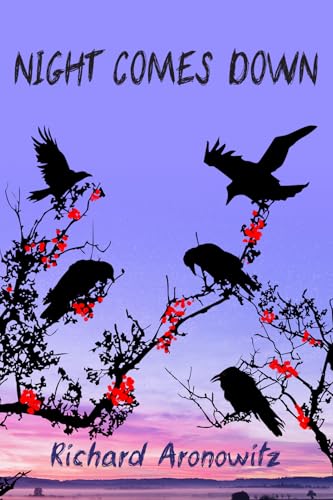
Night Comes Down
The 1841 insular world of Much Purlock, Herefordshire, is being invaded by the railway. In this place that Grace has only known, nature is her essence. So, with news that construction will begin, she must speak out against it. Sean lives in County Sligo, Ireland; the farm is struggling, and the family is left with heavy debts upon the father’s death. He goes to England to earn money where he joins the other navvies working on the Much Purlock railway line. As the noisy destruction continues, trees and woods, rooks and blackbirds play an important role in the novel.
In alternating views, Sean and Grace tell their stories – his loneliness and displacement common among the Irish diaspora, her battle of nature versus progress, and their friendship and bonding. Grace’s father, a doctor, favors the speed that the railway brings, cutting days of travel to hours. This angers Grace and adds to her many grievances against him; she will teach him a lesson. So, in her skewed logic, she begins a campaign to use nature against him. Sporadically, she adds dried, powdered mushrooms to her father’s snuff. His hallucinations followed by mental disturbance mystify him. She says the speed of the train is disturbing his mind and enjoys her power over him as he obsessively searches for the cause. Intermittently, we check in on Grace at the Hereford Insane Asylum in 1849, always returning to 1841-42 as Grace’s actions become more sinister towards her father, while conducting a normal relationship with Sean.
Aronowitz is also a poet, and his narrative echoes that in the rich, descriptive nature writing. The novel is propulsive and puzzling. How far will Grace go in her twisted campaign against her father? How does she end up in the asylum? Where does this take her relationship with Sean? A wonderfully immersive read.