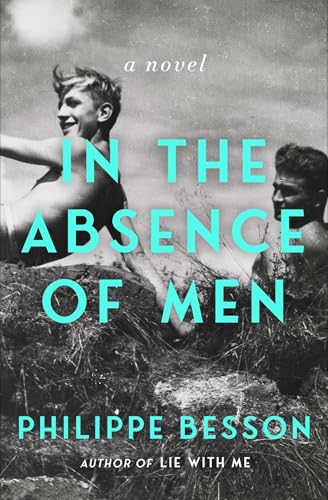
In the Absence of Men
In the summer of 1916, Europe is in the throes of war. As more men march out of Paris to face the Germans on the front lines, sixteen-year-old Vincent de L’Etoile, aristocratic son of wealthy Parisians, is too young to join the fight. Left mostly on his own, he becomes acquainted with middle-aged Marcel P., a famous novelist, and the two begin a kind of friend/mentor relationship. Meanwhile, Arthur Vales, the 21-year-old schoolmaster/soldier son of Vincent’s governess, arrives home on a week’s leave, and the two young men enter into an explosive affair of pleasure and discovery. For Arthur, their intimacy helps to blot out the horrors of war; for Vincent, it is an emotional revelation.
Constructed in three parts, Besson’s novel portrays three men whose lives become intertwined over the course of one week, with lasting consequences for each of them. The middle section, “Separation,” is depicted in letters between Vincent and each of his intimates, who are at first unknown to each other, and describes each character’s background of secret desires, love, trust, family, and the emotional pain. As the layers are peeled back and more is revealed, Vincent realizes his true feelings concerning both Marcel and Arthur. When tragedy occurs, it is left to Arthur’s mother, Blanche, to offer Vincent solace, understanding, and the final truth about her son.
Apart from the somewhat confusing way he writes dialogue, Besson has crafted a sensitive and sympathetic story of three men who manage to connect with and influence each other during a time of dreadful chaos, terrible destruction, and an uncertain future. Marcel’s thoughtful rumination on love being the root of unhappiness alone is worth the read.