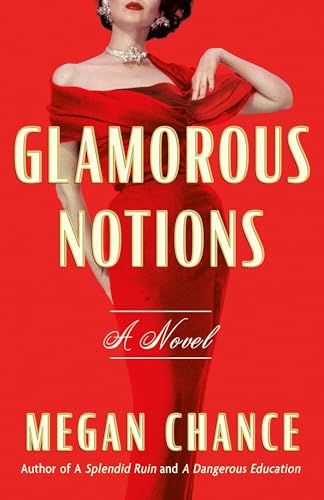
Glamorous Notions
Following Chance’s previous 1950s-era novel A Dangerous Education, Glamorous Notions once again plunges into McCarthyism, this time exploring the Red Scare, Hollywood cinema, propaganda, and how entertainment geared to white Christian Nationalism embedded the notion of the appropriate healthy American family.
In 1951, Elsie Gruner frees herself from farm country Ohio to chase the American Dream to the bright lights of Los Angeles with her wannabe actor hustler boyfriend. Her waitressing job in a small café feels to Elsie as though her aspiration to be a dress designer is unattainable, but her sketches are noticed, and luck lands her a scholarship to the American Art Academy in Rome. There, a vivacious, fun-loving, and manipulative archeology student lures Elsie to remake her image, including changing her name to Lena Taylor, which gives her a powerful sense of self she can take true ownership of.
Once back in the U.S. Lena’s star rises rapidly. Taken on as a sketch artist at Lux Studios and quickly promoted to costume designer, she is in demand by the acting elite but finds herself in Hedda Hopper’s crosshairs as Hedda investigates Lena’s seemingly well-disguised origins. Lena’s relationship with screenwriter, Paul, carries its own dangers when the overzealous censor from HUAC becomes insidiously picky about his changes to Paul’s script, characters, settings, and costumes. As Lena’s past mistakes return to haunt her, she must play her part, bury her secrets, or lose it all.
Glamorous Notions has an unhurried approach to its characters and plot in its early chapters, but readers are swiftly rewarded once Lena arrives in vibrant Rome. The novel reads like a thriller. The plot is intense and dramatic, and it is always edifying to experience Chance’s scene-setting where she revels in minute detail to embed her characters firmly in time and place. The author writes superbly and never fails to weave a powerful story.