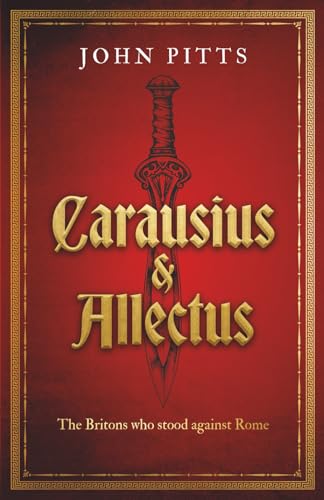
Carausius & Allectus
The 3rd century AD saw the once mighty Roman Empire fracture into crisis and chaos. In the year 286, with widespread military support, Carausius, the commander of the Roman fleet, rebelled and declared himself emperor of Brittania and Gaul. This well-researched book adheres to the known facts while convincingly fleshing out his story. Little is known of Carausius’s early life, giving the author free rein to portray him and his successor Allectus as Welshmen, the sons of tribal leaders taken to be educated by Rome: effectively hostages to secure their fathers’ loyalty.
Carausius finds renown fighting in the Roman army in Gaul; Allectus becomes a Roman financial administrator. History is silent on how Carausius came to be appointed commander of the fleet with the task of defeating the northern pirates, but in this telling, Carausius proves his leadership and seamanship during a terrifying storm. Descriptions are evocative: the ship smelt of ‘wood, salt, pitch and sweat, an acrid perfume of naval force’.
According to Roman historians, Diocletian’s co-emperor Maximian ordered Carausius’s capture for execution based on reports he was keeping the pirates’ plundered goods for himself. In this story, these are false accusations, seized upon by Maximian, who is jealous of Carausius’s growing power and popularity.
Each chapter is told from a particular character’s perspective with fourteen different points of view, making the story feel somewhat disjointed. Paragraphs occasionally veer from first person to third, while tenses wander from past to present. These issues aside, this is a fast-paced, engaging story about a little-known period of Britain’s history under Roman rule.