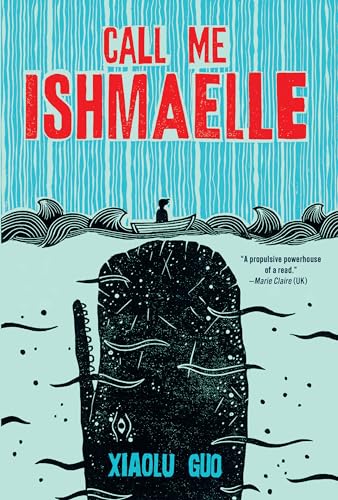
Call Me Ishmaelle
This is Moby Dick retold, with several twists: the narrator is a young female who dresses as a male to pass as a cabin boy on the whaling ship Nimrod, Captain Seneca is a freed ex-slave, and the crew is racially diverse, with additional Black freedmen, Japanese sailors, and a Chinese shaman aboard. The voyage takes place in 1860-61.
It has been a long time since I read Moby Dick in school, but I did spot some plot parallels. Ishmaelle befriends a Polynesian harpooner named Kauri, whose near-death experience has a large consequence for Ishmaelle in the climax; Seneca is as obsessed with finding the white whale as Ahab was, similarly having lost a leg to it; and Seneca’s obsession causes him to refuse to help another ship’s search for its missing boat and crew. The differences: Ishmaelle’s sex is discovered in a shocking manner, and instead of Biblical passages, ancient Chinese texts such as the I Ching influence the plot. At the climax, Seneca insists that Ishmaelle is a witch who can lure the whale to the Nimrod and thereby take his vengeance on the beast.
This take on Moby Dick has more straightforward storytelling and fewer digressions, like Melville’s lengthy passages about whale biology. Ishmaelle is a relatable character, whose gender confusion is a running theme—is she female, male, or a third option? There are several passages written from Seneca’s point of view and stream-of-consciousness thoughts.
I am not a huge fan of reimagined classics, yet I understand others’ desire to update literary masterpieces for today’s audiences. I could see Call Me Ishmaelle as a companion read to Moby Dick, as it certainly gives the story a new spin. Fans of sea stories and tales of 19th-century proto-feminism will enjoy it.