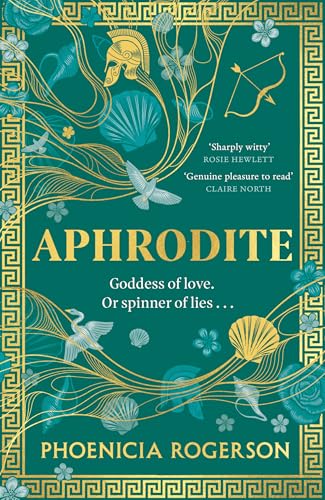
Aphrodite
The beginning. Dark, empty. Someone emerges. Washed up on a beach, she shelters in a cave. Alone. Alone for how long? A few visitors chance upon her. She listens. She learns. One day, she takes a decision. She goes to Zeus, King of the Gods, and claims a home amongst the Gods on Mount Olympus. So begins the story of Aphrodite, the ancient Greek Goddess of Love.
Hats off to Rogerson for weaving a chaos of myths and legends into a coherent narrative. She does so by focussing on the life of Aphrodite, from beginning to end. She is mirrored by Zeus, both patron and enemy. But while supporters elevate Zeus to King of the Gods, Aphrodite is self-made, surviving by wits alone. Gods are created in the image of mankind and in this book, they are very, very human. Aphrodite is a woman alone, faking it to make it in a world where power is weighted heavily against her. Zeus, a spoiled child grown into monstrous tyrant, is dangerous because he is bored.
Readers hoping for lots of gratuitous sex will be disappointed. Aphrodite has her lovers, it’s true. But the sex scenes are not excessive and are sensitively written, considering emotions rather than mechanics. The warning for prudish readers is the language – it’s chatty, modern and robust. Most of the story is told in Aphrodite’s own words, with contributions from other characters. It enlivens the Ancient Gods, made in the image of mankind, and still – just like humanity – the same today. Aphrodite, a woman alone, both vulnerable and strong, comes through as a very modern goddess.