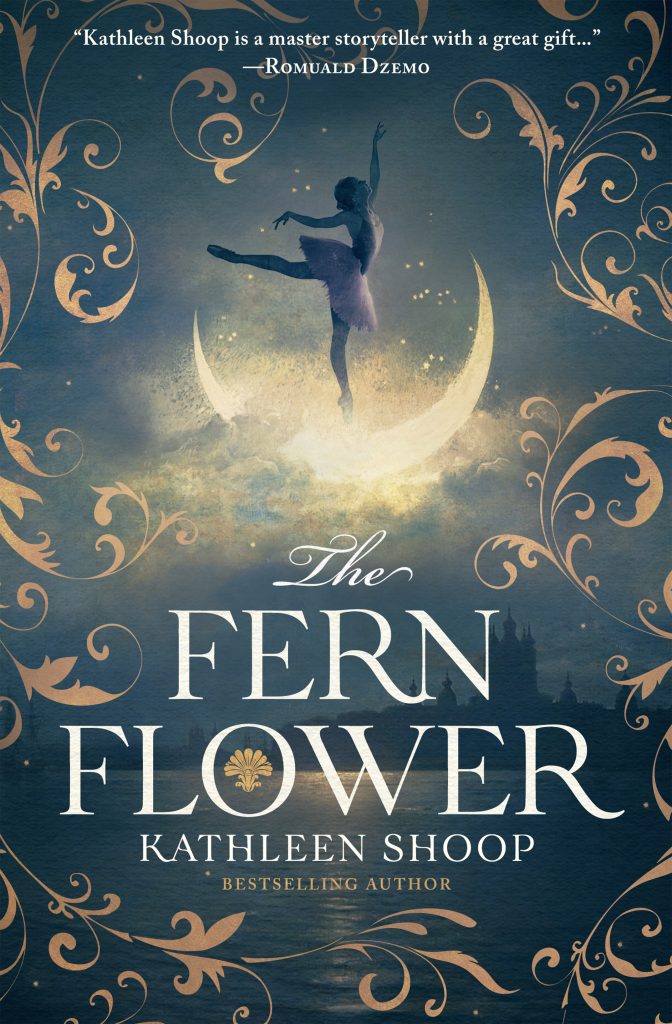
Launch: Kathleen Shoop’s The Fern Flower
INTERVIEWED BY KAREN DRURY
Bestselling, award-winning author Kathleen Shoop, PhD, writes historical fiction, women’s fiction, and romance. Kathleen also teaches and co-coordinates Mindful Writers Retreats and writing conferences. Join her as she brings the past to life!
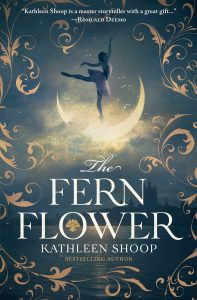 How would you describe The Fern Flower and its themes?
Mila Belova is the star of this sweeping tale that is set in her beloved Tsarist Russia. Rooted in folklore, ballet, war, and revolution, Mila finds her place in the arts, her home on the stage, her devotion to fellow performers and lost souls. But there comes a time when a choice must be made. Is courage revealed in standing her ground or risking everything for those she loves?
You say in your Author’s Note that The Fern Flower was written for an American audience—what did you mean by that, and in what ways did you achieve it?
I had intended to just write a short chunk of the story about Mila in Russia, showing her flee to the United States, where she would emerge into her new life as The Circus Dancer (The Donora Story Collection). But once I started researching ballet in Imperial Russia and what that education looked like for students, circus life, how noble life worked in relation to royal life, and more, I realized revealing why Mila considers running to America required more than a few thousand words.
The Author’s Note also explains and apologizes for anything that doesn’t ring true to a Russian reader. Certain traditions common in Russian life could be confusing for American readers—the audience most likely to end up reading my work.
For instance, Russians have the lovely tradition of giving people a multitude of nicknames that grow sometimes from a context and sometimes from a common nickname for a more formal name. To the American eye, there isn’t an easy leap between many of the names, which aren’t just shortened versions of longer spellings. I had to consider my likely primary audience, and knowing it would be American, I limited the number of nicknames to hopefully make it easier to follow. This is why I wrote that note.
Hopefully the range and depth of research I did shows, as I wanted to respect the culture and various communities in telling the story, but also had to make some limiting decisions.
The novel encompasses a great deal of research about Russia, myths and legends, and ballet and ballet training and the disintegration of the artistic institutions under the revolution, to name but three. Was there an area of research you liked best?
I honestly can’t pick a favorite. This is what led to the book standing outside of the larger body of work I’d first intended. Every research thread revealed an incredible wealth of grittiness, beauty, ritual, and magic.
Ballet was what first pulled me in, the autobiographies and biographies of famous dancers of the time just wowed me. The politics of the time were complicated and woven into the beauty of the stage, the hard work of the working class, and the desire for a world that should meet the needs of the entire populace. This tied into the noble family Mila was born into.
And the folklore—there was something about the Fern Flower mythology—that depending which version you read, there’s an open-endedness to what it means if you find it (it’s not botanically possible to grow the plant) and what you should do if you’re the lucky “winner.” I could see how this myth might figure into the imagination of very gifted, artistic dancers and musicians.
Which character challenged you the most?
Probably Lottie. She’s a bridge to the United States, and she provides a naïve perspective on what is happening. She can ask questions, get things wrong, and ultimately have her Americanness create issues for the entire Belov household. I needed it to make sense that she might be there in the first place. She had to be a blend of savvy, bold, and also humble in knowing what she didn’t know.
Grusha, the moon, plays a particular role in observing the action. What gave you this idea?
I can’t remember at what point into the six years of writing I decided Grusha should narrate, but I remember the moment. The moon was an anchor for Mila. Mila spends a lot of time looking at her, imagining her dead mother in the stars with Grusha, and more. Because I needed the story to jump time, I would need limited spots where information could be slipped into the narrative in an organic way to move the story along. And when I kept going back to Grusha with Mila, it just jumped out.
Obviously, then I had to get past the worry that a moon narrating a story could possibly shift the book into fantasy… but not enough fantasy for fantasy readers to love it. I wondered if I was killing the story by making it too much or not enough for every audience it might appeal to. Hopefully historical fiction readers will welcome a bit of magic mixed in.
Was there a part of the book you found more challenging to write?
The level of research and cycles of rewriting to be sure that the book didn’t drag, but didn’t move so quickly that any of the politics, ballet, family life, circus bits, lacked depth.
You’ve written many books! What keeps you inspired and writing?
The story inspiration and characters just keep arriving unbidden. I’m not short on ideas, just short on time!
 Mindfulness is a key part of your life. Given a busy author’s schedule, how do you practice mindfulness while writing and publishing?
Mindful walking is a big part of my writing process. When I’m stuck on something, going outside and letting my mind unravel ideas and problems works like nothing else.
What is the best writing advice you have to share?
Read a ton and write a ton. There are writers who are born with an otherworldly gift, but most of us aren’t. And I truly believe if you aren’t writing a ton, writing bad, experimenting, and exploring, you won’t turn into the writer you deserve to be.
What is the last great book you read?
Whistler by Ann Patchett

HNS Sponsored Author Interviews are paid for by authors or their publishers. Interviews are commissioned by HNS.