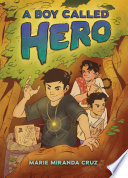
A Boy Called Hero
Hero Del Rosario has recently moved back to the Philippines from California with his family, but now his parents have left him alone with his grandfather while they take his older brother, Patrick, back to the U.S. for a checkup. Hero was conceived as a potential bone marrow donor for Patrick, who had contracted leukemia, but despite having saved his brother’s life he feels invisible. However, he has developed a relationship with his widowed grandfather and an interest in Filipino history, which becomes alarmingly real when he removes a rare book from his grandfather’s cabinet and is transported to the family’s house in 1892. There, he meets his great-great-grandfather Teo, who is also 12 years old at that time, Teo’s twin sister Olivia, and the cruel priest Padre Antonio, who takes Hero’s rare book and spies on the family for any hint of rebellion against the Spanish authorities who rule the islands.
The book, José Rizal’s Noli Me Tangere, is a manifesto for freedom and independence. Hero needs it back to return to the present day. Teo and Olivia, and their father, are smuggling more copies of the banned book into their town, hoping to spark a revolution. This gripping adventure story will appeal to middle graders interested in both history and time travel, and the time travel itself is well executed, with Teo and Olivia in on the secret of Hero’s arrival while their parents and the authorities surveilling them are not, which adds both suspense and humor. Descriptions of the family home, then and now, are vivid (especially the outhouse in a time before indoor plumbing) and depict how life changed from the late nineteenth century to the present day. The novel includes a historical note, glossary of words in Tagalog, and questions for discussion.