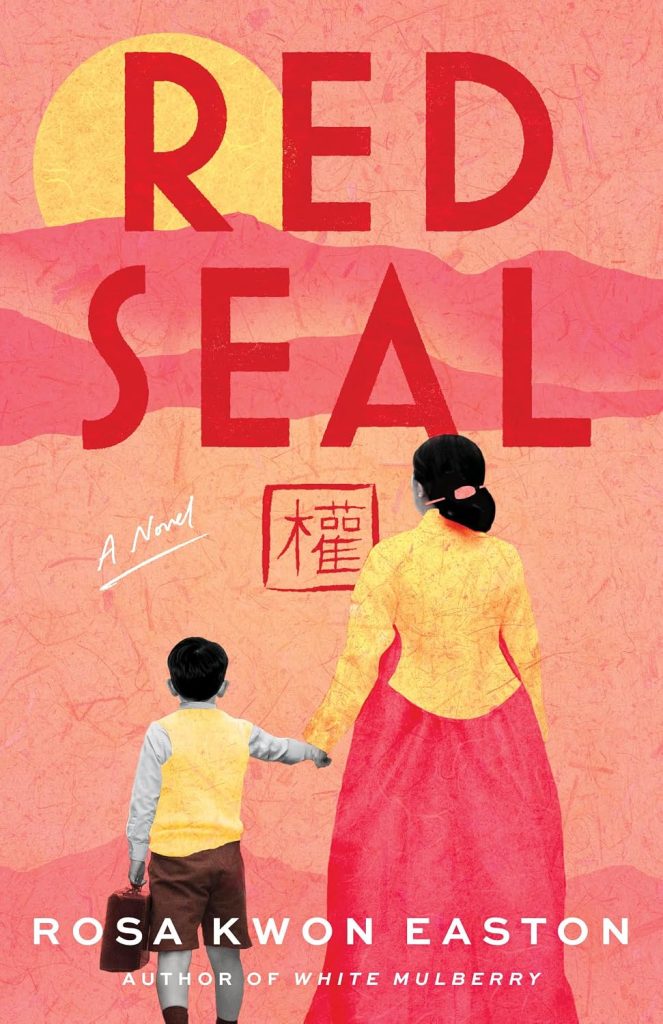
Red Seal
Set during Korea’s traumatic period from 1943 to 1971, Red Seal captures the joys and strains of the bond between a mother and son, and the importance of heritage in Korean culture. During these years, Korea transitioned from a Japanese colony to a hopeful nation, then to two states, war, and a peace with economic hardship and persecution of opposition.
In 1943, Miyoung, a Korean nurse in Japan, has passed as Japanese. When she’s ordered to help the war effort, she escapes to her family’s homeland, Korea—a country she had left thirteen years earlier—with her six-year-old son, Ko-Chan, to honor a promise to her deceased husband. But to survive during this period, they frequently move across Korea and Manchuria.
The narrative provides the perspectives of both mother and son. To stay strong for her son, who she barely knows, Miyoung hides her emotions. Ko-chan misses the grandmother who raised him. At each new location he finds friends, yet his mother repeatedly uproots him, saying they must survive and stay together. As the number of moves mounts and Miyoung’s options dwindle through choices she makes, and as Soonho (Ko-chan’s Korean name) becomes increasingly independent, the tension between them grows.
The red seal, or dojang, is a Korean personal stamp of both legal and cultural significance. Miyoung takes the dojang on her escape from Japan and eventually gives it to Soonho as a reminder of his heritage. This is a well-paced story with emotionally transparent prose. Readers of the author’s White Mulberry can continue experiencing Miyoung’s journey, though this book is self-contained. I thank the author for bringing to life the resilience of people during this tragic period of Korean history.