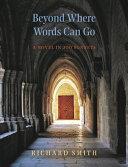
Beyond Where Words Can Go: A Novel in 200 Sonnets
Poignant. Unique. Extraordinary. Beyond Where Words Can Go is all of these and much more. In technical terms, it is an historical novel written in the form of a narrative poem in 200 fourteen-line sonnets.
Set in a monastery in 16th-century Dorset, England, at its simplest level it is the autobiography of a foundling raised in the monastery during the most fraught period of English religious history. It tells the story of the life of an infant, child, novice, monk, and priest as England moves from a traditional Catholic country through a period of cruel religious upheaval and the effects this has upon the members of the brotherhood and the community. At this level, Smith does an excellent job of creating a vivid tale, with many distinctive, likeable characters, strong conflict, increasing tension, touches of humour, and exquisite writing and cadence.
Beyond this, each page is, quite literally, a piece of poetry, and it is both easy and pleasurable to read. It tells a compelling story. The work explores sin, particularly the many sins of commission and omission that Henry VIII commits as he destroys the monasteries in England. Much more than this, the book is about love and the struggle that love so often is in its many forms: love of God, love of other members of the community, love of family, and forbidden love.
This is poetry that resonates with meaning. I cannot praise it highly enough.