Launch: Shelly Chatterelli’s Knowin’ Sugar
INTERVIEWED BY LESLIE S. LOWE
Shelly Chatterelli is an award-winning writer and poet, a former commentator for NPR affiliate WKSU, and a newspaper columnist. As a second-generation Appalachian, she draws her inspiration for her debut novel, Knowin’ Sugar, from her family’s deep roots in southeastern Kentucky.
 How would you describe this book and its themes in a couple of sentences?
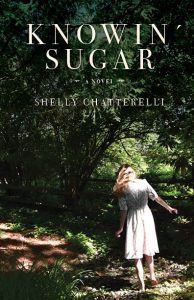
Knowin’ Sugar is a coming-of-age novel rooted in Appalachian folklore, set in 1947 southeastern Kentucky. As thirteen-year-old Sugar struggles to understand the mysterious “knowin’s” she’s inherited, she’s forced to choose between the gift that’s calling to her and the one thing she can’t imagine losing: her mother’s love. It’s a story about family, heritage, belonging, and finding the courage to be true to yourself.
What inspired you to start writing historical fiction, and what has been the most rewarding about it?
Many years ago, I realized I knew a lot about my father’s life growing up in southeastern Kentucky, but very little about my mother’s. So I started asking her questions: What was the most exciting thing you remember? The scariest? The funniest? I was fascinated, and the story began to unfold.
As a second-generation Appalachian, I wasn’t born in the mountains, but I am from them—raised on the stories, traditions, music, and spirit passed down through generations. One of the most enjoyable parts of writing this novel was blending my family’s stories with Appalachian folklore, lots of imagination and watching the characters come to life.
How is writing Knowin’ Sugar different for you than writing poetry or your column?
The playlist I use. 😉 For Sugar, Appalachian-inspired music before settling into binaural beats to help quiet my ADHD brain enough to stay focused.
But the heart of my process never changes. Whether I’m writing poetry, essays, or fiction, I always begin by closing my eyes and asking, “What do I—or my characters—want/need to say?” Then I get quiet and listen.
Why the focus on this topic now?
There’s no single historical event behind it—this story came through conversations with my mother and my own experiences growing up. I’ve been working on this novel for over a decade, off and on, mostly because of some momentous life events along the way. Even when I stepped away, Sugar would inevitably wake me in the middle of the night saying, “Okay, enough. Time to get back to it.”
As bittersweet as the timing can be, I’m so happy Knowin’ Sugar is coming out now, a year after my mother’s death, as an ode to her and her home and my father’s home place. I also believe, that Appalachia is often misunderstood and underrepresented, so it feels like the perfect time to pay homage to its landscape, culture, and people.
How does Sugar transform within the story? What did that journey mean to you as you wrote it?
Sugar is happy as can be until her thirteenth birthday, when something deep within her begins to change. Mysterious whispers of truth, warnings of danger, and quiet calls to action reveal a gift passed down through generations. What follows is a journey from fear to acceptance. By the end, Sugar embraces the very thing she once feared and discovers her greatest strengths.
I cried a lot. I cheered her on with a few “You go, girl!” moments and smiled as she found the courage to trust herself. And as Sugar found more understanding, I felt the joy and softening in my own heart.
How do you think the reader will connect with Sugar in this book?
Beneath her mysterious “knowin’s,” she’s simply a thirteen-year-old girl longing for what we all long for—to be accepted and seen fully. She’s tender-hearted, fiercely loyal, and deeply devoted to the people and the place she loves. I hope readers are reminded that who we are, whether others understand us or not, is the exact unique brushstroke of beauty this world needs.
How did you balance the research with writing the story?
I did most of my research at the beginning—interviewing relatives, calling the local library about historical events, etc. Once I had the facts I needed, I leaned into my own experience of the area and my family’s lore. Then, in the final editing, checked historical facts once more.
What are you working on now?
Mostly marketing, like most writers in the launch phase. But when I steal a few quiet moments to write, I have two novels going: a contemporary middle-grade story about loss and finding a new kind of normal, and a sequel to Knowin’ Sugar, centered on the mysterious boy she sees at the end of book one.
Every author has their own publishing journey. Tell me about yours.
When I finished the first draft many years ago, I began querying agents and signed with a wonderful, well-known agent who believed the book would quickly find a publisher.
The responses were remarkably consistent. They loved the voice, the characters, the setting. But they all wanted the novel more commercial—a stronger external plot rather than the quieter, emotional journey at the heart of Sugar’s story. One editor even said, “Short of winning the Newbery, I don’t think it will sell a lot of books as is.” I remember thinking, I’m okay with that.
Two agents, several revisions, and another publisher later—who also wanted me to make the book more commercial—I finally decided I was done. Done writing.
Around that same time, my mother was dying, and something shifted in me. I realized I wasn’t done writing—I was done trying to write something that didn’t want to be written by me. Even though it’s fiction, it’s my family: their stories, their strength, their love of the mountains, their belief that there’s wisdom in the earth and magic in the wind.
So I cried. I wrote. I mixed prose with verse. I embraced the quiet moments instead of rushing past them. I leaned into what it means to be a mountain woman, because I was raised by one—a woman who taught me that when someone tells you no to something you know is right, you stand tall and keep going.
I stopped trying to fit the story into someone else’s expectations and trusted my own voice.
When the book was finally finished, I sent it to Fauve Press, an independent publisher in Colorado. Two days later, she called and said, “You wrote something really special.”
Looking back, I wouldn’t change a thing. As hard as it was, I learned something from every rejection, and there are scenes from those times of revision that remain among my favorites.
 What advice would you give to other aspiring historical writers?
Do your research well enough that you can forget about it while you’re writing. Facts create the foundation, but it’s the people and small details that breathe life into history. Sometimes the most memorable part of a story isn’t something you found in a history book—it’s something your mother told you at the kitchen table. Trust your characters to lead you somewhere you never expected to go. No one else can write your story but you.
What is the last great book you read?
Wolf Hollow by Lauren Wolk

HNS Sponsored Author Interviews are paid for by authors or their publishers. Interviews are commissioned by HNS.