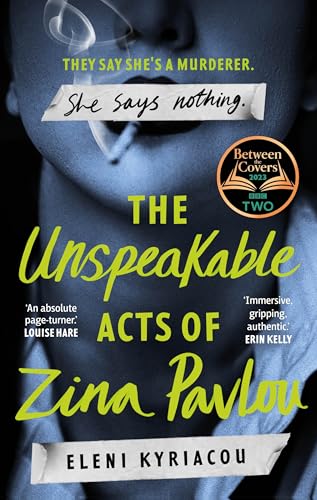
The Unspeakable Acts of Zina Pavlou
In a way this is a police procedural, but whereas most ‘procedurals’ are told from the point of view of the chief investigator, usually the Detective Inspector, this story is told from the point of view of the accused, Zina, and her police interpreter, Eva. Eva is crucial because Zina is a Greek-speaking Cypriot immigrant who speaks little English and reads and writes neither Greek nor English. Her acts are truly unspeakable except via Eva.
We often think of interpreters as mere transmitters of other people’s words, but a good interpreter needs to be a diplomat and a psychologist, knowing what the speaker wants to say and the listener wants to hear, and what is best left unsaid. Zina is accused of murdering her daughter-in-law at their home in London in 1954. Eva, partly as a result of her own experience as a Cypriot immigrant, gradually begins to identify with her and steps beyond her role in trying to save her from the hangman.
This is a poignant study of alienation and culture shock, love and friendship, which will remain with you long after you have finished the book. It is based on an actual case, but please do not read the author’s note until you have read the book, as it is a real spoiler.