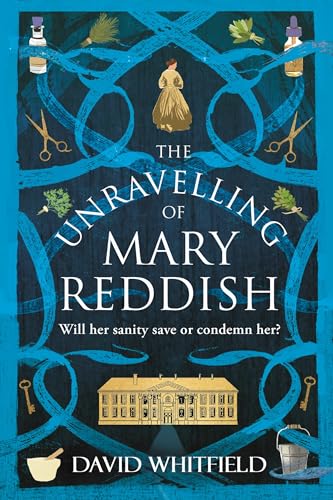
The Unravelling of Mary Reddish
Mary Reddish was the daughter of a poor working-class family living in the village of Woodborough, just outside Nottingham. To supplement her family’s meagre income, as soon as she was old enough, she left home and went to work in a Nottingham lace factory and then as a cook/housekeeper for Mr and Mrs Barwick in the village of Halloughton. The job was mundane, but things went well until Mrs Barwick went away to visit a relative, leaving Mary alone with her husband. One night he came into her room and climbed into bed beside her. She rejected his advances, and from this arose a chain of events which culminated in him having Mary committed to the General Lunatic Asylum near the city.
The asylum was the first of its kind in the country, overseen by the Director Thomas Morris, with his wife Ann acting as matron for the women’s section. They had hoped to run an establishment based on kindness and humanity, but these hopes were continually thwarted by the physician, who had the final say on the patients’ treatment so that they were subjected to a regime which was little short of torture.
The first section of the novel alternates between the circumstances leading up to Mary’s committal and the establishment and running of the asylum. The second section covers Mary’s struggles to prove her sanity and the Morrises’ part in this. The book is based on fact: the asylum took its first patients in February 1812, and Mary was committed in June 1827. It will appeal to anyone interested in the social history of the period or the treatment of mental health. It will also appeal to anyone who enjoys a good story well told. This is Whitfield’s first novel. I look forward to his next.