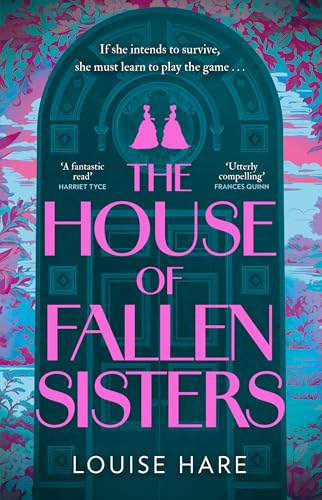
The House of Fallen Sisters
Known for successful books set in the 20th century, Louise Hare has now chosen to depict, with unflinching frankness, the lives of 18th-century prostitutes. The main character, Sukey, is a mixed-race girl who has been raised in a respectable country home as the faithful companion of a contemporary named Emily, but as the story begins, Emily’s estranged mother has reclaimed her, along with Sukey, and put them to work in her business – a Covent Garden brothel. We first see Sukey having run away to escape the auction of her virginity, days after her first period, but later she agrees to come back and submit. Emily’s own auction follows in a few weeks. I am certain, given the amorality of the 18th century, that there were in reality girls who tolerated working for their mothers in this way, but portraying such a character as both sympathetic and having agency is very difficult: Hare does not quite make us identify with the moral gymnastics through which her characters put themselves.
As a feud between two madams ensues, Sukey and Emily are drawn to one side and then the other, sometimes in control of events, often not at all. Another plot strand, perhaps more successful, concerns Sukey’s increasing consciousness of her own race, having rescued a young ex-slave who has been beaten up. She gathers together with other Black Londoners, both enslaved and free, in the fight for fairness.
Comparing this to works such as The Mermaid and Mrs Hancock by Imogen Hermes Gowar or Daughters of Night by Laura Shepherd-Robinson, I felt that the leading characters suffered from some passivity, perhaps because the plot is diffuse, lacking a single line of suspense or jeopardy. However I applaud the author for producing an ambitious book, and one that reads with grim fascination.