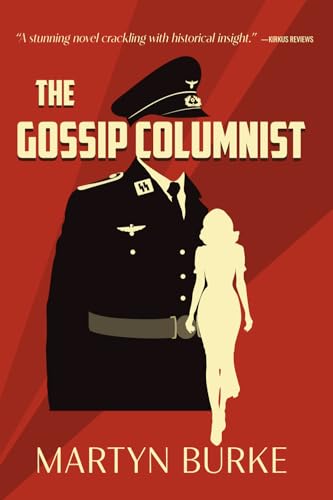
The Gossip Columnist
Our narrator, Bella, a journalist at the German newspaper Vossische Zeitung, is assigned as a gossip columnist to attend events, many at embassies and report favorably on the Nazi presence. Writing in code, however, she devotes herself to exposing Josef Goebbels—Minister of Propaganda and studio head at Babelsberg—as an insatiable sexual deviant, seeing it as an act of political defiance. Goebbels controls the media in his purpose “to shape and control the mood and thoughts of the German people … to believe in the Führer and the march to war.” Bella has the inside scoop with her cool, blond sister Karin, a star at Babelsberg Studio. Karin, abused by her father, is a strange femme fatale, a tragic character who disassociates in her sexual exploits with top Nazis.
Though female-narrated, it feels like a male voice – graphic, crude, unsympathetic – giving a raw portrayal of life in the Third Reich from 1933-1945. The novel depicts the rise of Nazism up through the horrific bombing of Berlin, reduced to rubble as Russian troops terrorize the city. We witness the gradual eradication of the Jews, from editors fired so Nazis can run newspapers, to people disappearing, to Bella’s visit to her weak clerk father, delivering bags of (Jews’) wedding rings to be melted into gold bars in Switzerland. Bella and her former editor, Paul Langden, go into hiding at Mutter’s brothel. With help from prostitutes living there, they disseminate gossip to humiliate and undermine Goebbels. We witness the violence of Kristallnacht as synagogues and shops are vandalized and thousands “sent east.” This novel is a dark, brilliant blend of fact and fiction that’s not for the faint of heart.