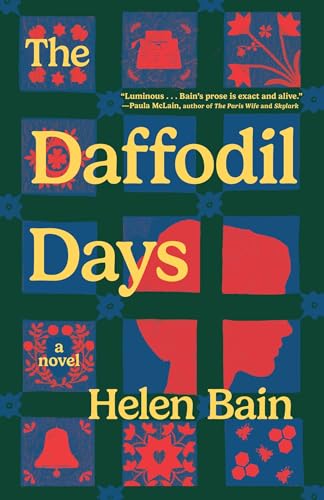
The Daffodil Days
This is an extraordinary novel. Extraordinary in its form: the story runs backwards. Extraordinary in its content: a meticulously researched fictional biography covering the last two years of the American poet Sylvia Plath’s short life. Extraordinary, too, as a highly accomplished first novel by a young writer. And mainly extraordinary for the superb quality of Helen Bain’s writing.
Of course, Plath herself was uniquely gifted, so it is a good match. Bain’s prose seems effortless. She merely writes “the best words in the best order,” as Coleridge described poetry. Bain’s language is precise, often understated, yet particularly strong in dialogue and in description, especially description of landscape and of processes such as extracting honey from the comb or suturing a slashed finger.
The novel is set in 1961 and 1962, mostly in North Tawton, a small town in Devonshire, where Plath and her husband, the English poet Ted Hughes, bought an old, thatched house called Court Green. Each of the sixteen chapters views Plath at a different moment through a different pair of eyes: housekeeper, friends, doctor, midwife, neighbors, riding teacher, brother, husband. And each character’s own story subtly emerges, too.
In November of 1962, the Plath-Hughes marriage, always tumultuous, fractured over his infidelity. As the novel unravels this disaster, a greater one constantly looms: Plath’s suicide in February 1963, at age thirty.
These two writers left traces. Letters, documents, memoirs, photographs, journals, and poems abound—except the ones Hughes destroyed, controlling Plath’s legacy and his own. He lived on in Court Green, became Poet Laureate, got rich, and achieved a towering reputation. To Plath’s passionate admirers, he is Satan himself.