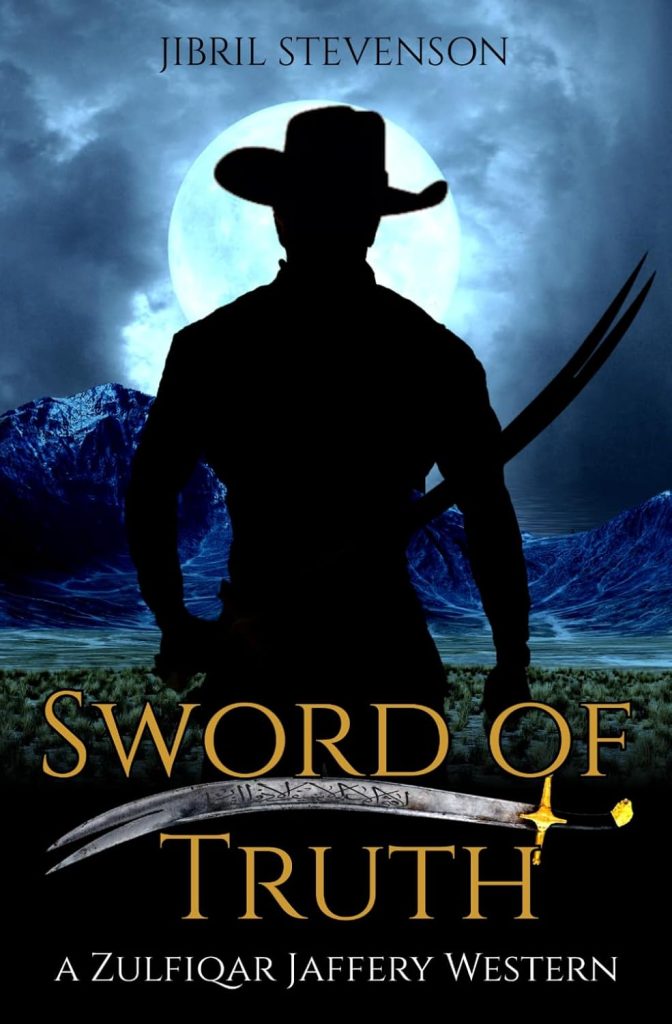
Sword of Truth
1900: Zulfiqar Jaffrey, homesteader and sometimes private detective, is abruptly summoned by telegram from his North Dakota holding to faraway California, where a Punjabi farmer’s Mexican wife has been found dead, hanging from a rafter in the storeroom. The sheriff says suicide but the husband, Abdul Syed, believes his wife has been murdered and wants Jaffrey to investigate. Jaffrey heads west by train, accompanied partway by his wife and his brother, who plan to purchase merchandise in San Francisco to sell in the Dakotas. Jaffrey’s quest takes him further south to the little town of Bagdad, near Palm Springs. Here Syed has created a lush farm in the midst of a desert, but the law prohibits Asians from owning property, so his wife owned the farm. Her death puts everything at risk as the couple had no children. Jaffrey’s investigation pits him against greed, family vengeance, powerful interests and entrenched racism, and eventually endangering himself, and the people he holds dear.
This classic Western with a twist shines a new light on the little-known, at least to this reader, diversity of the American frontier. The author’s note gives historical background on a Muslim community in North Dakota in the 1900s and Punjabi settlers in California, as well as the better-known immigration of Chinese to the West. Jaffrey is an intrepid investigator, motivated by his desire for justice and by his faith. The storytelling is brisk, with frequent references to his other cases, which are also available in print. Recommended for readers who delight in Western fiction, as well as those who appreciate historical stories that shed light on the struggles of immigrants for acceptance in our diverse country.