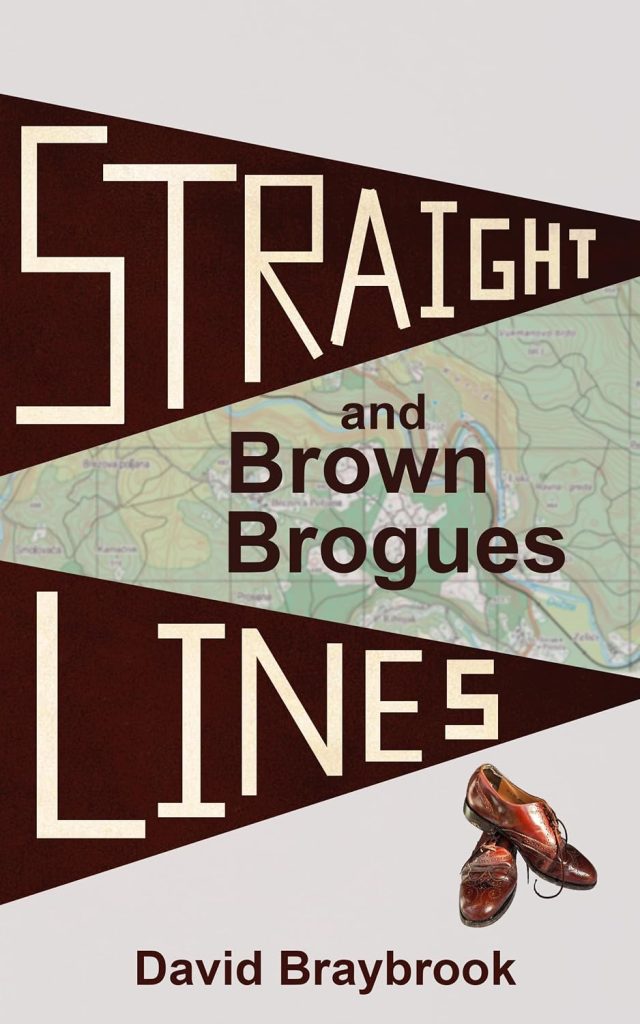
Straight Lines and Brown Brogues
More historical fable than historical fiction, this book tells Joseph’s story from boy to grandfather. It takes place at an unspecified time in the past, but steam trains and other period details suggest the early 20th century. The settings are an English village and a war-torn island under military occupation. ‘The country was unnaturally divided and devastated by the effects of war,’ comments one of the characters. The location could be post-Second World War Germany, Cyprus, Ireland, India and Pakistan, and many other places where the destructive patterns of war have been reiterated.
Joseph becomes a cartographer tasked with helping the army create a new road and draw a border on the island. A straight line drawn on a map has brutal divisive effects that Joseph witnesses firsthand. The brown brogues of the title tie Joseph to a local man, Edo, who enables Joseph to see the conflict from more than one perspective.
At times, the pacing is a little slow and there is an over-reliance on dialogue, but this is a rich and important story. Descriptions of both settings and characters are evocative and there is a knowledgeable engagement with the business of cartography and its fall-out.
At the beginning of the novel, Joseph’s father tells him war has only two types of people: the dead and the survivors, but at the end of the novel, Joseph’s wife says, ‘It is our responsibility to do more than survive’. This is a gem of a story about the futility of war and the durable bonds forged in adversity.