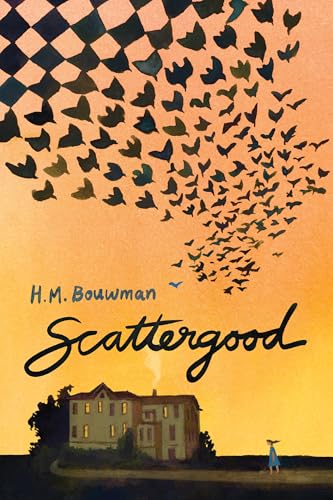
Scattergood
This is a remarkable coming-of-age novel in its depiction of an adolescent girl coming to terms with family, friendships, romantic love, serious illness, religious beliefs, and career aspirations—as she goes through the process of maturing mentally, psychologically, emotionally, and socially. Big claim? But this novel meets it!
The time is summer, 1941. The place is the community of Scattergood in rural Iowa, far from the war raging in Europe. The heroine is a farm girl, twelve-year-old Peggy…who is going on thirty! Peggy’s cousin and best friend, Delia, an aspiring romantic poet, has leukemia. Delia’s younger brother, Sam, is trying all sorts of remedies to cope with her illness. Peggy’s hardscrabble parents hope to bring in a pumpkin harvest that will save the family financially. Casual friend Ida Jean is every young girl’s self-absorbed nightmare.
Near Scattergood is a Quaker residential institution for Jewish refugees from Hitler’s regime. One of its residents is a curmudgeonly professor who teaches Peggy how to play chess because she has an extraordinary mathematical and logical mind. (Peggy’s analysis of a sonnet versus Delia’s analysis of a sonnet is worth the price of the novel.) Another Scattergood resident is the charming teenager Gunther, who sets female hearts afire. Joe volunteers at the institution and wants to develop a friendship (or more?) with Peggy.
All of these characters are developed subtly and slowly, but jump off the page to engage the reader. Dialogue, description, and symbolism wonderfully complement the characters and the plot, which itself is masterfully complicated. Middle-school readers will greatly enjoy this novel.